Plumbing guide
Backflow Testing in Los Angeles: Who Needs It, When, and What the Tester Checks
Backflow testing in Los Angeles is a yearly check of the valve assembly that keeps water on your property from flowing back into the public supply. If your property has one, the water utility expects a certified tester to test it once a year and submit the results. Commercial buildings, restaurants, medical offices, apartment buildings, fire sprinkler lines, and most irrigation systems with their own assembly get the notice.
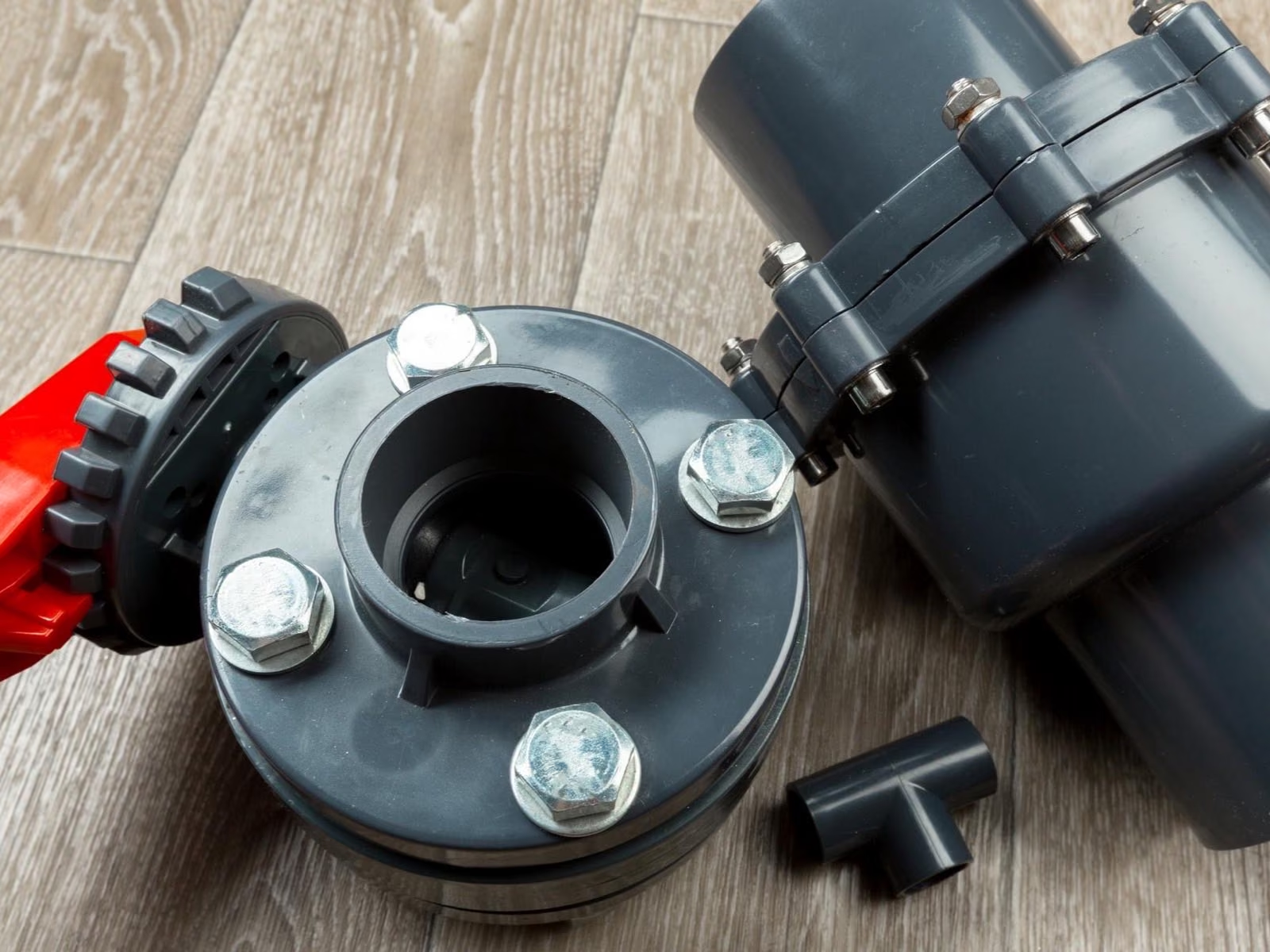
- A backflow prevention assembly stops water on your property from flowing back into the public drinking water supply when pressure in the main drops or reverses.
- LADWP and the other water agencies around Los Angeles require a yearly test on most assemblies, and only a certified tester can perform it and file the results.
- Reduced pressure (RP) assemblies protect high-hazard sites, double check (DC) assemblies cover low-hazard lines such as fire sprinklers, and pressure vacuum breakers (PVB) are the usual testable assembly on lawn irrigation.
- Most failed tests trace to worn rubber parts or debris on a check valve seat, and a rebuild kit plus a retest usually fixes them.
- Miss the deadline and most programs send a reminder, then a final notice, then can shut off water service until a passing test is on file.
What does a backflow prevention assembly do, and why does the water utility care?
Water should move one way: from the street main, through the meter, into your building. A cross-connection is any point where that clean water can touch something else. A boiler, a chemical dispenser, a hose in a mop sink, or a sprinkler head in wet soil all count.
If pressure in the main drops, water from those points can siphon backward. If a pump or boiler on your side pushes harder than the main, it flows backward instead.
Testers call the first case backsiphonage and the second backpressure. A backflow prevention assembly sits on the service line and blocks both, so whatever happens inside your fence stays inside your fence. The working parts are check valves, spring-loaded discs that open only in the right direction, plus a relief valve or air inlet on some types.
The utility cares because one bad event contaminates the shared main. A main break on a Valley street, or a hydrant opened for a fire, drops pressure for the whole block. Federal drinking water law makes the utility answerable for what comes out of every tap it serves.
California's cross-connection control rules require every public water system to run its own program, and the State Water Resources Control Board oversees those rules. LADWP runs the program for accounts inside the City of Los Angeles. The assembly on your line is your half of that bargain: you keep it working and prove it once a year.
Who gets the annual test notice in Los Angeles?
The notice goes to whoever owns or manages a property with an assembly on file with the utility. Programs differ by agency and by county, so treat the list below as the usual pattern rather than a rule for every address.
- Commercial buildings of almost any kind, since the utility cannot see what a tenant connects behind the meter.
- Restaurants and commercial kitchens, where dish machines, chemical dispensers, and soda carbonators sit on the water line.
- Medical, dental, and veterinary offices, plus labs, where sterilizers and vacuum pumps create a high hazard.
- Apartment and condo buildings, especially those with a booster pump, a boiler, a pool, or shared irrigation.
- Fire sprinkler systems, which hold stagnant water for years and sometimes antifreeze or corrosion inhibitors.
- Irrigation systems with their own assembly, and any system with fertilizer injection counts as high hazard.
- Properties with an auxiliary water source, such as a private well, a rainwater cistern, or a recycled water connection.
Homeowners land on the list more often than they expect. A lawn irrigation system in Encino or Northridge often runs on simple anti-siphon valves that are never tested, but where it has a pressure vacuum breaker or another testable assembly on the utility's records, the yearly notice follows. The same goes for a house with a well in the hills above Sunland-Tujunga.
If you have never received a notice and have none of the items above, you probably have no assembly to test. If a notice did arrive, it names the assembly, its serial number, and the due date. That letter answers the question, and the tag on the assembly should match it.
What is the deadline, and what happens if you miss it?
The deadline is on the notice. LADWP sends a test notice once a year for each assembly on file, and the letter gives a window to complete the test and submit the results. The clock runs from the date on the letter, not from the day you open it.
Testing alone does not close the file. The results have to reach the utility on its form, on paper or through its online portal. Ask who submits the report and when.
Miss the date, and the sequence in most programs runs the same way: a reminder, then a final notice, then a possible service action. That can mean a locked valve at the meter or a shutoff until a passing test is on file. A restaurant with no water on a Friday night has a far bigger problem than a test appointment.
Two other moments call for a test without a notice. A new assembly needs a passing test before the utility accepts it, which is why a tenant improvement in a Van Nuys strip mall usually ends with a tester on site. A repaired or relocated assembly needs a retest too. If you manage several buildings, keep one calendar with every assembly and due date, because the notices arrive at different times of year.
RP, DC, or PVB: which assembly type do you have?
Three assembly types cover almost every site in Los Angeles, and the utility decides which one you need based on the hazard behind it. A higher hazard behind the meter means a stricter assembly in front of it.
Assembly types, typical use, and what the test checks
| Assembly type | Typical use | What the test checks |
|---|---|---|
| Reduced pressure (RP or RPZ) | High hazard: restaurants, medical and dental, labs, fertilizer injection, recycled water sites | Both checks hold, and the relief valve opens before the margin between the zones gets too small |
| Double check (DC or DCVA) | Low hazard: fire sprinkler lines without additives (often as a detector assembly with a bypass meter), some commercial mains | Each of the two check valves holds tight against reverse flow on its own |
| Pressure vacuum breaker (PVB) | Lawn irrigation on homes and businesses, where no backpressure can occur | The air inlet opens as pressure drops, and the single check holds |
The RP is the one that drips. Its relief valve sits between the two checks and dumps water on the ground when anything upstream misbehaves, by design. An RP therefore sits above grade with room for the discharge, never in a pit that can flood.
The DC has the same two checks and no relief valve. Older ones often sit in below-grade vaults, but California's current rules put new and replaced DCs above grade unless the water utility approves otherwise. The PVB has one check and an air inlet, guards against siphoning only, and sits at least a foot above the highest sprinkler head.
Most commercial assemblies in LA sit in a locked cage near the sidewalk, right after the meter, because the utility wants them visible and testable. The brass body carries a tag with make, model, size, and serial number, and that tag is what the notice refers to.
What does the backflow test actually check?
A backflow test measures whether each check valve holds pressure in the right direction, and whether the relief valve or air inlet opens when it should. The tester connects a calibrated gauge to the small test cocks on the assembly, closes the shutoffs one at a time, and reads the pressure difference across each part. Backflow testing in Los Angeles follows that same procedure on a Downtown high-rise and on a lawn in Reseda.
The pass marks come from a standard field procedure. On an RP, the first check has to hold at least five psi across it, and the relief valve has to open before the difference between the two zones drops to two psi.
On a DC, each check has to hold at least one psi on its own. On a PVB, the air inlet has to open as pressure falls, and the check has to hold at least one psi. A reading under any of those marks is a fail, even with no water in sight.
Two practical points. Water to the building pauses for a few minutes during the test, so a restaurant or dental office will want it scheduled outside busy hours. The gauge needs a current calibration certificate, usually within the past year, because the utility can reject results from an uncalibrated kit.
Why do assemblies fail, and what does the Valley sun do to them?
Most failures are boring. The rubber discs on the check valves take a set after years against the same seat, the springs weaken, and the check no longer holds its minimum. A relief valve on an RP that spits briefly when pressure in the main swings is normal. A relief valve that runs steadily, or spits every time a tap upstream opens, means the first check is leaking past its seat, and the assembly will not pass.
Debris is the other big one. After a main break or a hydrant flush on your street, sand and scale travel down the service line and land on the first check seat. If your notice arrives right after LADWP crews worked on your block, tell the tester, since a cleaning may be all the assembly needs.
Sun and heat do the rest. Assemblies in Woodland Hills or Sun Valley sit in direct heat all summer. The insulated bag or hard cover over an assembly cracks and fades, the rubber inside hardens faster, and the plastic body on a low-end PVB can split at the threads. Ants and spiders pack into the air inlet on a PVB, and a stuck inlet fails the test.
Repair or replace: what happens after a failed test?
A failed test is common and rarely dramatic. The tester tells you which part failed and by how much, and the fix follows from that. Most assemblies rebuild with a manufacturer repair kit: new rubber, new springs, then a retest on the spot. A rebuilt assembly with a passing retest satisfies the utility the same as a new one.
Replacement makes sense in three cases. The body has a crack or the threads have corroded through, common on old bronze in wet soil. The model is obsolete and the parts no longer exist. The third case is a changed hazard: a landscaper adds fertilizer injection to an irrigation system that had a PVB, and the utility now wants an RP there.
Replacing an assembly in the City of Los Angeles usually needs a plumbing permit from LADBS, a model from the utility's approved list, and a passing test before service. Burbank, Glendale, and Pasadena run their own permit desks and their own lists. Current ranges for tests, rebuilds, and replacement are on our backflow testing page.
One more pattern from Valley commercial lots. When an assembly keeps failing on debris every spring, the old galvanized service line behind it is usually shedding rust into the checks. At that point a water line repair fixes the cause, and the assembly stops eating repair kits.
Who should do backflow testing in Los Angeles?
Only a certified tester whose certification your water utility accepts. LA County Public Health long kept the local tester list, and state rules now call for a certificate from an organization the State Water Board recognizes for assemblies at the meter, so confirm with the utility first. Certification includes a hands-on exam on a test bench and has to stay current. A plumber without the certification cannot sign the test report, and some local programs also want a certified tester for repairs and installs on testable assemblies.
A+ Electric & Plumbing is a licensed electrician and plumber serving Los Angeles and the San Fernando Valley, and our commercial plumbing team handles test notices for restaurants, offices, and property managers with several assemblies. Backflow assemblies on fire lines and pump systems often share a room with the controls that run them. Holding both trade licenses means one crew can service the valve and the wiring beside it, with nobody pointing at another contractor.
If a notice arrived and you are not sure what it means, a photo of the tag and a photo of the letter answers most of it. Someone picks up at (818) 421-5290 day or night, and the written estimate is free. Our Los Angeles plumber team handles the rest of the water side too, from the regulator to the water heater. If you would rather start with a licensed electrician and plumber in Los Angeles who can read the notice with you, that works too.
Frequently asked questions
I only have a sprinkler system at my house. Do I really need this?
If a PVB or another assembly sits on your irrigation line and the utility has it on file, yes. The notice would not arrive otherwise. Irrigation counts because sprinkler heads sit in soil with fertilizer, pet waste, and pesticides, and a pressure drop in the main can siphon that back toward the house. The test is short, and a home PVB is the simplest assembly to test and rebuild.
Can I test the assembly myself?
No. The utility only accepts results from a certified tester using a calibrated gauge, and the report carries the tester's certification number. You can do a useful pre-check, though. Look for a steady stream from the relief port, a cracked cover, or a PVB with a cap full of ants. Those tell you to book the test with time for a repair before the deadline.
What if my notice came from a water district, not LADWP?
Same idea, different desk. Calabasas and Agoura Hills get water from Las Virgenes. Burbank, Glendale, and Pasadena each run their own utility, and Long Beach and many smaller cities have programs of their own. Each one keeps a tester list, a form, and a deadline. Read the letter for the agency name and follow that agency's rules, since the county line does not decide it.
Why does my RP assembly drip water on the ground?
A brief spit from the relief port is normal when pressure in the main swings. The relief valve exists to dump water when the zone between the two checks loses its margin. A steady drip or flow, or a spit every time someone upstream opens a tap, means the first check has debris on the seat or worn rubber. Have it serviced before the test date, because it will fail as it stands.
What does the tester actually submit to the utility?
The test report: the assembly's make, model, size, and serial number, the readings for each check and for the relief valve or air inlet, the pass or fail result, the gauge's calibration date, and the tester's certification and signature. LADWP takes it through its portal or on its form, and other agencies have their own. Ask for a copy of the filed report and keep it with the building records.
How long does a failed assembly leave me out of compliance?
Until a passing retest reaches the utility. A failed report still counts as a completed test in most programs, so the utility knows you responded, but it opens a repair window rather than closing the file. Rebuilding on the same visit and retesting closes it fastest. If the assembly needs a full replacement, tell the utility, since most programs allow a short extension while the part is on order.
Related services
Need this handled? Start here
Get a free estimate
Tell us what's going on and a licensed tech calls you back fast, with the exact price before any work starts. Electrical and plumbing, one team.
Estimates for quoted work are free. Troubleshooting or diagnosis may carry a $100-$250 service call, credited to your repair when you approve the work.
- Exact price in writing before we start
- Licensed, bonded & insured (CSLB #942404)
- One team for electrical and plumbing
Prefer to talk? Call (818) 421-5290, answered 24/7.