Backflow testing & certification
Backflow Testing in Los Angeles
Backflow testing in Los Angeles is an annual certified check that keeps dirty water from flowing back into the clean supply. A+ Electric & Plumbing tests your RPZ, DCVA, or PVB device in under an hour, then files the certification with your water agency. Every device is priced on its own type and size, so you get an exact written price first, and the estimate is free.
- Certified backflow testing, filed to code (CSLB #942404)
- Certified test $150-$350 per device, under an hour each
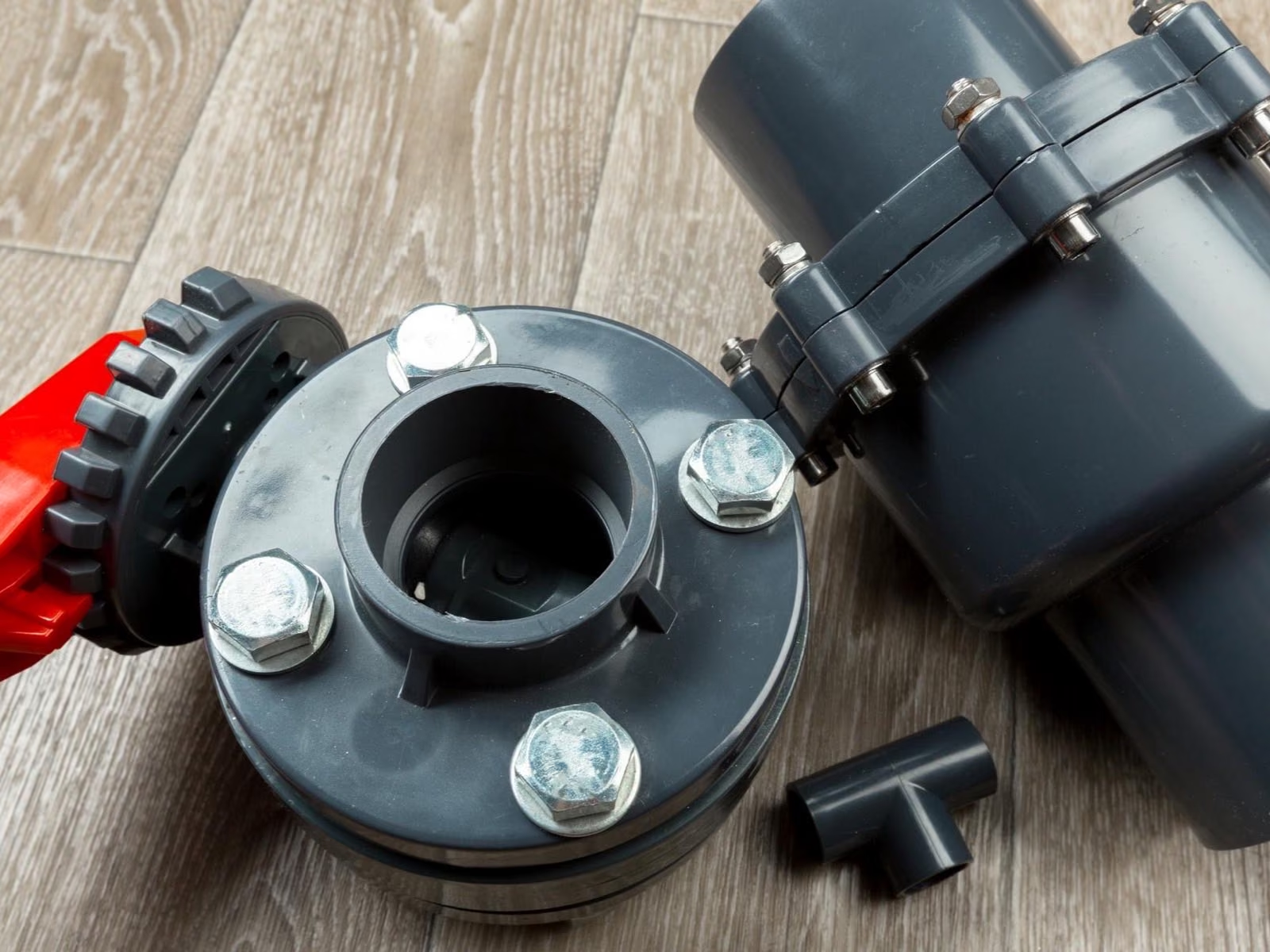
- We test RPZ, DCVA, and PVB devices for the whole site
- Certificate filed with your water agency, renewal reminder included
- One licensed team, one upfront price, before we start
What is a cross-connection, and why does it matter?
A cross-connection is any spot where your clean drinking water can touch dirty water. Backflow is when that dirty water flows backward into the clean supply. It happens when the pressure drops, like during a water main break or heavy fire-hydrant use down the street.
Take a Sherman Oaks restaurant with a hose left sitting in a mop bucket. If city pressure suddenly drops, the bucket water can get pulled back up the hose and into the building pipes. A backflow preventer is the valve that stops that from happening.
Every preventer has small moving parts inside, springs and rubber seats, that wear out over time. After a year of use they can stick, leak, or fail. When that happens, the device no longer blocks the dirty water, and nobody knows until it is tested.
So the yearly test is not busywork. It proves the valve still does its job. It protects the drinking water for your building, your staff, and your neighbors on the same line.
The rule traces back to the federal Safe Drinking Water Act, which pushes every water agency to guard the public supply. Locally, LADWP and the water districts enforce it building by building. That is where the annual test comes in.
Skip the test and you can get a shutoff notice or a fine. When we test your device, we tag it, log the reading, and file the certificate for you, so the record shows on time.
Who needs backflow testing in Los Angeles?
Backflow testing in Los Angeles covers any property with a backflow preventer on its water line. That means most commercial buildings, plus homes and businesses with certain systems. If your water agency sent a test notice, a certified tester needs to handle it.
- Commercial and industrial buildings with a dedicated water service
- Restaurants, bars, and any food service with a grease or dish line
- Medical, dental, and lab spaces where chemicals meet the water supply
- Irrigation and sprinkler systems, common on both homes and businesses
- Fire sprinkler lines that hold water separate from the drinking supply
- Apartment buildings, HOAs, and mixed-use property on a shared meter
Homeowners are often surprised to be on the list. If you added a lawn irrigation system with its own backflow valve, the city may require an annual test on it. Our residential plumbing team handles those.
Bigger properties usually have several devices. A medical building might have one on the main, one on the irrigation, and one on the fire line. Our commercial plumbing team tests them all in one visit and files each certificate.
Not sure if you need it? Check the letter from LADWP or your water district. It names the device and the due date. Or call (818) 421-5290 and we will look it up with you.
How does backflow testing work step by step?
Backflow testing works by closing the valves and measuring the pressure with a calibrated gauge. The whole check takes under an hour per device. We hook our test kit to the device, read how the internal checks and relief valve hold, and record the numbers.
- Notify and shut offabout 5 minutes
We tell you before we close the water, since the supply pauses for a few minutes during the test.
- Connect the gaugeabout 10 minutes
We attach a calibrated test kit to the device test cocks and bleed the lines.
- Test the checksabout 15 minutes
We measure how each internal check valve and the relief valve hold under pressure.
- Record and tagabout 10 minutes
We log the readings, then tag the device with the date and the result.
- File the certificatesame day
We submit the passing certificate to your water agency and set your renewal reminder.
One detail matters here. Our test kit is calibrated on a set schedule, because the water agency only accepts readings from a gauge with a current calibration. An out-of-date gauge can void the whole test. We keep ours current, so your certificate holds up.
A passing device gets a tag and a filed certificate, and you are done for the year. A failing device needs a repair before it can pass. We carry common parts, so we can often fix and retest in the same visit.
One note on timing. The water pauses for only a few minutes per device. For a restaurant or medical office, we schedule your test around your busy hours, so you barely notice.
RPZ, DCVA, or PVB: which device do you have?
Los Angeles uses three main backflow devices, and the type sets the price and the rules. RPZ stands for reduced pressure zone. DCVA is a double check valve assembly. PVB is a pressure vacuum breaker. The higher the hazard, the stronger the device the code requires.
Backflow device types and where they are used
| Device | Where it is used |
|---|---|
| RPZ (reduced pressure) | High-hazard sites: medical, dental, labs, chemical, some restaurants |
| DCVA (double check) | Lower-hazard sites: fire lines, some irrigation, commercial fill |
| PVB (pressure vacuum breaker) | Irrigation and sprinkler systems on homes and businesses |
The RPZ is the workhorse for high-hazard sites. It has a relief valve that dumps water if the checks fail, so you may see it drip. A little drip is normal, but a steady stream means it needs service.
The DCVA suits lower-hazard lines, like a fire sprinkler that only holds clean water. The PVB is the common choice for lawn irrigation, and it is the one most homeowners have. Each type tests a little differently, and a certified tester knows the steps for all three.
Not sure which one is on your line? Send us a photo, or we will identify it on site. We test RPZ, DCVA, and PVB devices across Los Angeles, and we tell you the type and the price before we start.
How much does backflow testing cost in Los Angeles?
Backflow testing in Los Angeles starts at $150-$350 per device for a certified annual test, which includes filing the certificate and a renewal reminder. If the device fails, a rebuild runs $150-$500 plus the test.
Backflow testing and repair costs in Los Angeles
| Service | Typical Los Angeles range |
|---|---|
| Certified test, per device | $150-$350 |
| Rebuild after a failed test | $150-$500 plus the test |
| RPZ replacement | $400-$1,500+ |
| Certificate filing and renewal reminder | Included |
These are typical Los Angeles ranges for orientation, not a quote. Every job is priced by its own conditions, so your exact number comes from a free on-site look. Get a free estimate in minutes, or call (818) 421-5290.
What moves the price? The device type, its size, and how many you have. A small PVB on a home irrigation line sits at the low end of that range. A large RPZ on a commercial main costs more to test and to rebuild.
A rebuild uses a repair kit to replace the worn springs and seats. It is the cheaper fix when the body of the device is still good. When the device is old or cracked, a full RPZ replacement at $400-$1,500+ is the honest call.
Either way, you get the exact written price before we start. The estimate is free, and the invoice matches the number we quote.
What happens if your device fails the annual check?
If your device fails, it did not block the water the way it should, and it needs a repair before it can pass. Do not panic. A failed test is common, especially on older devices, and most failures come from worn rubber parts inside.
First, we tell you why it failed. Maybe a check valve leaks, or the relief valve on an RPZ opens too early. Then we give you two clear options, a rebuild or a replacement, each with a written price.
A rebuild is the usual fix. We install a manufacturer repair kit, swap the worn springs and seats, and retest on the spot. That runs $150-$500 plus the test, and it brings most devices back to passing.
When the device is too old, cracked, or the wrong type for the hazard, we replace it. An RPZ replacement runs $400-$1,500+. We size the new one to code, so it passes the first time.
Once it passes, we tag it and file the certificate the same day. That keeps you clear with the water agency and off any shutoff list. You do not chase the paperwork, because we handle it for you.
When is your annual deadline, and who files it?
The deadline is once a year, set by the date on your water agency notice. Most Los Angeles devices are due every 12 months. Miss the date and you risk a warning letter, a fine, or even a water shutoff on the device.
Testing the device is only half the job. The passing certificate has to reach the water agency by the due date, or it does not count. We file it for you, so the record shows on time.
After we test and file, we set a renewal reminder for next year. That means you get a heads-up before the deadline, not a shutoff notice after it. For a property manager with many devices, we track every due date in one place.
New building or tenant improvement? The city usually wants the device tested right after install, before you open. We coordinate that test with your plumbing project and permit timeline, so nothing holds up your opening day.
Lost your notice? Call (818) 421-5290 and we will help you find the due date and the device on file. Then we schedule the test around your week.
Who does certified backflow testing near you?
A+ Electric & Plumbing, a licensed electrician and plumber serving Los Angeles and the San Fernando Valley, handles certified backflow testing for Los Angeles businesses and homeowners. We test, repair, and replace RPZ, DCVA, and PVB devices, then file the paperwork with your water agency.
Why does the dual-trade license help here? Backflow devices on fire lines and pump systems often sit next to electrical gear. Because we hold both trade classifications, one team handles the water side and any wiring nearby. One call, one schedule, one invoice, no finger-pointing.
We are licensed to California code under CSLB #942404. Our certified tester carries a calibrated kit, so the readings hold up with the water agency. When we tag your device, the certificate is real and filed on time.
From Van Nuys to Downtown, we cover commercial and residential customers across the region. Our commercial plumbing team handles multi-device sites, and we keep every due date on a renewal list.
Ready to stay compliant? Call (818) 421-5290 or Get a Free Estimate, and we will schedule your backflow test fast. We will pull your device on file and handle the certificate for you.
Frequently asked questions
How often do I need a backflow test?
Once a year for most Los Angeles devices. Your water agency sets the exact date and mails a notice. Some high-hazard sites, like hospitals, may face a tighter schedule. The test itself takes under an hour per device. We file the passing certificate and set a renewal reminder, so you get a heads-up before next year's deadline.
How long does a backflow test take?
Under an hour per device in most cases. We close the valves, connect a calibrated gauge, and read how the internal checks hold. The water pauses for only a few minutes. A site with several devices takes longer, but we test them all in one visit. Restaurants and medical offices can ask us to work around busy hours.
Do I really need a test on my home sprinkler system?
Maybe. If your irrigation system has its own backflow valve, usually a PVB, your water agency may require an annual test on it. Many Los Angeles homeowners do not realize this until a notice arrives. The test runs $150-$350 for a home device. Check your letter or call (818) 421-5290, and we will confirm whether yours is on the list.
What is the difference between an RPZ and a DCVA?
An RPZ has a relief valve that dumps water if the internal checks fail, so it protects against high-hazard backflow. A DCVA uses two check valves with no relief port, and it suits lower-hazard lines like fire sprinklers. Code sets which one your site needs, based on the risk to the drinking water. We test and service both.
Why did my RPZ device fail the test?
Usually worn rubber parts inside. Over a year, the springs and seats that seal the check valves wear down, and the valve stops holding pressure. On an RPZ, the relief valve may open too early. A rebuild with a repair kit fixes most failures for $150-$500 plus the test. We can often repair and retest in the same visit.
What does a backflow test cost in Los Angeles?
A certified test runs $150-$350 per device, and that includes filing the certificate. A rebuild after a failed test adds $150-$500. A full RPZ replacement runs $400-$1,500 or more. If you have several devices, we price the whole site in one number. The written estimate is free.
Do you file the certificate with the water agency?
Yes. Filing is part of the job, and it is included in the test price. After your device passes, we submit the certificate to LADWP or your local water district by the deadline. Testing alone does not keep you compliant; the agency needs the paperwork on file. We also set a renewal reminder for next year's test.
What happens if I miss the annual deadline?
You risk a warning letter, a fine, or a shutoff on the device. Water agencies take backflow seriously, because a failed device can let dirty water into the drinking supply. If you already missed the date, call us and we will test and file fast. We can often catch you up before the agency takes action.
Can you test and repair in the same visit?
Often, yes. We carry common repair kits, so if your device fails, we can rebuild it and retest on the spot. That saves you a second appointment. If the device needs full replacement, we size and order the right one, then return to install and test it. Either way, you get a written price before any repair.
Is my drinking water unsafe if the device fails?
Not right away, but the risk goes up. A failed device means the barrier that blocks dirty water is weak. If pressure drops, backflow could pull contaminants into your lines. That is why the annual test exists. If yours failed, we fix it fast to restore the barrier, then retest to prove the water is protected again.
Do restaurants and medical offices need special devices?
Often, yes. High-hazard sites like medical offices, dental clinics, and many restaurants need an RPZ, the strongest device. It protects the public supply from chemicals, waste, or grease. Lower-hazard lines may use a DCVA. Our commercial team knows the code for each use, so we test the right way and file the correct certificate for your business.
From our blog
Guides that answer the questions behind this job
Where we do this work
Backflow testing & certification across our service areas
Get a free estimate
Tell us what's going on and a licensed tech calls you back fast, with the exact price before any work starts. Electrical and plumbing, one team.
Estimates for quoted work are free. Troubleshooting or diagnosis may carry a $100-$250 service call, credited to your repair when you approve the work.
- Exact price in writing before we start
- Licensed, bonded & insured (CSLB #942404)
- One team for electrical and plumbing
Prefer to talk? Call (818) 421-5290, answered 24/7.