
Whole-house repiping
Repiping in Los Angeles
Repiping in Los Angeles replaces failing galvanized and copper supply lines with new whole-house PEX or copper. Most homes take 2 to 5 days, and the water is back on every evening. Every job is priced by its own conditions, so you get an exact written number before we open a single wall. We are licensed and pull the LADBS permit.
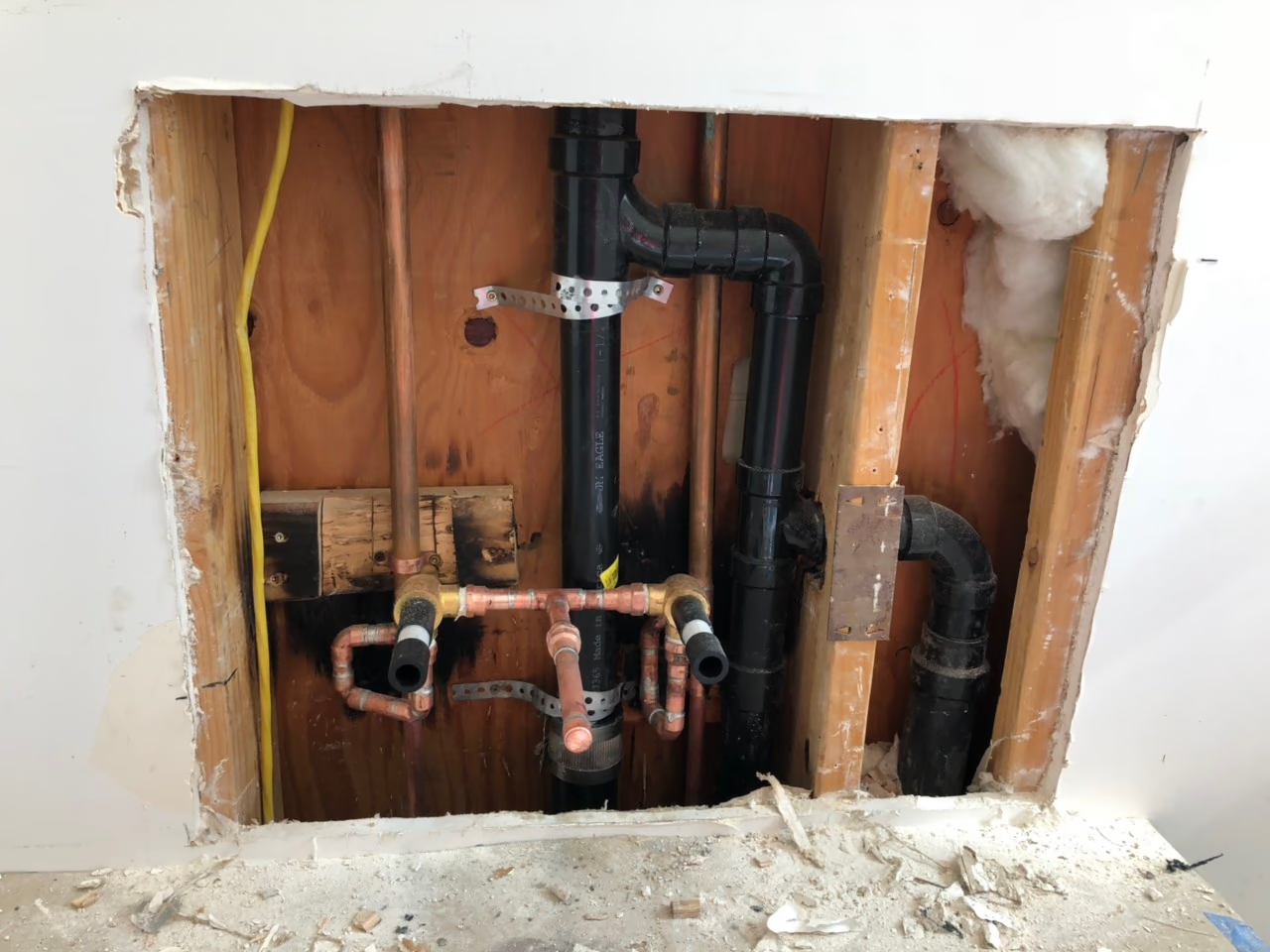
- PEX whole-house repipe: $4,500-$14,000, rough patching included
- Copper option: $8,000-$20,000+, preferred by some owners of higher-end homes
- 2-5 days on site, water back on every evening
- Permit and inspection through LADBS handled for you
- One licensed team for pipes and wiring: rewire while the walls are open
How much does it cost to repipe a house in Los Angeles?
A whole-house repipe in PEX runs $4,500 to $14,000. Copper runs $8,000 to $20,000 and up. Every quote for repiping in Los Angeles comes down to three things: how many bathrooms you have, how hard your walls are to open, and which material you pick. Once we walk the house, the range collapses to one written number. That number is free, and it does not move.
Typical repiping ranges in Los Angeles
| Home size | PEX | Copper |
|---|---|---|
| 1 bath, up to 1,200 sq ft | $4,500-$8,000 | $8,000-$12,000 |
| 2 bath, 1,200-1,800 sq ft | $6,500-$11,000 | $11,000-$16,000 |
| 3 bath or two story | $9,000-$14,000+ | $15,000-$20,000+ |
| Slab leak reroute (single line) | $1,500-$4,000 | $2,500-$5,000 |
These are typical Los Angeles ranges for orientation, not a quote. Every job is priced by its own conditions, so your exact number comes from a free on-site look. Get a free estimate in minutes, or call (818) 421-5290.
PEX or copper: which is right for a California home?
For most homes, we recommend PEX. It costs less, installs faster, and flexes instead of cracking when the ground moves. That flexibility matters in earthquake country. Copper still earns its place, though. It lasts decades, it shrugs off UV and rodents, and some buyers simply expect it. Both materials are approved for repiping across Los Angeles, so the choice is yours.
PEX vs copper at a glance
| Factor | PEX | Copper |
|---|---|---|
| Installed cost | Lower ($4,500-$14,000) | Higher ($8,000-$20,000+) |
| Seismic movement | Flexes with the house | Rigid, joints can stress |
| Lifespan | 50+ years expected | 50-70 years proven |
| Water taste | Neutral | Neutral after break-in |
| Freeze tolerance | High, expands slightly | Lower, can split |
| Best for | Most LA homes | Exposed runs, purist remodels |
These are typical Los Angeles ranges for orientation, not a quote. Every job is priced by its own conditions, so your exact number comes from a free on-site look. Get a free estimate in minutes, or call (818) 421-5290.
Either way, every repipe we run uses home-run lines to a central manifold where it makes sense, so each fixture group gets its own shut-off. A future faucet repair then never kills water to the whole house again.
Do my galvanized pipes need replacing?
If your home went up before 1960 and still has its original galvanized steel supply lines, then yes, they are on borrowed time. Galvanized pipe rusts from the inside out. The zinc coating fails after 40 to 60 years, and most of these pipes passed that mark long ago. Homes in Van Nuys, North Hollywood, and Burbank from that era are our most common repiping jobs in Los Angeles.
- Water pressure drops when two fixtures run at once
- Brown or rusty water after a vacation or a shutdown
- Visible corrosion or white crust at joints and angle stops
- Pinhole leaks that keep appearing in different spots
- Hot water arrives slower and weaker than cold
One more reason not to wait: insurers increasingly ask about original galvanized plumbing. Also, a failed pipe floods first and asks questions later. If a line has already burst, our 24/7 emergency plumbers can stabilize things tonight and plan the repipe tomorrow.
How long does repiping a Los Angeles house take?
Plan for 2 to 5 days of work for a typical single-family home. A one-bath house often finishes in 2 days. A two-story, three-bath home runs closer to 5. Most importantly, you keep living at home: we restore water every evening, and the final inspection follows within days.
- Walkthrough and written priceabout 1 hour
We map every fixture, check access, and hand you the exact number. Free, no pressure.
- Protect and openday 1 morning
Floors and furniture get covered, then we make small, planned openings instead of tearing out whole walls.
- Run the new linesdays 1-3
New PEX or copper goes in through the attic and crawl space, fixture by fixture. Water returns each evening.
- Pressure test and inspectionday 3-5
We test the whole system, then meet the LADBS inspector so you do not have to.
- Patching1-2 days after
Openings get patched to an agreed finish. Paint-ready smoothing is quoted up front if you want it.
Does the price include drywall repair?
Our repipe quotes include rough patching of every opening we make: backing, drywall, tape, and mud. In short, walls come back closed and paint-ready smoothing is listed as its own line if you want it. Some companies leave patching out entirely to look cheaper on paper. Ask any bidder that question before you compare numbers.
We also plan openings to be small and few. Since we route through the attic and crawl space first, a typical repipe needs modest access cuts at fixtures and manifolds, not open trenches through your hallway.
What about slab leaks in Valley homes?
Thousands of San Fernando Valley homes sit on concrete slabs with original copper lines running underneath. When one of those lines pinholes, you get a slab leak: warm spots on the floor, a hissing sound, or a water bill that jumps for no reason. We reroute the failed line overhead for $1,500 to $4,000 instead of jackhammering the slab.
However, a second or third slab leak is the house telling you something. At that point, a full repipe usually beats another spot fix on cost per year. We will show you both numbers and let you decide. The buried water line from your meter is a separate job too, since a repipe replaces the pipes inside the house, not the service line outside. Note too that your sewer line is a separate system; if drains are the problem, start with a sewer camera inspection instead.
Do I need a permit to repipe in Los Angeles?
Yes. A whole-house repipe needs a plumbing permit and a final inspection. In the City of LA that goes through LADBS, while Burbank and Glendale run their own building departments. We pull the permit, schedule the inspection, and meet the inspector. The permit typically adds $150 to $500 depending on the city.
A permit protects you twice. First, an independent inspector verifies the work. Second, when you sell, escrow goes smoother because the upgrade is on record. Unpermitted plumbing is a classic deal-killer in LA real estate.
What does a full repipe actually replace?
Everything on the pressure side of your meter. That means every hot and cold supply line in the walls, ceiling, and crawl space, plus the small parts that fail most often. In most cases the quote also covers new angle stops under every fixture, new supply risers, new hose bibs, and fresh laundry valves. Old shut-offs that no longer close get retired with the pipe they served.
- All hot and cold supply lines, attic to crawl space
- New angle stops and flexible risers at every fixture
- New hose bibs outside and washer valves in the laundry
- A new pressure regulator when street pressure runs high
- Insulation on hot lines where code asks for it
Two things stay out of scope by design. Drains and the sewer lateral are a separate system, and gas lines are their own trade with their own permit. We will tell you plainly if either needs attention while we are under the house, because we are already looking.
Why do LA homes need repiping sooner than elsewhere?
Three local pressures shorten pipe life here. First, our water is hard, and decades of mineral scale narrow old galvanized lines from the inside. Second, the ground moves, and every small quake stresses rigid joints a little more. Third, the housing stock is old: whole Valley neighborhoods went up between 1948 and 1965 with the same steel pipe that is now failing street by street.
That is why repiping in Los Angeles is rarely a luxury remodel item. It is scheduled maintenance arriving 60 years late. The good news: prices for PEX work have stayed reasonable, and a repipe done once is done for the rest of the time you own the house.
How do I prepare for repipe day?
Not much, honestly. We handle protection and access, but a little prep the night before keeps the crew fast and your costs down. Fill a few jugs of drinking water for the daytime shutoffs, and plan showers for the evening once pressure is back.
- Clear the cabinets under sinks so the crew can reach angle stops
- Move fragile items off shelves on walls we flagged for openings
- Keep pets in a closed room or out of the house during work hours
- Leave a parking spot free for the truck and the pipe rack
- Point us to the attic hatch and crawl space entry before day one
During the job you will have water every evening, and if anything feels off at night, the emergency line answers 24/7 either way.
Which parts of the Valley call for repipes most?
The postwar tracts. Van Nuys, Panorama City, and North Hollywood filled with steel-piped homes in the early 1950s, and those systems are now 70 years old. Sherman Oaks and Studio City add the slab-leak pattern, because so many hillside-adjacent homes there sit on concrete slabs with copper underneath. Farther west, Woodland Hills and Northridge ranch homes mix both problems under one roof.
We schedule repiping in Los Angeles neighborhoods like these every week, so the crew knows the housing stock before the truck arrives. That familiarity shortens day one. It also means the quote you get reflects how these specific homes are built, not a national average. Glendale and Burbank owners: your cities issue their own permits, and we handle those counters too.
Why rewire while the walls are open?
A+ Electric & Plumbing, a licensed electrician and plumber serving Los Angeles and the San Fernando Valley, runs both trades on one crew. That changes the math on a repipe. The same pre-1960 house that still has galvanized pipe usually still has original wiring too. Opening walls twice, in two projects, with two contractors, costs real money.
We quote it as one job when it helps you: repiping now, rewiring through the same openings, one schedule, one invoice, one patching pass. The same logic applies to a water heater swap that needs a new circuit. One call covers it: (818) 421-5290.
Frequently asked questions
How much does it cost to repipe a 3 bedroom house in LA?
Bedrooms matter less than bathrooms, since each bathroom adds fixtures and pipe runs. A typical 3-bedroom, 2-bath Valley home runs $6,500 to $11,000 in PEX. Copper roughly doubles that. Your free written quote pins the exact number before any work starts.
Can I stay in my house during a repipe?
Yes, almost everyone does. We shut water off during working hours and turn it back on every evening. Toilets, showers, and the kitchen work each night. The noisy work happens in short stretches, and we keep dust contained with plastic and floor protection.
Does repiping increase home value?
It protects value more than it adds sticker price. Buyers and inspectors in LA flag galvanized pipe fast, and a documented, permitted repipe removes that objection from escrow. Insurers also quote older plumbing higher, so the upgrade pays off twice. Call (818) 421-5290 and we will walk you through it.
How long does a repipe take for a small house?
A one-bath house up to about 1,200 sq ft usually takes 2 days of pipe work plus a patching visit. Water runs again the same evening. The city inspection lands within a few days after, and we meet the inspector for you.
Is PEX safe for drinking water?
Yes. Modern PEX-A and PEX-B are certified for potable water in California and carry NSF listings. Taste stays neutral, and the material does not corrode or leach the way aging metal does. That is exactly why failed galvanized systems get replaced with it every day.
Will PEX survive an earthquake better than copper?
Generally, yes. PEX flexes with ground movement, while rigid copper transfers stress into its soldered joints. After a shake, spot leaks show up in rigid systems more often. For most homes in Los Angeles, that flexibility is a real advantage, not a sales line.
Do you repipe condos and duplexes?
Yes. Condos need HOA sign-off and shared-wall planning, and duplexes need unit-by-unit scheduling so nobody loses water overnight. We handle both regularly, plus small multi-family buildings for property managers. Call (818) 421-5290 for a building walkthrough.
What is the difference between repiping and a reroute?
A reroute replaces one failed line, usually around a slab leak, for $1,500 to $4,000. Repiping replaces the whole supply system at once. If your home has had more than one leak, we will price both honestly so you can compare cost per year.
Does a repipe cover the sewer line too?
No. Repiping covers the pressurized supply lines that feed fixtures. Drains and the sewer lateral are a separate gravity system with its own methods and pricing. If backups are your problem, a sewer camera inspection is the right first step, not a repipe.
Do I have to upgrade my water heater during a repipe?
No, but it is the cheapest moment to do it. The heater is already disconnected while we tie in new lines, so swap labor drops. If yours is past 8 to 10 years old, we will quote the swap separately and you decide.
Who checks that the repipe was done right?
Two parties. First, we pressure-test the entire system before closing a single wall. Second, an independent city inspector signs off under the permit. You also get our written workmanship guarantee: if it is not right, we come back and make it right.
Does homeowners insurance pay for repiping?
Usually not for the repipe itself, since insurers treat old pipe as a maintenance issue. However, policies often cover the water damage a burst causes. After a repipe, many carriers lower your premium or drop old-plumbing surcharges, so send them the permit record once we finish.
What brands of PEX and fittings do you install?
We install established, code-listed systems such as Uponor PEX-A with expansion fittings and comparable copper press systems. Every material carries NSF certification for drinking water in California. If you have a brand preference from a past home, tell us and we will quote it.
From our blog
Guides that answer the questions behind this job
Signs of a Hidden Water Leak, and the Two-Minute Test That Confirms One
The clearest signs of a hidden water leak are a rising bill with unchanged habits and a meter that turns with every tap off.
Read the guide Plumbing guideIs Your Water Pressure Too High? The 80 psi Rule and the Fix
Is your water pressure too high?
Read the guideWhere we do this work
Whole-house repiping across our service areas
Get a free estimate
Tell us what's going on and a licensed tech calls you back fast, with the exact price before any work starts. Electrical and plumbing, one team.
Estimates for quoted work are free. Troubleshooting or diagnosis may carry a $100-$250 service call, credited to your repair when you approve the work.
- Exact price in writing before we start
- Licensed, bonded & insured (CSLB #942404)
- One team for electrical and plumbing
Prefer to talk? Call (818) 421-5290, answered 24/7.