Gas line installation & repair
Gas Line Installation in Los Angeles
A+ Electric & Plumbing handles gas line installation in Los Angeles: new runs for a range or dryer, appliance hookups, upsizing for tankless units, and rerouting during remodels. Since every run differs in length, access, and pipe condition, we price each one on its own and hand you an exact figure in writing. One licensed plumber pulls the permit, runs the line, and pressure tests it before the gas goes back on.
- New appliance gas run: $500-$2,000; gas leak repair: $150-$800
- One licensed team handles the gas line, the pressure test, and the permit, with no finger-pointing
- Smell gas? Leave the house, call from outside, then call SoCalGas and us at (818) 421-5290
- Shutoff valves, sediment traps, and capped abandoned lines done to code across the San Fernando Valley
- We upsize gas lines for tankless water heaters and generators, and exact quotes are free
What gas line installation and repair work do you handle in Los Angeles?
We handle every part of residential and light commercial gas piping: a new gas line for a stove or dryer, rerouted runs for a remodel, shutoff valves, sediment traps, and capping old lines. We run the pressure test and pull the permit too. Every job is done to code by a licensed plumber, with an exact price before we start.
Here is a call we get most weeks. The new gas range arrives, and the delivery crew slides it off the truck. Then they stop: the old fitting sits inches short, so they leave it in the middle of your kitchen and drive off.
Now you have a range you cannot cook on. That is a same day gas line for a stove, and it is exactly what we do. We move the connection, add a shutoff valve, and test it before we leave.
- New gas runs for a range, dryer, BBQ, pool heater, fire pit, or generator
- Rerouting and upsizing existing lines for remodels and new appliances
- A sediment trap and shutoff valve at each appliance, so grit and moisture stay out of the gas valve
- Capping and safely removing abandoned gas lines during a remodel
- The gas line pressure test and the city permit, included in the quote
How much does gas line installation cost in Los Angeles?
A new appliance gas run costs $500-$2,000 and a gas leak repair runs $150-$800. A whole-house gas repipe runs $3,000-$8,000, while a shutoff valve or sediment trap runs $150-$400. Every exact quote is free and in writing, so the price you approve is the price you pay.
What drives the price is distance and access. A short run to a dryer 8 feet from the line is quick and cheap. A run to a backyard fire pit, across a slab or up through the attic, takes more pipe and more hours.
Older Valley homes add a wrinkle. Plenty of 1950s houses in Van Nuys and North Hollywood still run undersized or corroded pipe, so meeting what an inspector wants sometimes means a partial repipe. We show you that number before any work starts.
Gas line work cost in Los Angeles by job type
| Gas line job | Typical Los Angeles range |
|---|---|
| Gas leak repair | $150-$800 |
| New appliance gas run (range, dryer, BBQ, generator) | $500-$2,000 |
| Appliance hookup only (stove or dryer, line in place) | $150-$450 |
| Shutoff valve or sediment trap | $150-$400 |
| Whole-house gas repipe | $3,000-$8,000 |
| Standalone leak test / pressure test | $150-$350 |
| City permit (City of Los Angeles) | $150-$400 |
These are typical Los Angeles ranges for orientation, not a quote. Every job is priced by its own conditions, so your exact number comes from a free on-site look. Get a free estimate in minutes, or call (818) 421-5290.
What if you smell rotten eggs right now?
That smell is the odorant SoCalGas adds to natural gas, so treat it as a live leak. Get everyone outside without touching a switch or a phone, call SoCalGas at 1-800-427-2200 from the street, and only then call us at (818) 421-5290.
Finding and fixing a leak is its own trade with its own tools, so it has its own page. Our gas leak repair guide covers the smell-gas checklist, the SoCalGas red-tag process, and what each fix costs. For most homes the repair lands at $150-$800, day or night.
Gas appliance hookups: stoves, dryers, BBQs
Plenty of calls are not a new line at all, just the last three feet. A gas stove hookup swaps the flex connector, adds a shutoff valve where one is missing, and leak-tests the joint before the range slides back into place. A dryer connection works the same way, and both usually land at $150-$450 when the line is already there.
Outdoor cooking is the fun end of the trade. A BBQ / fire pit gas line runs from the house to a built-in grill island or a fire feature, usually trenched along the patio edge, with its own shutoff at the appliance. That counts as a new run, so it prices like one, $500-$2,000 depending on distance and digging.
Every hookup ends the same way regardless of the appliance: a soap test on each joint, a check of the sediment trap, and the appliance fired up while we watch it burn. If the flame looks lazy or yellow, we adjust it before we leave.
Do you upsize gas lines for tankless heaters and generators?
Yes, and it is one of the most common upgrades we run. A tankless water heater can pull up to 199,000 BTU, and a whole-house generator pulls even more, so both usually need a 3/4 inch or larger gas line. We size the line to the appliance and the meter, then run a pressure test to confirm it feeds everything at once.
Swapping a tank for a tankless unit is the classic case. The old 1/2 inch line that fed a 40,000 BTU tank cannot feed a 199,000 BTU burner. When we handle a tankless water heater installation, upsizing the gas line is part of the same job, on one invoice.
Generators are the other big one. A standby generator that runs your whole house on natural gas needs a dedicated, correctly sized line. Since we are electricians too, our team handles both the gas line and the generator installation and wiring together, so nobody points fingers between trades.
This is where one licensed team saves you money. Instead of a plumber and an electrician blaming each other, the gas line the code requires and the electrical hookup come from the same crew. You get one schedule, one permit package, and one exact price before we start.
Black iron, CSST, or flexible: which gas line is right?
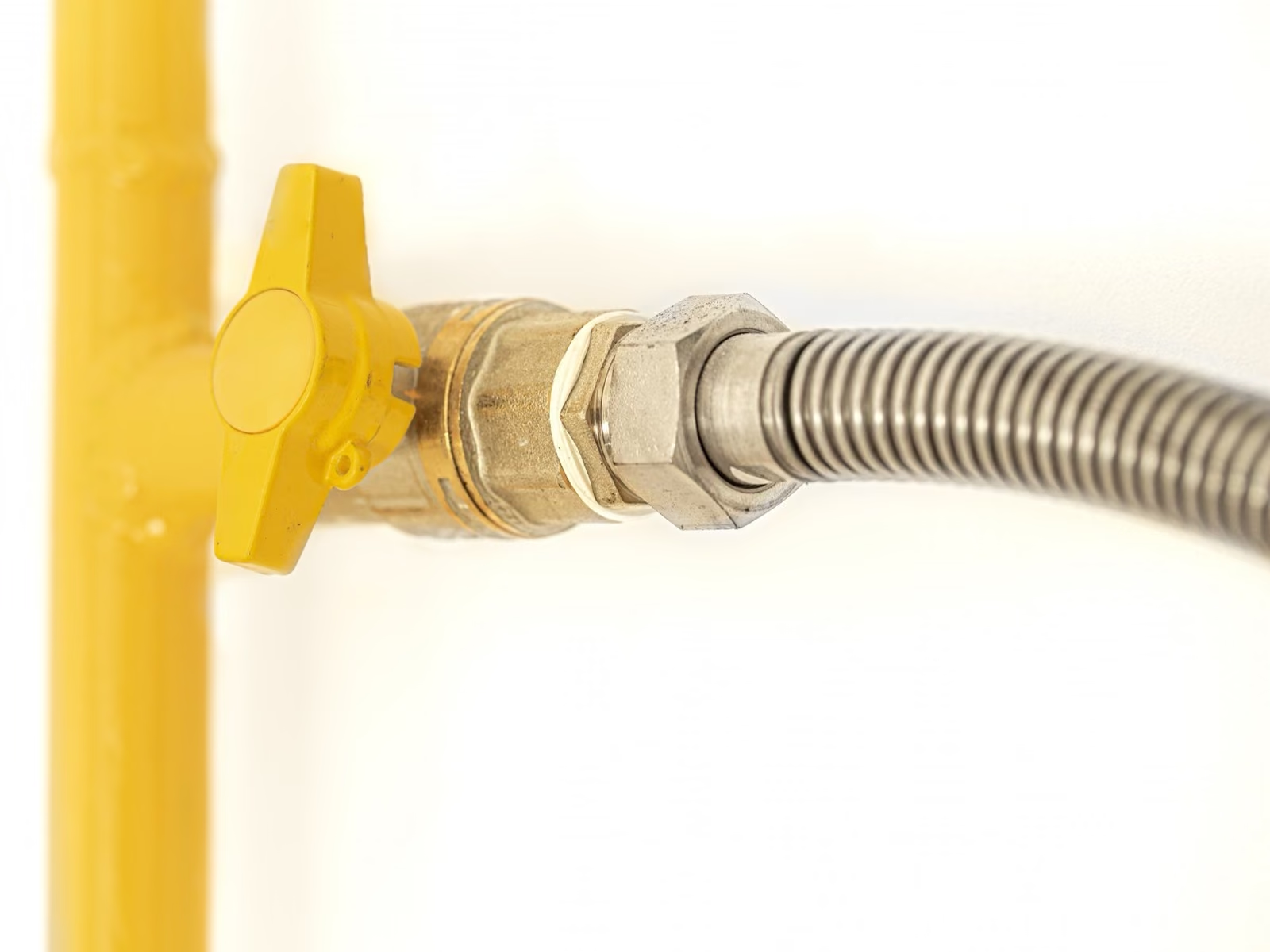
All three are code-approved in Los Angeles, and each has a job it does best. Black iron handles main runs, CSST (the yellow flexible tubing) routes quickly through framing, and a short flexible connector links the final appliance. We pick the material that fits your home and passes inspection, not the one that is fastest for us.
Gas pipe materials compared
| Material | Best for | Good to know |
|---|---|---|
| Black iron pipe | Main lines and long runs | Strong and proven; must stay dry to avoid rust; the pipe is threaded to size |
| CSST (yellow flexible) | Routing through walls, attics, and crawlspaces | Fast to install; must be bonded to your electrical ground for lightning safety |
| Flexible appliance connector | The last few feet to a range, dryer, or heater | For the final connection only; never run it inside a wall |
One detail matters here. CSST must be bonded to your home's electrical grounding system, because a nearby lightning strike can arc through unbonded tubing. That is code, and being both electricians and plumbers means we bond it right, note it for the inspector, and finish the job the code demands in one visit.
Do you need a permit and pressure test for gas line installation in Los Angeles?
Yes. The City of Los Angeles requires a permit for new gas lines and most gas line repairs, and it runs $150-$400. We pull the permit through LADBS, run the required gas line pressure test, and meet the inspector, all included in your quote.
A gas line pressure test is simple and telling. We cap the line, pump it with air, and watch the gauge: a steady needle means the line is tight, and a dropping needle means a leak to find. The inspector wants that gauge to hold before the gas goes on.
Which department signs off depends on your address. In the City of Los Angeles, gas permits run through LADBS, while Burbank and Glendale operate their own building departments, and we handle them all. You can verify our license anytime at CSLB.
How does a gas line installation work, step by step?
Most gas line jobs take one visit, from a few hours for an appliance run to a full day for a repipe. The gas line jobs homeowners hire us for follow five clear steps, and you get a firm written price before step two. Here is each step and how long it takes.
- Free on-site estimateabout 30-45 minutes
We measure the run, check your gas meter capacity, count the fittings, and map the path. You get an exact written price on the spot.
- Permit and materials1-2 days, mostly waiting
We pull the City of Los Angeles or local permit and pick up the right pipe: black iron, CSST, or connectors sized to your appliance.
- Shut off and run the line2-5 hours
We close the gas at the meter, run the new line or make the repair, and add a shutoff valve and sediment trap at the appliance.
- Pressure testabout 1 hour
We cap the line, pump it with air, and watch the gauge hold. Nothing gets connected until the line proves tight.
- Inspection and relightabout 30 minutes on inspection day
We meet the inspector, pass the gas line pressure test, then relight and check every appliance before we leave.
Why does one licensed team beat hiring two contractors?
Gas work touches both trades more often than you would think. A generator, a CSST bond, or an electric range swap: each one crosses from plumbing into electrical. One licensed team means one call, one schedule, one permit package, and one invoice, with no finger-pointing between contractors who have never met.
A+ Electric & Plumbing, a licensed electrician and plumber serving Los Angeles and the San Fernando Valley, handles gas line installation across Los Angeles, from the first measurement to the final inspection. When the inspector asks about the CSST bond, the electrician who wired it is standing right there. That is the whole point of one team.
The same one-call logic covers the rest of your house. Whether you need everyday residential plumbing or a bigger project from our full plumbing services, one crew keeps it simple. From gas lines to a new water heater, you get one schedule and one price.
Frequently asked questions
How much does gas line installation cost in Los Angeles?
Gas line installation in Los Angeles costs $500-$2,000 for a new appliance run and $150-$800 for a gas leak repair. A whole-house gas repipe runs $3,000-$8,000, and the permit adds $150-$400. We measure the run and the meter first, then quote an exact written price for free.
How long does it take to run a gas line?
Most appliance runs take 2-5 hours, and a whole-house repipe usually takes a full day. The time depends on distance and access: a dryer 8 feet from the line is fast, while a run to a backyard fire pit takes longer. We also allow a day or two for the permit before we start.
Do you fix gas leaks the same day?
Yes. Gas leaks are 24/7 emergency work, and most single-leak fixes run $150-$800. If you smell gas, leave the house and call SoCalGas from outside, then call us at (818) 421-5290. Our gas leak repair page walks through the whole process, from red tag to relight.
What is a sediment trap and do I need one?
A sediment trap is a short capped pipe below the gas valve that catches grit, rust, and moisture before they reach your appliance. Los Angeles code requires one at most appliances. A sediment trap and shutoff valve together run $150-$400, and we add both during any new appliance run.
Can you run a gas line for a stove or a dryer?
Yes, a gas line for a stove or dryer is our most common job. A new run costs $500-$2,000 depending on how far it travels and what is in the way. We add a shutoff valve and a sediment trap, then run a pressure test before we connect the appliance.
Can you hook up a gas stove I already bought?
Yes, that is one of our quickest visits. A stove hookup includes a new flex connector, a shutoff valve if the old one is missing or stuck, and a soap test on every joint before the range slides back. With the line already in place it usually runs $150-$450, and we can often fit it in within the week.
Do you need a permit for gas line work in Los Angeles?
Yes. The City of Los Angeles requires a permit for new gas lines and most repairs, and it runs $150-$400. We pull it through LADBS, run the pressure test, and meet the inspector, all in your quote. Burbank and Glendale use their own departments, and we handle those too. Call (818) 421-5290.
What is the difference between black iron and CSST?
Black iron is rigid threaded pipe, best for main runs and long lines. CSST is the yellow flexible tubing that routes quickly through walls and attics. Both are code-approved in Los Angeles. However, CSST must be bonded to your electrical ground, which we handle because we are electricians too.
How do I know if I have a gas leak?
The rotten-egg smell is the clearest sign, since SoCalGas adds that odor on purpose. Other clues include a hissing sound near a line, a higher gas bill, or dead grass over a buried pipe. If you smell gas, leave and call from outside. Then we confirm it with a gas line pressure test.
Can you upsize my gas line for a tankless water heater?
Yes. A tankless unit can draw 199,000 BTU, far more than a tank, so it usually needs a 3/4 inch line. We upsize the line and handle the tankless install on one invoice, so you skip juggling two contractors. A new run runs $500-$2,000. Call (818) 421-5290.
Do you cap gas lines during a remodel?
Yes. When you remove a gas appliance or reroute a kitchen, we cap and pressure-test the abandoned line so it stays safe and to code. Capping a single line is usually part of the larger job, not a big separate cost. We can also remove old dead lines entirely during a repipe.
Is gas or electric cheaper to install for an appliance?
It depends on what your home already has. A gas line for a stove or dryer runs $500-$2,000, while a new electric circuit for the same spot varies with your panel. Since we do both trades, we quote the gas and electric options side by side, so you pick with real numbers.
Do you offer free estimates for gas line work?
Yes, every written estimate is free. We come out, measure the run, check your meter, and count the fittings, then hand you an exact price before any work starts. There is no charge and no obligation. For gas leaks we are available 24/7. Call (818) 421-5290.
From our blog
Guides that answer the questions behind this job
Tankless vs Tank Water Heater: Which One Fits a Los Angeles Home?
Three things decide the tankless vs tank water heater question in Los Angeles: how many people shower at once, how long you plan to stay, and what your garage already has for gas pipe, venting, and power.
Read the guide Plumbing guideEarthquake Gas Shutoff Valve Requirements: What Los Angeles Homeowners Must Know
In the City of Los Angeles, earthquake gas shutoff valve requirements kick in at two moments.
Read the guideWhere we do this work
Gas line installation & repair across our service areas
Get a free estimate
Tell us what's going on and a licensed tech calls you back fast, with the exact price before any work starts. Electrical and plumbing, one team.
Estimates for quoted work are free. Troubleshooting or diagnosis may carry a $100-$250 service call, credited to your repair when you approve the work.
- Exact price in writing before we start
- Licensed, bonded & insured (CSLB #942404)
- One team for electrical and plumbing
Prefer to talk? Call (818) 421-5290, answered 24/7.