
Whole-house & attic fans
Whole House Fan Installation in Los Angeles
A whole house fan pulls cool evening air through the house and flushes hot attic heat, cutting your AC bills. A+ Electric & Plumbing handles whole house fan installation in Los Angeles start to finish: we size the fan, run the circuit, and wire the switch. Every attic is different, so we quote your exact price after a look, never a guess. It complements your AC, and the estimate is free.
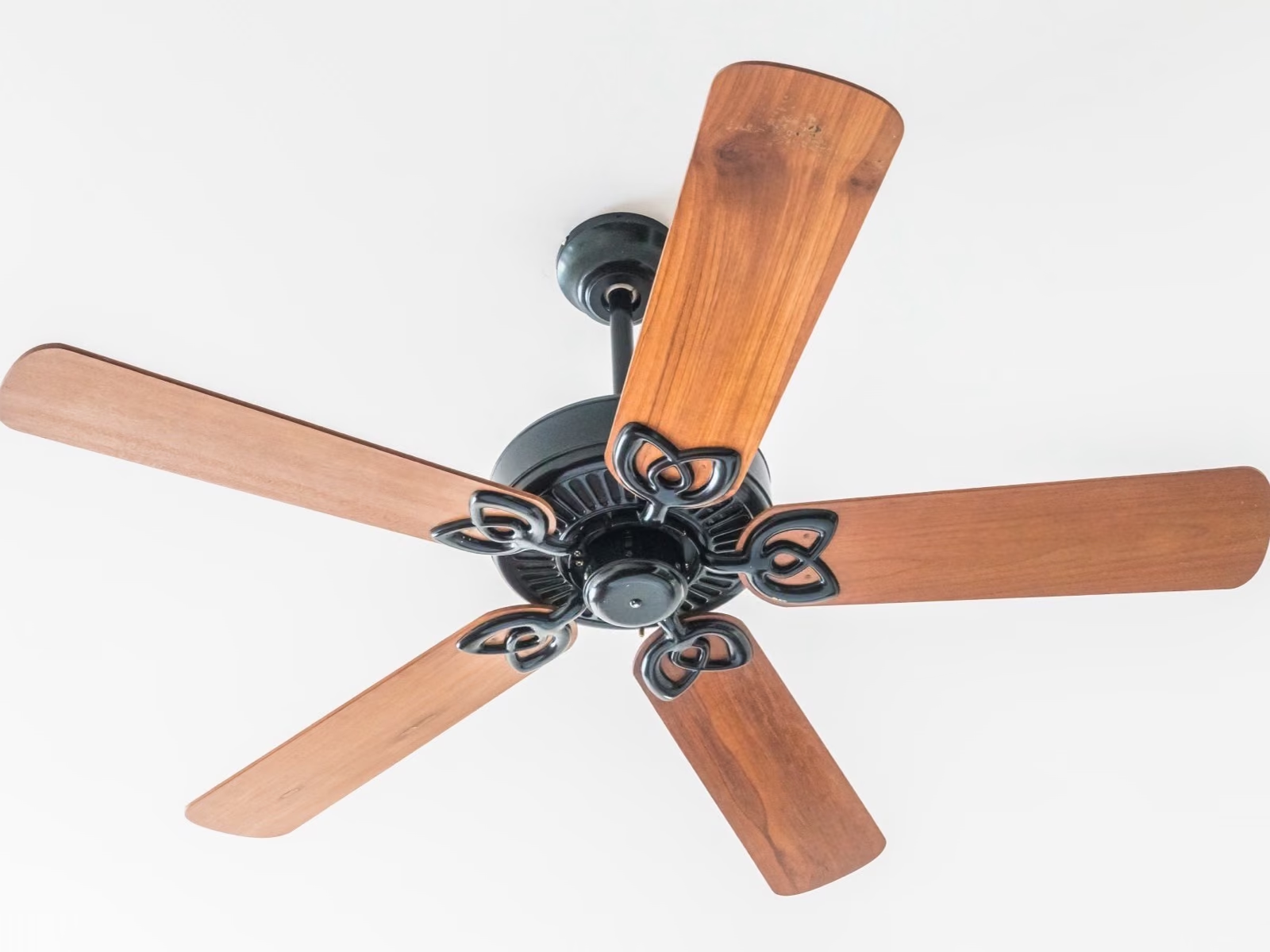
- Licensed whole house fan installation in Los Angeles, to code (CSLB #942404)
- Whole house fan installed $600-$1,800; attic or gable fan $400-$900
- Solar attic fan $500-$1,200; timer or switch add-on $80-$200
- Cuts AC bills by flushing cool evening air and hot attic heat
- One licensed team, one upfront price, before we start
What is a whole house fan, and how does it work?
A whole house fan is a large fan mounted in your ceiling that pulls cool evening air through open windows and pushes hot attic air out the roof vents. It cools your whole house in minutes, not just the attic. On a summer night in Los Angeles, the outside air often drops 20 degrees after sunset while your house stays warm. That trapped heat is exactly what a whole house fan clears out.
Here is how it works. You open a few windows, then flip the fan on. The fan draws cool outdoor air across your living space and up into the attic. From there the air escapes through the roof vents, carrying the day's heat with it. In about 15 minutes the house feels fresh again.
Because it moves so much air, a whole house fan uses far less power than an air conditioner. A typical unit draws about 200 to 700 watts. Central AC can pull 3,000 watts or more. So running the fan for an hour costs only pennies. That is why so many LA homeowners add one.
Whole house fan vs attic fan: what is the difference?
A whole house fan cools the living space where you sit, while an attic fan only cools the attic above you. That is the key difference. Both move air, but they solve different problems. People mix them up all the time, so let us make it clear.
A whole house fan mounts in a ceiling, usually a hallway, and vents into the attic. It pulls cool outdoor air through your rooms. You feel the breeze, and the house cools down fast.
An attic fan, also called a gable fan or roof-mount fan, sits in the attic itself. It pushes hot attic air outside so the attic does not bake your ceilings. You do not feel it directly. Still, it eases the load on your AC and protects your roof.
A solar attic fan does the same attic job, but a small solar panel runs it. So it costs nothing to operate and needs no wiring to the panel. It moves less air than a wired fan, though, and it slows down on cloudy days.
Which one do you need? Many LA homes benefit from both. Run the whole house fan in the evening to flush the rooms, then let an attic fan keep the attic cooler all day. We can wire a whole house fan and add an attic fan in the same visit.
How much does whole house fan installation in Los Angeles cost?
Installing a whole house fan runs $600-$1,800 for the fan installed, a typical Los Angeles range. The price depends on the size of the fan, the model you choose, and how easy the attic is to reach. A quiet ducted unit costs more than a basic direct-mount fan. Either way, we hand you the exact written price before we start.
Whole house fan and attic fan costs, typical Los Angeles ranges
| Service | Typical Los Angeles range |
|---|---|
| Whole house fan installed | $600-$1,800 |
| Attic or gable fan installed | $400-$900 |
| Solar attic fan installed | $500-$1,200 |
| Timer or switch add-on | $80-$200 |
These are typical Los Angeles ranges for orientation, not a quote. Every job is priced by its own conditions, so your exact number comes from a free on-site look. Get a free estimate in minutes, or call (818) 421-5290.
An attic or gable fan runs $400-$900 installed. A solar attic fan runs $500-$1,200, since the panel adds to the parts cost. Adding a timer or a wall switch runs $80-$200 on top. These are ranges, not quotes, because every attic is a little different.
One more thing to know. A whole house fan is an energy upgrade, not just a comfort upgrade. Run it instead of the AC on cool nights, and you shave real money off your summer power bill. That payback is why many LA homeowners call us for one.
How do you size a whole house fan by CFM?
You size a whole house fan by CFM, the cubic feet of air it moves per minute. A good rule for Los Angeles homes is about 2 to 3 CFM for every square foot of living space. So a 1,500 square foot house needs a fan rated around 3,000 to 4,500 CFM. Too small, and it barely cools. Too big, and it gets loud and struggles to vent.
Sizing does not stop at the fan. The attic needs enough open vent area for the air to escape. A rough guide is 1 square foot of net vent opening for every 750 CFM. If the vents are too small, the fan works hard, gets noisy, and can even backdraft your water heater. So we check the venting before we pick the fan.
We also ask how you plan to use it. Want to cool one hallway and the bedrooms? A mid-size fan does the job. Want to flush a whole two-story house fast? Then you need more CFM, and maybe two speeds.
Good whole house fan installation in Los Angeles starts with these numbers, not a guess. We measure your square footage, count your vents, and match the fan to your home. Then we tell you the size and the price before we start. That way the fan is quiet, legal, and does what you paid for.
Ceiling mount or roof mount: which one is quieter?
A ducted or roof-mount fan runs quieter than a standard ceiling fan, because the motor sits farther from the room. Most whole house fans mount right in the ceiling, but some homes do better with a ducted design. A standard ceiling model drops into a hallway between the living space and the attic. It is the simplest to install and the most common choice in LA homes.
A ducted model sits in the attic and connects to a ceiling grille with a short duct. The motor is farther from your ear, so it runs much quieter. If noise bothers you, this is the model to ask about. It costs a bit more, but many homeowners find it worth every dollar.
Then there is the insulated damper. A fan opening lets attic air leak into the house in winter if it is not sealed. A motorized insulated damper closes tight when the fan is off. So you keep the heat in on cold nights and the cool in on hot days. We include one on most jobs, because an open hole in your ceiling wastes energy.
Roof-mount fans are usually attic fans, not whole house fans. They pull heat straight out of the attic through the roof. If your goal is a cooler attic and a lighter AC load, a roof-mount or solar attic fan makes sense. We walk you through the trade-offs, then you pick the right tool.
What about attic ventilation and solar options?
Attic ventilation is the other half of keeping an LA home cool, and a solar attic fan is a popular way to do it. A whole house fan cools the rooms you live in. Attic ventilation clears the heat trapped above your ceiling. On a 95 degree day, an unvented attic can hit 140 degrees. That heat then radiates down into your bedrooms all evening.
A solar attic fan runs on a small rooftop panel. It costs $500-$1,200 installed and adds nothing to your power bill. It moves less air than a wired fan, and it slows when clouds roll in, but it needs no new circuit. Many homeowners like that trade.
A gable fan mounts in the vent at the end of your attic and plugs into attic wiring. It moves more air than a solar unit and runs day or night. It runs $400-$900 installed. We wire it to a thermostat, so it kicks on only when the attic gets hot.
Good passive vents matter too. If your soffit and ridge vents are blocked, no fan can breathe. So we check the vents first. Sometimes clearing them is all your attic needs, and that costs you nothing but a look.
How is the switch or timer wired in?
We wire a whole house fan to its own wall switch or a countdown timer, on a dedicated circuit when the fan needs one. Most fans run on a standard 120-volt circuit, and a mid-size unit fits on an existing 15 or 20 amp line. A large fan may need its own circuit run from the panel.
A simple wall switch works, but a timer is smarter. You set it for 30, 60, or 120 minutes, then fall asleep while it runs. The fan shuts itself off, so it does not blow cool air in all night. You can also pair the timer with a two-speed fan, so a low setting runs quiet at bedtime. A timer add-on runs $80-$200.
Here is where one licensed team helps. Wiring a fan sometimes means adding a circuit, and a tired panel may not have room. If your panel is full, you may need a panel upgrade first. We handle both, so you get one plan, not two contractors pointing fingers.
We pull a permit when the job needs one, and we wire everything to California code. In the City of Los Angeles, electrical permits go through LADBS. That means your fan meets code and stays safe for years.
What happens on whole house fan installation day?
Most whole house fan installations take about half a day, start to finish. On install day, we protect your floors, cut a clean opening, set the fan, and wire the switch. You can stay home the whole time. The typical flow looks like this.
- Walkthrough and priceabout 30 minutes
We check your square footage, attic, and vents, then hand you a written price.
- Cut the ceiling openingabout 1 hour
We frame a clean opening in the hallway ceiling for the fan and grille.
- Set the fan and damperabout 1 to 2 hours
We mount the fan in the attic and fit an insulated damper that seals when it is off.
- Wire the switch or timerabout 1 hour
We run the circuit and connect a wall switch or countdown timer to code.
- Test and clean upabout 30 minutes
We run the fan on every speed, check the airflow, and clean the site.
Do we make a mess? Not much. We cut one clean opening and vacuum the drywall dust. Your hallway looks finished, with a trim grille over the fan, before we leave. Then we show you how the switch or timer works, and we back the job with a written workmanship guarantee.
Who does whole house fan installation in the San Fernando Valley?
A+ Electric & Plumbing, a licensed electrician and plumber serving Los Angeles and the San Fernando Valley, handles whole house fan installation from start to finish. We work across the Valley, from Sherman Oaks to Woodland Hills. Since we are licensed electricians, we size the fan, run the circuit, and wire the switch as one job. One call, one schedule, one price.
Check us out before we start. Our CSLB license is #942404. Licensed work means we install your fan to California code and back it with a written workmanship guarantee.
A whole house fan is one piece of a cooler, cheaper home. See our full range of electrician services in Los Angeles, or read about our residential electrical work. If your panel is full, a panel upgrade can make room for the new circuit.
Ready to cool your house the smart way? Call (818) 421-5290 or Get a Free Estimate. We will measure your home, size the right fan, and give you the price before we start. No surprises.
Frequently asked questions
Does a whole house fan replace air conditioning?
No, a whole house fan works with your AC, not instead of it. It cools your home when the outside air is cooler than inside, usually evening and early morning. It cannot chill hot midday air the way AC does. Many LA homeowners run the fan at night and the AC on the hottest afternoons. Together they cut your cooling bill.
How much can a whole house fan save on my bill?
Savings depend on your home and habits, so we avoid promising a fixed number. A whole house fan draws about 200 to 700 watts, while central AC pulls 3,000 watts or more. Running the fan on cool evenings instead of the AC costs pennies per hour. Over a hot LA summer, many homeowners run their AC far less and see real savings.
How loud is a whole house fan?
It depends on the model. A basic direct-mount fan makes a steady whoosh you will notice in the hallway. A ducted fan sits farther from the room, so it runs much quieter. If noise matters to you, ask us about a quiet ducted model. Proper attic venting also cuts noise, because the fan does not have to strain to move air.
What size whole house fan do I need?
Size it by airflow, measured in CFM. A good rule for LA homes is 2 to 3 CFM per square foot of living space. So a 1,500 square foot home needs about 3,000 to 4,500 CFM. Your attic also needs enough vent area for the air to escape. We measure your square footage and vents, then match the fan before we quote.
Do I need a permit to install a whole house fan?
Often yes, because the job involves electrical wiring. In the City of Los Angeles, electrical permits go through LADBS. Burbank, Glendale, and other cities run their own departments, so timelines differ. We pull the permit and wire everything to California code, so your fan passes inspection. A permitted, code job also protects you when you sell the home.
Will a whole house fan let dust or bugs in?
It can pull in some outdoor air, so run it with clean window screens in place. Close windows in rooms you want to keep sealed. In winter, an open fan opening can leak attic air into the house. That is why we fit a motorized insulated damper that shuts tight when the fan is off. It keeps dust, bugs, and drafts out.
What is the difference between a whole house fan and an attic fan?
A whole house fan cools the rooms you live in by pulling cool outdoor air through the house. An attic fan only cools the attic by pushing hot air out. You feel a whole house fan right away. An attic fan works out of sight to protect your roof and ease the AC load. Many LA homes use both together.
Can you install a solar attic fan too?
Yes. A solar attic fan runs on a small rooftop panel and costs nothing to operate. It runs $500-$1,200 installed in the typical LA range. It moves less air than a wired fan and slows on cloudy days, but it needs no new circuit. We can add one when we install your whole house fan, in the same visit.
Should I add a timer or just a switch?
A timer is usually the better pick. With a plain switch, the fan runs until you remember to turn it off, which can chill the house overnight. A countdown timer lets you set 30, 60, or 120 minutes, then it shuts off on its own. A timer add-on runs $80-$200. We wire either one to code during the install.
How long does installation take?
Most whole house fan installs take about half a day. We check the attic and vents, cut a clean ceiling opening, set the fan and damper, then wire the switch or timer. You can stay home the whole time. A larger fan or a new circuit from the panel can add a few hours. We give you the timeline before we start.
Are you licensed to do the electrical work?
Yes. A+ Electric & Plumbing is a licensed electrician and plumber, CSLB #942404. That matters because a whole house fan needs proper wiring, a correct circuit, and sometimes a permit. We size the fan, run the circuit, and wire the switch as one job. If your panel is full, we can upgrade it too. Call (818) 421-5290 for a free estimate.
From our blog
Guides that answer the questions behind this job
Where we do this work
Whole-house & attic fans across our service areas
Get a free estimate
Tell us what's going on and a licensed tech calls you back fast, with the exact price before any work starts. Electrical and plumbing, one team.
Estimates for quoted work are free. Troubleshooting or diagnosis may carry a $100-$250 service call, credited to your repair when you approve the work.
- Exact price in writing before we start
- Licensed, bonded & insured (CSLB #942404)
- One team for electrical and plumbing
Prefer to talk? Call (818) 421-5290, answered 24/7.