Electrical repair & troubleshooting
Electrical Repair in Los Angeles
Electrical repair in Los Angeles starts with finding the real fault, not guessing at parts. We troubleshoot dead outlets, breakers that trip, flickering lights, and circuits that lost power, then quote the fix in writing before we touch a wire. We credit the $100-$250 service call toward the repair when you go ahead, and a licensed electrician reaches most of LA and the Valley the same day.
- Service call $100-$250, and we credit it toward the repair
- Dead outlets, tripping breakers, flickering lights, and partial power, found and fixed
- Labor $58-$115 per hour after diagnosis, with the price in writing first
- Same-day slots most days, 24/7 for sparks and burning smells
- CSLB #942404, licensed electricians based in Tujunga: (818) 421-5290
How much does electrical repair cost in Los Angeles?
Electrical repair in Los Angeles usually lands between $150 and $600 once we know the cause. The visit starts with a $100-$250 service call that covers the full diagnosis, and we credit that fee toward the repair when you approve the work. After that, labor runs $58-$115 per hour plus parts, with the whole number in writing before we start.
Common electrical repair prices in Los Angeles
| Repair | Typical range |
|---|---|
| Service call and diagnosis, credited toward the repair | $100-$250 |
| Labor after diagnosis | $58-$115 per hour |
| Dead outlet or switch repair | $100-$300 |
| Breaker swap at the panel | $150-$350 |
| Flickering or dimming light circuit | $150-$450 |
| Aluminum wiring pigtails | $30-$60 per connection |
| Scorched outlet with damaged wiring | $200-$500 |
These are typical Los Angeles ranges for orientation, not a quote. Every job is priced by its own conditions, so your exact number comes from a free on-site look. Get a free estimate in minutes, or call (818) 421-5290.
Small jobs stay small when the wiring cooperates. A breaker swap or a burned-out receptacle rarely takes more than an hour. The price climbs when the fault hides inside a wall or a buried junction box, and we tell you the moment the scope changes.
What makes a breaker trip again and again?
When a breaker keeps tripping, the breaker itself is rarely the broken part. It trips because something downstream pulls more current than the wire can carry, or leaks current where it should not. The usual suspects: an overloaded circuit, a failing appliance motor, a loose connection building heat, or a dead short.
The pattern tells us a lot over the phone. A breaker that trips the moment the microwave and toaster run together points to a plain overload. One that trips at random with nothing obvious running suggests a loose connection or a nail through a cable. An AFCI that trips on one bedroom circuit often reacts to a worn cord or a cheap dimmer on that run.
Swapping the breaker without finding the cause just moves the problem, and fitting a bigger breaker on the same wire invites a fire during the first hot week. We test the circuit first. If the wiring checks out and the breaker itself trips weakly, hums, or refuses to reset, a straightforward circuit breaker replacement at the correct rating closes the case.
Why are my lights flickering or dimming?
Flicker has three broad causes, and the fix depends on which one you have. A single fixture that flickers points to the bulb, the dimmer, or the fixture wiring. A whole room points to a loose connection somewhere on that circuit. The whole house dimming when the AC kicks on points to the panel or the utility service, and that one deserves attention soon.
Loose connections cause most of it. Copper expands and contracts every time a circuit heats and cools, and after a few decades a screw terminal or a wire nut can work loose. The bad joint arcs, the light flickers, and the connection builds heat inside the wall. We open the boxes along the affected run and tighten or remake each joint.
Dimming across the whole house can also mean a failing service neutral, which lives on the utility's cable. We test at the panel and tell you which side of the meter owns the problem. If it belongs to LADWP, you get that finding in writing to hand them.
Half the room is dead: outlets and partial power
A dead outlet with the breaker still on usually means the circuit lost its path somewhere upstream. The most common cause in LA homes is a tripped GFCI hiding in the garage, a bathroom, or an outdoor box that protects more outlets than anyone remembers. The runner-up is a backstab connection, the push-in wire fitting on the back of many 1970s and 80s receptacles, which loosens with age until the whole downstream run goes dark.
Partial power is stranger: half the house weak, lights bright in one room and dim in the next, appliances acting confused. That pattern often means one leg of your 240-volt service dropped at the panel or out at the weatherhead. Unplug sensitive electronics and call, since our emergency electricians treat a lost leg as a right-now problem at any hour.
Electrical troubleshooting is mostly disciplined elimination. We map which outlets died together, test at the accessible points along the circuit, and close in on the failed span without opening walls on a hunch. Most dead-outlet calls end within the first hour, at the low end of the price table above.
Buzzing panels and scorched outlets: stop and call
A panel that buzzes, crackles, or smells hot has an arcing connection inside. The same goes for an outlet with brown scorch marks or a faceplate warm to the touch. These faults start house fires, so they earn a same-day visit rather than a slot on next week's schedule.
Scorching at one outlet usually means a loose termination cooked the device and the first few inches of insulation. We replace the receptacle, cut the conductors back to clean copper, and check the rest of the circuit for the same sloppy work, because whoever left one loose screw rarely stopped at one.
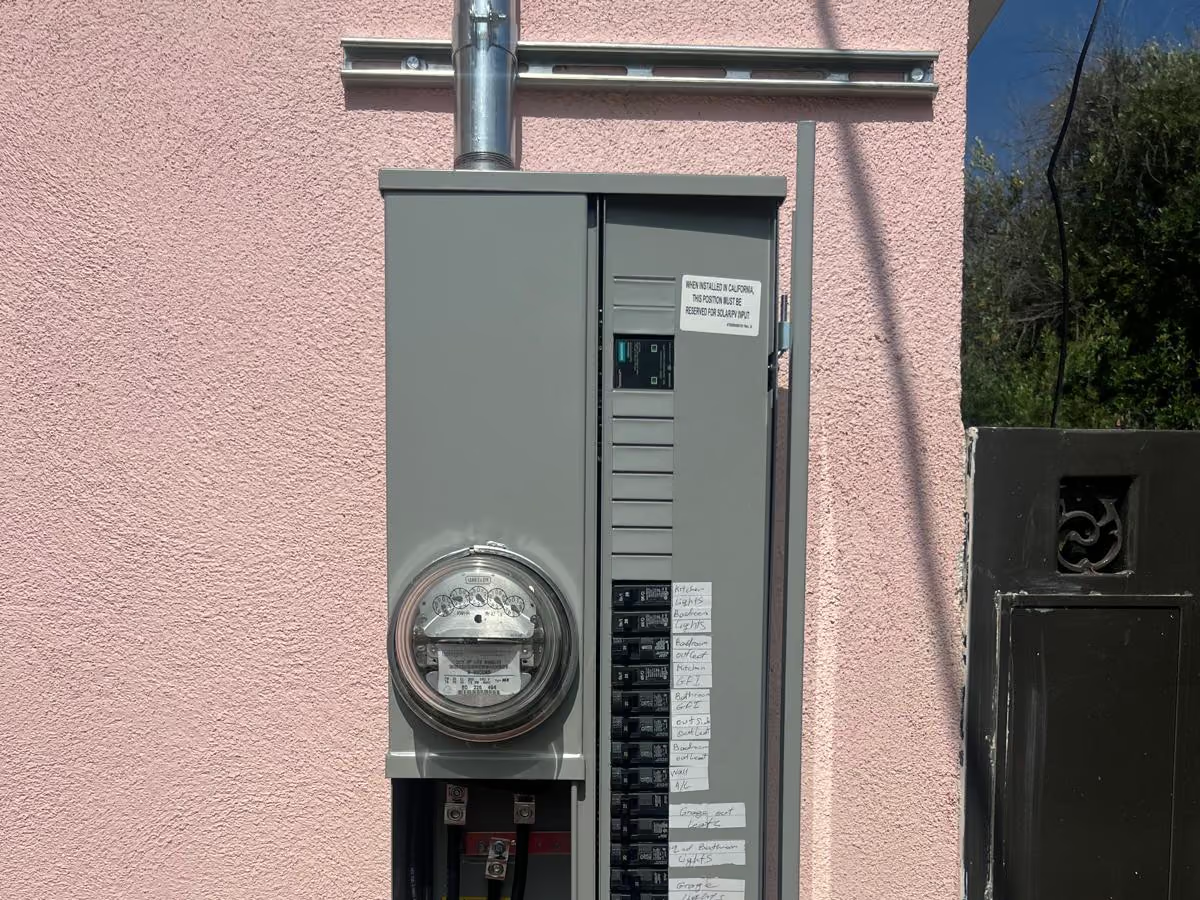
Buzzing inside the panel points to a breaker riding loose on the bus, a corroded lug, or, in Zinsco and Federal Pacific equipment, a design that never held up. We repair what a repair can honestly fix and say so plainly when the panel itself is the hazard.
Can you repair aluminum wiring without rewiring the house?
Houses wired between about 1965 and 1973 often carry aluminum branch circuits, and aluminum expands more than copper every time a circuit heats up. Connections work loose over the decades, which is why these homes show up so often with flickering lights and warm switch plates. Insurers ask about it for a reason.
The proven fix short of rewiring is a copper pigtail at every connection. We splice a short copper lead onto each aluminum conductor with a connector rated for that pairing, AlumiConn is the common brand, then land the copper on the outlet, switch, or breaker. Priced per connection, the repair costs a fraction of new wiring.
Pigtails cure the connections, not the wire, so a house with brittle insulation or faults spread across many circuits is a better candidate for house rewiring. We price both paths and tell you which one we would pick in our own home.
What happens during an electrical repair visit?
Most repair visits run one to three hours from knock to cleanup, and you get the diagnosis, the written price, and usually the fix in one trip. The truck carries the breakers, receptacles, GFCIs, and wire that the common repairs call for.
- Call and describe the symptom5 minutes
You tell us what died, what flickers, and when it started. Half the time that narrows the fault to one or two circuits before we arrive.
- Panel check first15-30 minutes
We open the panel, look for heat, corrosion, and loose terminations, and confirm which breaker feeds the problem area.
- Isolate the fault30-60 minutes
We test outlets and junctions along the circuit, splitting it into halves until the failed span or device shows itself.
- Written quote10 minutes
You see the exact repair price with the service call already subtracted, and you approve it before any repair starts.
- Repair and retest30-90 minutes
We make the repair, load-test the circuit, and confirm the original symptom is gone before we pack up.
- Label and walkthrough10 minutes
We label the breaker correctly, show you the failed part, and note anything else the panel revealed that deserves watching.
When does a repair turn into a replacement?
One bad breaker in a modern panel is a repair. A Zinsco or Federal Pacific panel with a scorched bus is not, because those breakers have a documented habit of failing to trip, and sinking money into obsolete parts is a bad bet. At that point we quote an electrical panel upgrade instead of another patch.
The same math applies to wiring. Cloth insulation that crumbles at a touch, repeated shorts inside the same wall, or knob and tube under the floor all push the answer toward a rewire rather than a third fix on the same run. A good repair should buy you years, not weeks.
Our rule is simple: we quote the honest repair when it will hold, and we show you the replacement number when it will not. You decide with both prices in front of you. The small fix wins most of the time, which is exactly why people believe us when we recommend the big one.
Why hire A+ Electric & Plumbing for electrical repair in Los Angeles?
A+ Electric & Plumbing is a licensed electrician and plumber based in Tujunga, serving Los Angeles and the San Fernando Valley under CSLB #942404. That matters for repair work because the person tracing your fault is a licensed tradesperson rather than a parts-swapper on commission, and our 1-year workmanship guarantee covers the fix in writing.
You can verify the license anytime with the Contractors State License Board. If the diagnosis turns up plumbing trouble in the same wall, which happens more often than you would think with slab leaks and water heaters, the same company handles it without a second contractor.
We handle electrical repair across Los Angeles seven days a week, and the rest of our electrician services cover everything from panels to EV chargers. Call (818) 421-5290 or book a free estimate online.
Frequently asked questions
How much does it cost to have an electrician find a problem?
The service call runs $100-$250 depending on where you are and the time of day, and it covers the full diagnosis. When you approve the repair, we credit that fee toward the work, so the troubleshooting costs you nothing extra if we do the fix. The repair price goes in writing before we touch anything.
Why does my breaker trip when the AC kicks on?
A central air compressor pulls a hard surge of current at startup. A tired breaker, an undersized circuit, or a failing capacitor inside the unit can each trip on that surge, and each has a different fix. We test at the panel to find which one you have, then repair the electrical side or point you to an honest HVAC tech.
My lights dim for a second when the fridge starts. Is that normal?
A brief dip when a motor starts is normal on a shared circuit. Steady dimming, flicker that lingers, or lights that brighten in one room while they dim in another is not, and that last pattern suggests a loose neutral, which deserves a same-day look. When in doubt, describe it to us by phone and we will tell you honestly.
Half my outlets died and no breaker tripped. What happened?
Check for a tripped GFCI first: garage, bathrooms, kitchen, and outdoor boxes, since one GFCI often protects a surprising chain of outlets. If resetting those does nothing, the likely cause is a failed connection at one receptacle that cut power to everything downstream. We trace the break and repair it, usually within the first hour.
Is a warm outlet or switch plate dangerous?
Treat it seriously. A dimmer running a heavy load gets mildly warm by design, but an ordinary outlet or switch should stay cool. Heat means a loose or overloaded connection building toward failure, so stop using that outlet, flip the breaker off if the plate feels hot, and have a licensed electrician open it up soon.
Can I replace a breaker myself?
California lets homeowners pull permits for electrical work on their own home, but the panel is the wrong place to learn. The service lugs stay live even with the main off, and the wrong breaker type or rating creates a hazard that looks finished. A licensed electrician swaps it safely in under an hour.
Do you repair Federal Pacific and Zinsco panels?
We will diagnose them and make safe repairs where they hold, but we stay honest about the ceiling: both brands have documented failure-to-trip problems, and replacement parts are old stock at best. Most owners come out ahead replacing the panel once repairs start stacking up. We show you the condition and give you both numbers.
Should I repair aluminum wiring or rewire the house?
It depends on the condition of the wire, not just the metal. Aluminum circuits with sound insulation do well with copper pigtails at every connection, priced per point. Wiring with brittle insulation, past overheating, or faults on many circuits argues for a rewire. We inspect a sample of connections and price both paths honestly.
Can you come out today?
Usually, yes. We keep room in the schedule for same-day electrical repair in Los Angeles and the Valley, and true emergencies, sparks, burning smells, a dead panel, jump the line at any hour. Call (818) 421-5290 and describe the symptom, and we will tell you straight whether it can wait for a normal slot.
How long does it take to find an electrical fault?
Most faults show themselves inside the first hour or two, since the panel check plus circuit testing finds the majority of dead outlets and tripping breakers quickly. A fault buried in a wall or a splice hidden above a ceiling takes longer, and we tell you the moment the scope changes rather than letting hours quietly pile up.
Do two-prong outlets mean my house needs a rewire?
Not automatically. Code allows swapping a two-prong outlet for a GFCI-protected three-prong marked 'No Equipment Ground', which adds shock protection without new wire. It does not add a true ground, so surge strips and some electronics still want grounded circuits. Whether that matters enough to justify a rewire depends on how you use the rooms.
From our blog
Guides that answer the questions behind this job
Breaker Keeps Tripping? What the Pattern Tells You Before You Reset It Again
A breaker keeps tripping for one of three reasons: an overload, a short circuit, or a ground fault.
Read the guide Electrical guideWhy Electricians Replace a Federal Pacific Panel Instead of Repairing It
Electricians replace a Federal Pacific panel because its Stab-Lok breakers have a documented history of failing to trip during an overload.
Read the guide Electrical guideElectrical Safety Inspection Checklist: What a Real Inspection Covers in an Older LA Home
An electrical safety inspection checklist for an older Los Angeles home covers the panel first.
Read the guideWhere we do this work
Electrical repair & troubleshooting across our service areas
Get a free estimate
Tell us what's going on and a licensed tech calls you back fast, with the exact price before any work starts. Electrical and plumbing, one team.
Estimates for quoted work are free. Troubleshooting or diagnosis may carry a $100-$250 service call, credited to your repair when you approve the work.
- Exact price in writing before we start
- Licensed, bonded & insured (CSLB #942404)
- One team for electrical and plumbing
Prefer to talk? Call (818) 421-5290, answered 24/7.