
Generator installation
Generator Installation in Los Angeles
Generator installation in Los Angeles works best with one licensed team handling the wiring, the gas line, and the permit. We install whole-home standby generators for houses across the San Fernando Valley. Your generator size, gas line, and panel all shape the job, so you get a custom quote in writing, never a guess. A+ Electric & Plumbing holds one license for both trades, which means one call and no finger-pointing.
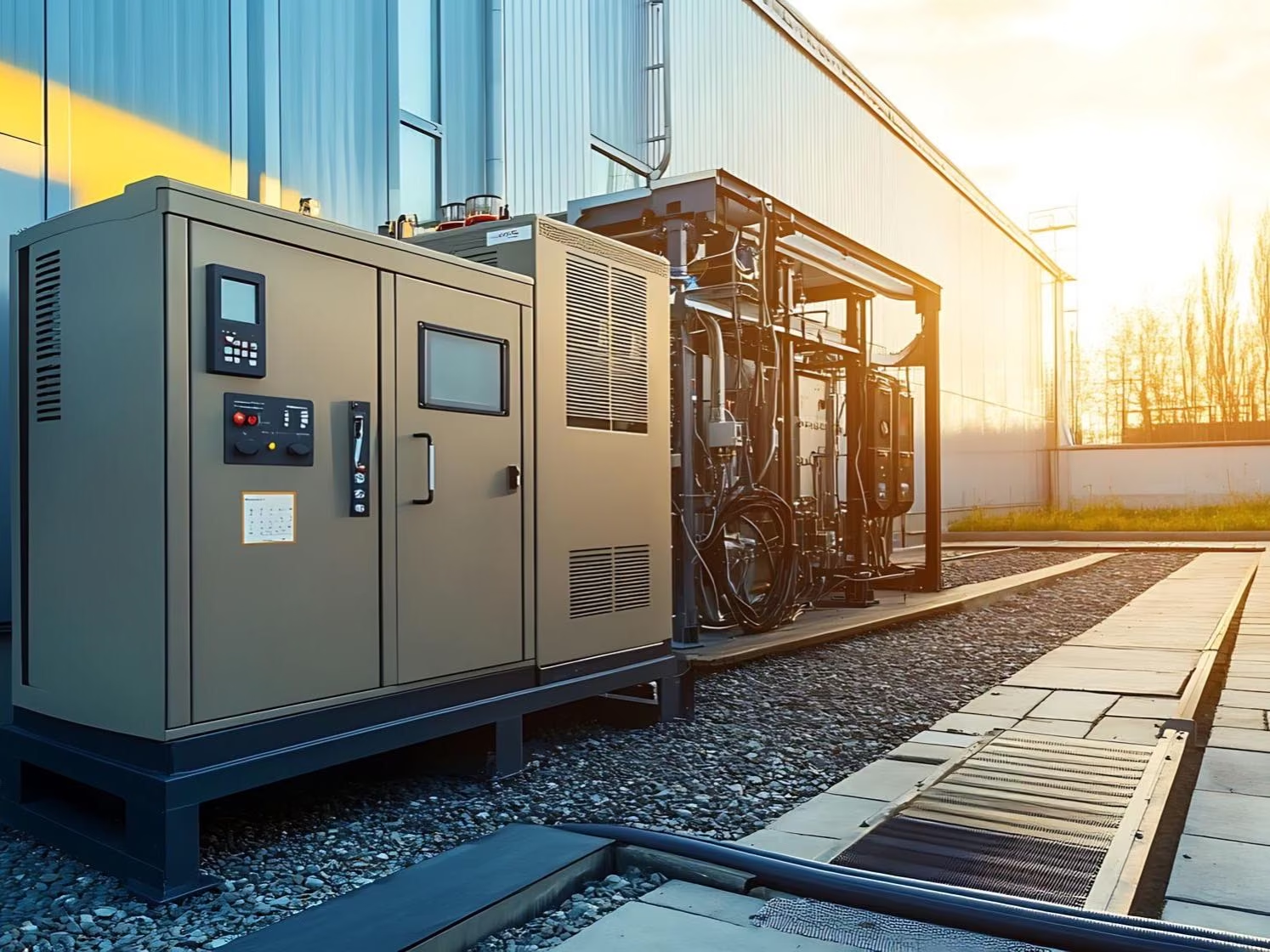
- Whole-home standby generators installed, usually $8,000-$18,000 by size
- One licensed crew wires the generator and runs the gas line, with no finger-pointing
- An automatic transfer switch starts backup power within seconds, even when you are away
- We pull the LADBS or city permit and set the unit to code
- CSLB #942404, based in Tujunga: free estimates, call (818) 421-5290
How much does generator installation cost in Los Angeles?
Generator installation in Los Angeles usually runs $8,000-$18,000 for a whole-home standby unit, installed. Bigger 22kW+ units run $15,000-$22,000. Your total depends on the generator size, the gas line, and the transfer switch, so you get one upfront price in writing before we start.
Typical generator installation costs in Los Angeles
| Type of job | Typical Los Angeles range |
|---|---|
| Whole-home standby generator, installed | $8,000-$18,000 |
| Larger 22kW+ standby generator, installed | $15,000-$22,000 |
| Automatic transfer switch | $900-$2,500 |
| Portable generator interlock kit | $500-$1,500 |
| Gas line work for the generator | $500-$2,000 |
| City permit | $150-$500 |
These are typical Los Angeles ranges for orientation, not a quote. Every job is priced by its own conditions, so your exact number comes from a free on-site look. Get a free estimate in minutes, or call (818) 421-5290.
The generator itself is the biggest line item. A 22kW+ unit that backs up the whole house costs more than a smaller model that covers only the essentials. Labor, the pad, and the permit make up the rest.
A few things move the price. First, many older homes in Van Nuys and Sherman Oaks need a panel upgrade before the generator ties in. Second, a long gas line run adds cost, and we flag all of it in writing before we start.
We install trusted brands like Generac, plus other major makers. A good unit paired with a right-sized gas line and transfer switch is what makes backup power reliable. Cheap corners show up the first time you actually need it.
Do I need a whole house generator in Los Angeles?
A whole house generator makes sense when an outage really hurts: spoiled food, a home office that must stay online, or a medical device that needs steady power. In Los Angeles, wildfire shutoffs and grid strain can cut power for hours or days. A backup generator keeps your lights, fridge, and AC running, and most homes do well on a whole-home standby unit.
The homes that feel an outage hardest are the ones with a load that cannot wait. A full fridge and freezer start to turn after a few hours, a home office goes offline, and phones drain with no way to charge. A standby unit picks the load back up on its own within seconds, so the disruption barely registers.
Medical needs raise the stakes. When someone in the house depends on a CPAP, an oxygen concentrator, or a medication fridge, steady power is not optional. A standby generator that starts automatically covers that gap whether or not anyone is home to flip a switch.
Some homes feel an outage more than others, and each one has a different priority list. A house that runs a home office, a well pump, or a refrigerator full of medicine treats steady power as a necessity, which raises how much backup makes sense.
You do not have to back up everything. If you only want the fridge, a few lights, and the internet running, a smaller unit costs less. If the power is already out tonight, though, that is a job for an emergency electrician, not a new install.
Standby vs portable generator: which one is better?
The first big choice is standby versus portable. A standby generator is permanent, starts automatically, and can power the whole house on natural gas. A portable costs less up front, but you start it by hand and refill the gas yourself. For hands-off backup during a multi-day outage, standby wins.
Standby vs portable generator at a glance
| Feature | Whole-home standby | Portable plus interlock |
|---|---|---|
| Startup | Automatic, within seconds | Manual, you start it |
| What it powers | Whole house or most circuits | A few chosen circuits |
| Fuel | Natural gas or propane, no refills | Gasoline, refill by hand |
| Runs when you are away | Yes | No, someone must be home |
| Installed cost | $8,000-$18,000 | $500-$1,500 for the interlock kit |
| Permit and inspection | Yes | Yes, for the interlock |
These are typical Los Angeles ranges for orientation, not a quote. Every job is priced by its own conditions, so your exact number comes from a free on-site look. Get a free estimate in minutes, or call (818) 421-5290.
The interlock kit is the safe, legal way to run a portable generator. It is a metal plate on your panel that blocks back-feed, so power cannot flow onto the grid and hurt a lineworker. We install the kit and inlet for $500-$1,500.
Portable power fits a renter or a tight budget. You keep the fridge and a few lights going, then store the generator in the garage between storms. Still, you must be home to roll it out, start it, and refuel every several hours.
A standby unit skips the manual steps. It self-tests weekly, runs off your gas line, and starts while you are at work or asleep. For many families, that hands-off backup is worth the higher install cost.
What size generator do I need for my house?
Generator size comes down to what you want to run. To cover the essentials, the fridge, some lights, outlets, and the internet, a 10kW-14kW unit is often enough. To run the whole house, including central AC in the Valley heat, plan on 22kW or more. We do a load check and size it right, so you never buy too much or too little.
A load check is simple. First we add up the big draws: AC, a well or pool pump, an electric range, and any medical gear. We then match the generator to that number, plus a little headroom.
Homes in Encino, Tarzana, and Woodland Hills lean hard on central AC all summer, so running that AC through an outage means a bigger unit. Either way, you get the honest trade-off before you spend a dollar.
Do not guess on size. An oversized unit wastes money and gas, while an undersized one trips and shuts down under load, so we base the number on your real loads instead of a rule of thumb.
Who runs the gas line, natural gas or propane?
Most standby generators in Los Angeles run on natural gas from your existing meter, so there is no tank and no refills. Homes without gas service use propane instead. Either way, the generator needs a correctly sized gas line, and that is a licensed plumbing job. We hold licenses for both trades, so one crew runs the gas line and wires the generator in a single visit.
This is where most companies hand you off. The electrician wires the unit, then a separate plumber comes another day for the gas. If something is off, each one blames the other.
We skip that. One licensed team handles the gas line and the wiring, which keeps it to one call, one schedule, and one invoice, with no finger-pointing.
A generator is a big new gas load. If the line is too small, the unit starves and shuts down right when you need it, so we measure the run, check your meter, and upsize the line where needed, usually $500-$2,000.
What does an automatic transfer switch do?
The automatic transfer switch is the brain of a standby system. It watches the grid, and the moment power drops, it disconnects your house from the utility and starts the generator. When the grid returns, it switches you back and shuts the generator down. Installed, the switch runs $900-$2,500.
That switch does more than add convenience. It stops your generator from back-feeding the grid, which protects utility crews on the lines. Code requires it on every permanent standby install, and the city inspector checks for it.
We size the switch to your panel and your generator. For a whole-home setup, that often means a service-rated switch at the meter. If you back up only a few circuits, a smaller sub-panel switch does the job.
Many standby units add a monitor you check from your phone. It tells you when the weekly test ran and warns you if service is due. That is handy when you travel and want to know the backup is ready.
Do I need a permit, and where can the generator go?
Yes, a standby generator needs a permit and a final inspection almost everywhere in Los Angeles. The permit itself runs $150-$500. Placement matters too, because the unit must sit a set distance from windows, doors, and vents so the exhaust stays outside. We handle the permit and set the generator to code.
In the City of Los Angeles, we pull the permit through LADBS. Burbank, Glendale, and Pasadena run their own building departments with their own rules, and knowing each one is why our installs pass the first time.
Standby generators are not silent, but modern units run about as loud as a central AC condenser. Most cities cap noise, and many HOAs add their own limits, so we place the generator to respect the setbacks and keep the sound away from bedrooms and the neighbor's fence.
What happens during a generator installation?
A generator installation in Los Angeles usually takes one to three days on site, plus lead time to order the unit and pull the permit. First we size and quote the job. Next we set the pad, run the gas and wiring, and install the transfer switch. Last, the city inspector signs off.
- Free estimate and load checkabout 1 hour
We visit, look at your panel and gas meter, and size the generator to what you want to run.
- Permit and equipment ordera few days to 2 weeks
We pull the LADBS or city permit and order your generator and transfer switch.
- Pad and placementabout half a day
We set a level pad or gravel base and place the unit to meet code setbacks.
- Gas line and wiringabout 1 day
One crew runs and sizes the gas line, then wires the generator to your panel.
- Transfer switch and startupabout 2-3 hours
We install the automatic transfer switch, then start and test the whole system.
- City inspectionabout 1 hour
The inspector signs off, and we show you how the monthly self-test works.
You get a firm price before any work starts. We also walk you through the monthly self-test and yearly service, so the unit is ready the next time the grid drops.
Why hire A+ Electric & Plumbing for generator installation?
A+ Electric & Plumbing, a licensed electrician and plumber serving Los Angeles and the San Fernando Valley, handles generator installation from the panel to the gas line. That means one licensed crew, one permit, and one invoice. We are based in Tujunga, hold CSLB license #942404, and back our work in writing. One call covers the whole job, from sizing to the final inspection.
You can check our license anytime with the CSLB. If you want the electrical side handled too, our Los Angeles electrician page covers the full range, from panels to EV chargers.
To plan your backup power, get a Free Estimate: we will size the generator, quote the gas line, and put one honest price in writing. Call (818) 421-5290 to get on the schedule.
Frequently asked questions
How much does a whole house generator cost in Los Angeles?
A whole house generator usually costs $8,000-$18,000 installed in Los Angeles. Larger 22kW+ units run $15,000-$22,000. Your price depends on the generator size, the gas line length, and whether your panel needs work first, so you get one upfront price in writing before we start.
How long does generator installation take?
Most generator installs take one to three days on site. Before that, expect a few days to two weeks to order the unit and pull the permit. The on-site work covers the pad, the gas line, the wiring, the transfer switch, and testing. A city inspector does the final check at the end.
Do I need a permit for a generator in Los Angeles?
Yes, a generator install needs a permit and a final inspection in almost every LA-area city. The permit typically runs $150-$500. In the City of Los Angeles, we pull it through LADBS, while Burbank and Glendale use their own departments. We handle that paperwork start to finish. Call (818) 421-5290.
Can a standby generator run on natural gas?
Yes, most standby generators in Los Angeles run on natural gas from your existing meter. That means no tank and no refills. Homes without gas service can run on propane instead. Either fuel needs a correctly sized gas line, which our licensed crew runs in the same visit as the wiring.
What size generator do I need to run my whole house?
To back up a whole house with central AC, plan on a 22kW+ unit. To cover just the essentials, like the fridge, lights, and internet, a 10kW-14kW unit often works. The right size depends on your biggest loads, so we run a load check first and match the generator to your real numbers.
Do you install Generac generators?
Yes, we handle Generac installation in Los Angeles, along with other major brands. Generac makes a wide range of air-cooled and liquid-cooled standby units, so there is a size for most homes. We help you pick the model that fits your loads and budget, then install it to code. Call (818) 421-5290.
How far from the house does a standby generator sit?
A standby generator must sit a set distance from windows, doors, and vents, so the exhaust stays outside. The exact setback depends on the model and your city code. Most units also need clear space around them for airflow and service. We place yours to meet code and keep the noise away from bedrooms.
Are standby generators loud?
Modern standby generators run about as loud as a central AC unit, not a construction site. They also run a short weekly self-test, usually during the day. Most cities cap generator noise, and many HOAs add stricter limits, so we set the unit to respect them and point the sound away from neighbors.
Will a generator work if I lose power while I am away?
Yes, a standby generator with an automatic transfer switch starts on its own, even when no one is home. It senses the outage, switches your house off the grid, and runs until power returns. That keeps your fridge, security system, and any medical gear going while you travel. Call (818) 421-5290.
Do I need to upgrade my panel for a generator?
Sometimes. Many 1950s-70s homes in the Valley still run older panels that need an upgrade before a whole-home generator ties in. A newer 200-amp panel usually has the room already. We check your panel during the estimate and flag any panel upgrade up front, so the cost is never a surprise.
How often does a standby generator need service?
Plan on a yearly service, plus a quick monthly look. The unit runs a self-test on its own each week, which keeps the battery and engine ready. Once a year, we change the oil, filter, and spark plugs and check the transfer switch. Regular service keeps the warranty valid and the generator reliable.
Can you install the generator and the gas line in one visit?
Yes, and that is our main advantage. We are licensed for both trades, so one crew wires the generator and runs the gas line together. You avoid the usual back-and-forth between a separate electrician and plumber, and that means one call, one schedule, and no finger-pointing. Call (818) 421-5290.
From our blog
Guides that answer the questions behind this job
Where we do this work
Generator installation across our service areas
Get a free estimate
Tell us what's going on and a licensed tech calls you back fast, with the exact price before any work starts. Electrical and plumbing, one team.
Estimates for quoted work are free. Troubleshooting or diagnosis may carry a $100-$250 service call, credited to your repair when you approve the work.
- Exact price in writing before we start
- Licensed, bonded & insured (CSLB #942404)
- One team for electrical and plumbing
Prefer to talk? Call (818) 421-5290, answered 24/7.