
Plumbing guide
Earthquake Gas Shutoff Valve Requirements: What Los Angeles Homeowners Must Know
In the City of Los Angeles, earthquake gas shutoff valve requirements kick in at two moments. The first is a sale or transfer of the building. The second is a permit for major alterations or additions. The valve must be a state-certified model, installed on the house side of the gas meter by a licensed contractor under a permit, and inspected. Neighboring cities set their own rules, and some have none.
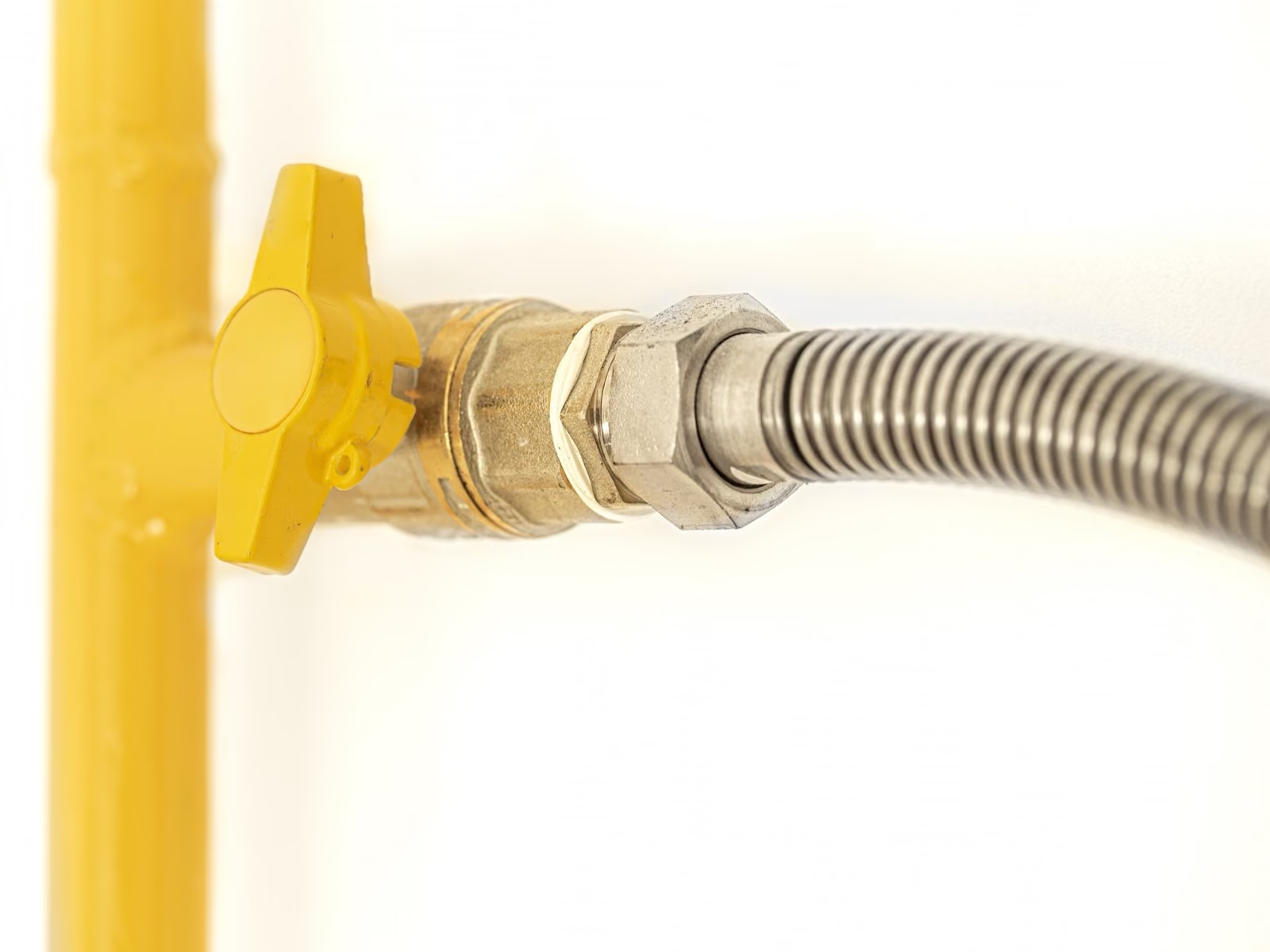
- The City of Los Angeles requires a certified seismic gas shutoff valve at sale and with any permit for major alterations or additions.
- A certified seismic valve trips on strong shaking, roughly the ground motion a magnitude 5.4 quake delivers nearby, and ignores trucks and slammed doors.
- The valve mounts level on the house side of the meter, on customer-owned piping, which makes it a licensed plumbing job rather than a SoCalGas job.
- Once tripped, the valve stays closed until someone resets it by hand and relights every pilot, and it needs no power or batteries.
- Burbank, Glendale, and Pasadena run their own building departments, and their rules on seismic valves differ from the City of Los Angeles.
When does the City of Los Angeles require an earthquake gas shutoff valve?
Two events trigger the rule. The first is a sale or transfer of the property. That is where most homeowners meet it, usually through the compliance items escrow gathers alongside water heater straps and smoke alarms. The second is a building permit for major alterations or additions above a valuation threshold the city sets. At that point the valve rides along with the project.
The rule applies to the building, not the buyer. If the house already has a certified valve, installed under permit and still on the pipe, the seller satisfies the requirement with the existing paperwork. If a previous owner bought a valve online and screwed it on without a permit, it does not count, and we see that more often than you would think.
Earthquake gas shutoff valve requirements in the City of Los Angeles say nothing about a home that simply sits there. Nothing in the code makes an owner who stays put install one. The fire risk is the same either way. Plenty of owners in Sunland-Tujunga and the foothills add a valve after a rough night of shaking and never wait for a deadline.
Which valves count as certified, and does the brand matter?
California certifies earthquake-actuated gas shutoff valves through the Division of the State Architect, and only a valve on that list satisfies the rule. Los Angeles narrows the field further to the models LADBS has approved for use in the city. A certified valve carries a metal tag with its certification number, and the inspector reads that tag before anything else.
Brand matters less than three things: pipe size, pressure rating, and mounting position. A valve for a 3/4-inch riser will not seat properly on a 1-inch line, and a valve calibrated for a level horizontal mount misbehaves on a tilted riser. Names you will run into include Little Firefighter and the Northridge valves from Pacific Seismic Products, both long-standing certified designs.
Skip the uncertified lookalikes sold online. They cost less for a reason, they fail the tag check at inspection, and a failed inspection two weeks before closing hurts far more than the valve ever would. Current ranges for a certified valve, installed with the permit, are on our earthquake gas shutoff valve page.
Seismic trigger or excess-flow trigger: what is the difference?
Two different failures can put gas into a house after a quake, and the two valve types answer them differently. A seismic valve reacts to motion. A calibrated ball sits on a pedestal inside the housing. Strong shaking knocks it off, and it drops into the gas path and seals the line in a fraction of a second.
An excess-flow valve reacts to volume instead. A sheared connector behind a stove or a broken riser lets gas rush out far faster than any appliance would draw, and the valve senses that surge and closes. It catches a break with no shaking at all, a truck backing into the meter for instance, but it can miss a small crack that leaks slowly.
Seismic, excess-flow, and combination valves compared
| Valve type | What trips it | What it can miss | Sale in the City of Los Angeles |
|---|---|---|---|
| Seismic, earthquake-actuated | Strong ground shaking, about a magnitude 5.4 quake nearby | A pipe broken by something other than a quake | Satisfies the rule when certified and permitted |
| Excess-flow | A sudden surge in gas volume from a sheared line | Slow leaks and small cracks below its flow threshold | Ask first; the rule is written around seismic actuation |
| Combination | Either shaking or a flow surge | Very little between the two triggers | Satisfies the rule and covers non-quake breaks too |
For a sale we install a certified seismic or combination valve, which ends the question at inspection. The combination unit earns its keep when the extra trigger adds little to the job. The failure it catches, a line sheared with no quake at all, is exactly what our gas leak repair crew sees most.
Where does the valve mount at the meter?
The valve goes on the house side of the gas meter, on customer-owned piping. SoCalGas owns the meter and everything toward the street, while the pipe leaving the meter toward the house belongs to the owner. That boundary makes the valve a licensed plumbing job, not a utility job, and it is why SoCalGas will not install one for you.
On most single-family homes it sits right after the meter, on the riser or the first horizontal run, before the pipe enters the wall. The mount has to be level in the orientation the model specifies. The trigger inside is a ball on a pedestal, so a tilt of a few degrees changes how much shaking knocks it loose.
Older Valley homes throw in a wrinkle. A riser that has sat in the weather since the 1960s is often corroded or undersized, and the valve needs sound pipe to seat against. If the riser needs rebuilding, that is gas line installation work, and we flag it at the estimate rather than mid-job.
What permit and inspection does the install need?
A plumbing permit, every time. Inside the City of Los Angeles it goes through LADBS, and the inspector comes out after the valve is on the pipe. Burbank, Glendale, and Pasadena issue their own permits through their own building departments, with their own forms.
The inspection is short and specific. The inspector wants to see the certification tag, a level mount in the right orientation, tight joints, and a valve that matches the pipe size. The inspector signs the permit at that point, and that signed record is what escrow wants, not a receipt from a hardware store.
Our Los Angeles plumber team pulls the permit before the install. On the day, we shut the gas at the meter, cut in the valve, and pressure test the joints. Gas goes back on, and we relight the water heater, furnace, and stove pilots. Keep a copy of the signed permit with the house records, since the next buyer's escrow will ask for it.
How do you reset it after a quake?
A tripped valve stays closed until someone resets it by hand. That is the design, not a fault, and it means the first thing to do after a big shake is not the reset. Walk the house first and sniff near the stove, water heater, and furnace. If you smell gas or hear hissing, leave the valve alone, get everyone outside, and call SoCalGas from the street.
If the house checks out, the reset is simple on most models. Remove the cap, push or turn the reset stem until the ball seats again, and replace the cap. Gas flows, and every pilot light in the house needs relighting: water heater, furnace, and any older stove or fireplace. Newer appliances with electronic ignition relight themselves.
Plenty of people would rather not do that after a frightening night, and that is fair. We run reset-and-relight visits across the Valley after any sizable quake, and the same visit checks the riser and the appliance connectors for damage the shaking may have caused.
Do Burbank, Glendale, and Pasadena have the same rule?
No, and that catches sellers out. The City of Los Angeles has one of the broader rules in the region, with the sale trigger and the alteration trigger both in play. Burbank, Glendale, and Pasadena run independent building departments, and each decides its own retrofit list. Some neighboring cities require a seismic valve on new construction only, some at sale, and some not at all.
Unincorporated Los Angeles County follows the county code, which differs again. The practical move is to check the rule for the exact address before buying a valve, and to ask the escrow officer what the compliance report for that city lists. We look it up before quoting, so you buy what your city asks for and nothing more.
One thing does not change across city lines. State certification of the valve itself is the same everywhere in California, so a valve that qualifies in Los Angeles qualifies in Glendale. Only the trigger for needing one moves.
Selling or remodeling? How to clear the retrofit list without stress
The valve rarely arrives alone. The same compliance report that lists it usually lists water heater strapping, smoke and carbon monoxide alarms, and sometimes a low-flow toilet. These items surface late in escrow, when everyone is tired. Contractors book up, the inspector needs a slot, and the closing date does not move.
A+ Electric & Plumbing is a licensed electrician and plumber serving Los Angeles and the San Fernando Valley from Tujunga, on one license. That is the whole point on a retrofit list. The gas valve and the water heater straps are plumbing, and the alarms are electrical. One crew can clear the whole sheet in fewer visits, with one permit package and no finger-pointing between trades.
On a remodel, fold the valve into the project while the alteration permit is already open, since the inspector will look for it at the final anyway. Listing the house soon? Handle the valve before the sign goes up, and the line item vanishes from the negotiation. For the rest of the list, a licensed electrician and plumber in Los Angeles can walk it with you, and a live person answers (818) 421-5290 around the clock.
Frequently asked questions
Does the seismic valve satisfy the water heater strapping rule too?
No, they are separate items. Water heater bracing is a statewide requirement at sale, and it means two straps anchored to the wall studs, not the valve at the meter. Escrow compliance reports list them on separate lines, and each gets its own check. We handle both in one visit when the report calls for them, along with any alarms on the list.
Will small earthquakes keep tripping the valve?
A certified valve mounted level ignores the small stuff. Los Angeles feels dozens of minor quakes a year, and a properly installed valve sleeps through nearly all of them. Repeated nuisance trips almost always trace back to a tilted mount, a loose bracket, or a valve installed in the wrong orientation, and remounting it level fixes the problem.
Can I install the valve myself and still pass?
Not in the City of Los Angeles. Earthquake gas shutoff valve requirements there call for a licensed contractor and a permit, and escrow wants the signed inspection record. A homeowner install with no permit fails on paperwork before anyone looks at the pipe. Gas piping also punishes one bad joint, which is the second reason the city wrote the rule that way.
What if I smell gas after the valve trips?
Do not reset it. Get everyone out, leave the door open behind you if that takes no switches, and call SoCalGas at 1-800-427-2200 from outside. The utility checks and secures the meter at no charge. Once the property is safe, a licensed plumber finds and repairs the leak on the house side and pressure tests the line before anyone resets the valve.
Does an apartment or condo need a valve at every meter?
The rule follows the building and its gas meters. A multi-unit building with a single master meter usually needs one valve at that meter. A building with a bank of individual meters needs a valve on the house side of each. An HOA typically handles common meters, and a unit owner handles a meter that serves only that unit. Confirm with the association before escrow.
Does the valve need any maintenance?
Almost none. There is no motor, battery, or sensor to service, just a ball, a pedestal, and gravity. A quick look once a year for corrosion, a firm mount, and a readable certification tag covers it. After any quake strong enough to rattle the dishes, glance at the indicator on the valve to see whether it tripped. That spares you a cold shower and a mystery the next morning.
Related services
Need this handled? Start here
Get a free estimate
Tell us what's going on and a licensed tech calls you back fast, with the exact price before any work starts. Electrical and plumbing, one team.
Estimates for quoted work are free. Troubleshooting or diagnosis may carry a $100-$250 service call, credited to your repair when you approve the work.
- Exact price in writing before we start
- Licensed, bonded & insured (CSLB #942404)
- One team for electrical and plumbing
Prefer to talk? Call (818) 421-5290, answered 24/7.