
Electrical guide
Electrical Safety Inspection Checklist: What a Real Inspection Covers in an Older LA Home
An electrical safety inspection checklist for an older Los Angeles home covers the panel first. That means brand, amperage, heat marks, double-tapped breakers, and the grounding and bonding behind it. From there it moves through the house. GFCI and AFCI protection, outlet wiring, aluminum or knob-and-tube circuits, junction boxes, and outdoor and pool circuits all get a look. The result is a written report that ranks each finding as safe, monitor, or fix now.
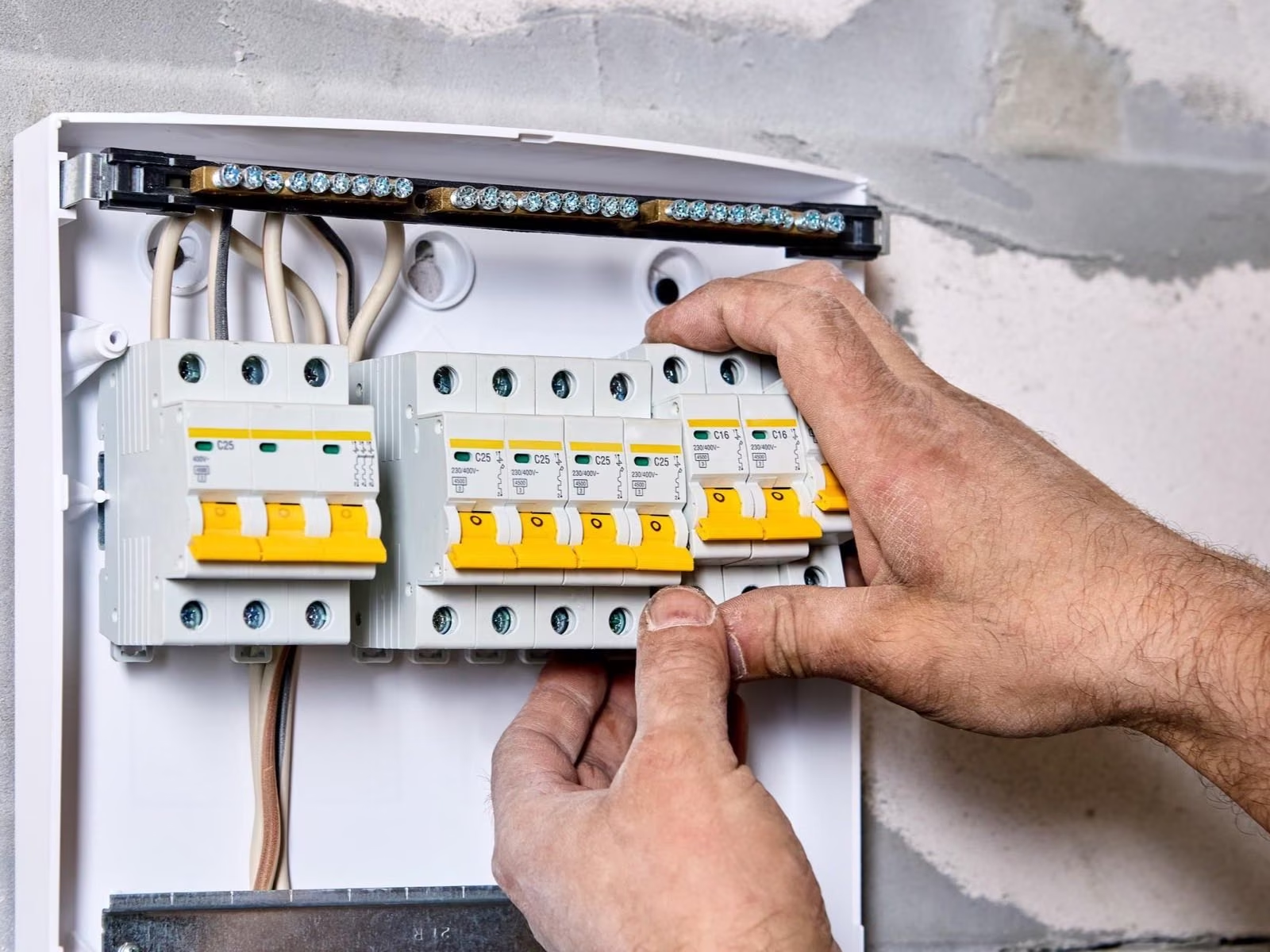
- A real inspection takes the panel cover off and reads the brand, the breaker rating, and every termination, not just the door label.
- Three findings change insurance and escrow outcomes in Los Angeles: Federal Pacific or Zinsco panels, aluminum wiring from 1965 to 1973, and pre-1950 knob-and-tube.
- Current code expects GFCI protection near water and outdoors, plus arc-fault protection on most living-area circuits, so an older home will show gaps.
- Book an inspection during escrow, before an insurance renewal, after inheriting a house, and before any remodel that opens walls.
- The written report rates each finding safe, monitor, or fix now, with photos, so a buyer or an insurer can act on it.
What is on a real electrical safety inspection checklist?
The electrical safety inspection checklist below follows the order a licensed electrician uses on site in an older Los Angeles house. A general home inspector touches a few of these items; a dedicated inspection covers all of them with the panel cover off.
Electrical safety inspection checklist, item by item
| Item | What the electrician checks | Red flag |
|---|---|---|
| Panel brand and rating | Label, main breaker amperage, age, free spaces | Federal Pacific Stab-Lok, Zinsco, fuses, a full 100-amp tract panel |
| Panel interior | Heat marks, corrosion, melted insulation, loose lugs | Brown or black marks on the bus, a warm breaker |
| Double taps | Two wires under one breaker terminal | Any double tap on a breaker not listed for it |
| Grounding electrode | Ground rod, water pipe clamp, wire back to the panel | No rod, clamp on paint or rust, ground lost in a repipe |
| Bonding | Jumpers at the water heater and on metal water and gas pipe | No heater jumper, unbonded CSST gas line |
| GFCI protection | Kitchen, bath, garage, laundry, outdoor, crawl space outlets | None near water, or a GFCI that will not trip |
| AFCI protection | Bedroom and living-area circuits | None on a home rewired or remodeled in the last 15 years |
| Outlets and switches | Polarity, ground, tension, heat, backstab connections | Open ground on a three-prong outlet, warm plate |
| Branch wiring type | Copper, aluminum, cloth, knob-and-tube, sampled at boxes and in the attic | Aluminum without pigtails, live knob-and-tube under insulation |
| Junction boxes | Attic, crawl space, and garage boxes: covers, fill, splices | Splices outside a box, missing covers, boxes under insulation |
| Smoke and CO alarms | Placement, age, interconnection, power source | Alarms past 10 years, none in bedrooms, no CO alarm |
| Outdoor, pool, spa | In-use covers, GFCI, pool equipment bonding, landscape transformer | Cracked covers, cords as wiring, pump without GFCI |
Every item earns a rating in the report, and the ratings drive the next step.
Why does the panel come first?
Most of the risk in an older house concentrates at the panel. It is also the one thing a general home inspector rarely opens. Reading the door label takes ten seconds. Pulling the cover shows whether the bus bar has been cooking for a decade.
Brand comes before everything else. Federal Pacific Stab-Lok and Zinsco panels shipped by the thousands into Valley tracts between 1960 and 1975. Both have a documented habit of breakers that fail to trip under a fault. Insurers in Los Angeles know the names, and so do buyers' agents. A finding of either one usually ends in a panel upgrade rather than a repair.
Amperage comes next. A 100-amp panel was normal in a 1960s tract house. Plenty still carry the original one while feeding central air, a dryer, and a car charger. Heat marks on the bus, a warm breaker, and a double tap from a homeowner's added circuit all tell the same story. The panel is working past its design.
What do grounding and bonding checks look for?
Grounding gives a fault somewhere safe to go. In most older Los Angeles homes the grounding electrode is the metal water pipe where it enters the house. A ground rod backs it up, or should. The inspector finds the clamp, checks that it bites clean metal, and follows the wire back to the panel.
Bonding is the cousin nobody talks about. Metal water pipe, metal gas pipe, and the water heater all need a solid tie to the grounding system. Without it, a stray current can make the plumbing itself live. Corrugated stainless gas tubing, the yellow CSST in many post-2000 remodels, needs its own bonding clamp, and it is missing more often than not.
This is the item where the two trades meet. A house repiped to PEX loses the water pipe as an electrode. A plumber without the electrical classification may not know to replace it. A crew holding both C-10 and C-36 checks the ground path while the pipe is still open. That is the quiet reason to hire one company for both.
Where should GFCI and AFCI protection show up?
A GFCI outlet or breaker trips when current leaks to ground, which is what happens when a hair dryer meets a sink. Current code expects that protection in bathrooms, kitchens, garages, laundry rooms, crawl spaces, outdoors, and anywhere within reach of a sink. An older home is not required to add it everywhere at once, but the gaps go in the report.
AFCI protection is newer and less familiar. An arc-fault breaker listens for the electrical signature of a loose or damaged connection and trips before it becomes a fire. Code calls for it on most bedroom and living-room circuits in new construction. A remodel, or even a replaced outlet on an old circuit, can trigger the requirement for that circuit.
The inspection tests each GFCI with its own button and with a plug-in tester. A device can light up green and still fail to trip. Dead GFCIs are common in garages and outdoor boxes that have sat in the sun for twenty years. Replacing them is quick work for the electrical repair side of the visit.
How does an inspection handle aluminum and knob-and-tube wiring?
By era first, then by evidence. Houses wired between about 1965 and 1973, common across Woodland Hills, Northridge, and Tarzana, often carry aluminum branch circuits. Houses built before 1950 in Highland Park, Eagle Rock, and older Burbank and Glendale may still run knob-and-tube in the attic and walls.
For aluminum, the inspector pulls a few outlet and switch covers and looks at the conductor color and the terminations. Warm plates, oxidized wire ends, and copper-only devices on aluminum wire are the findings. The fix short of a rewire is a copper pigtail at every connection, with a connector rated for the two metals.
For knob-and-tube, the attic tells the story. Ceramic knobs holding single cloth-covered wires, buried under blown-in insulation, is the worst case. That wiring sheds its heat into open air by design. A tester confirms which runs are still live, and the report separates dead legacy wire from circuits that still carry load. Live knob-and-tube in Los Angeles usually leads to an insurer letter and a rewiring quote.
What about outdoor, pool, and spa circuits?
Outdoor wiring ages faster than anything inside. Sun cracks the covers, sprinklers fill the boxes, and a decade of gardeners and holiday lights leaves extension cords doing permanent duty. The inspection checks every exterior outlet for an in-use cover and GFCI protection. It also looks at how the landscape lighting transformer connects to the house.
Pools and spas raise the stakes. Pump motors, heaters, and lights near water need GFCI protection. They also need a bonding grid tying the equipment, the rebar, and the metal fittings together, so nobody in the water becomes the path. Older hillside houses in Sherman Oaks and Encino often have pool equipment wired by three different people over forty years. The inspector documents what each one left behind.
Detached structures count too. A garage, a workshop, or a guest house on its own subpanel needs its own ground rod and a proper feeder. A backyard ADU conversion inherits whatever the garage had. The report flags a subpanel with neutrals and grounds bonded together, a classic mistake that sends current down the ground wire.
When should you book an electrical safety inspection?
Four moments come up more than any others.
- Escrow: the home inspector recommends a licensed electrician evaluate the panel, and that line needs a real answer before the contingency period ends.
- Insurance: a new policy or a renewal form asks about panel brand, wiring type, and system age. An insurer can decline a home over a Federal Pacific panel or live knob-and-tube.
- An inherited or long-held house: decades of small changes, some by handymen and some by relatives, leave nobody sure what is behind the walls.
- Before a remodel: an inspection before demolition shows what the new circuits will tie into, and whether the panel can take them at all.
After DIY work and after a quick flip are two more. A seller who repainted and staged a Van Nuys house may not have touched the 1962 panel. Fresh drywall hides nothing from a tester.
The inspection itself needs no permit, since nothing changes. Repairs it leads to often do. In the City of Los Angeles, panel work and new circuits need a permit from LADBS; Burbank and Glendale issue their own. Booking details and current ranges live on our electrical safety inspection page.
What does the written inspection report look like?
One or two pages, in plain language, with photos. The top of the report describes the panel: brand, main breaker rating, number of circuits, and overall condition. Below that, each checklist item gets one of three ratings: safe, monitor, or fix now. A sentence explains why, and a photo shows the finding when it is visual.
A useful report separates urgency from cost. A scorched bus bar is fix now regardless of budget. A missing GFCI in a garage is monitor for most families and fix now for a household with small children. The report says which, so a buyer can negotiate, an insurer can close a file, and a homeowner can plan the year.
A+ Electric & Plumbing is a licensed electrician and plumber in Los Angeles, working out of Tujunga. The crew that writes the report can make the repairs under the same license. The electrical services hub lists everything from panels to EV chargers, and a live person picks up (818) 421-5290 at any hour.
Frequently asked questions
Can I run this electrical safety inspection checklist myself?
Parts of it. You can read the panel label, test every GFCI with its button, plug a tester into outlets, and check the attic for ceramic knobs. Leave the panel cover on. The bus bar stays live even with the main breaker off. The findings that matter most, heat marks, torque, and double taps, sit right behind that cover.
How long does a whole-house inspection take?
Roughly an hour to an hour and a half for a single-story Valley house. A two-story home, a pool, or a detached garage adds time. Most of the time goes to the panel and to testing outlets room by room. The report comes together on site, so the findings are in your hands before the truck leaves.
Will the inspector fail my house over two-prong outlets?
No. Two-prong outlets are legal to keep, and the report rates them as monitor. A three-prong outlet on the same ungrounded wire is a different matter and a real finding. Code allows a GFCI-protected three-prong replacement, marked no equipment ground, and that gives shock protection without new wire. The report explains that choice instead of pushing the bigger job.
Does the inspection replace the buyer's general home inspection?
No, it fills the gap the general inspection leaves. A home inspector covers the roof, the foundation, the plumbing, and the electrical in one pass and rarely removes a panel cover. The electrical inspection goes deep on the one system. It answers the line in the general report that recommends a licensed electrician.
Will an insurer accept the written report?
Usually, yes, when it states the panel brand, the wiring type, and the date, and a licensed contractor signs it. Some carriers use their own form and want the same facts copied onto it. Ask your agent which they need before booking, and the report can carry the exact wording.
What happens if the report says fix now?
You decide the timing, with the risk spelled out. Fix-now items are the ones that can start a fire or shock someone: a scorched bus, an open splice, a pool pump without GFCI. The same crew can quote the repair on the spot, and that quote comes separately, in writing, before anything starts.
Related services
Need this handled? Start here
Get a free estimate
Tell us what's going on and a licensed tech calls you back fast, with the exact price before any work starts. Electrical and plumbing, one team.
Estimates for quoted work are free. Troubleshooting or diagnosis may carry a $100-$250 service call, credited to your repair when you approve the work.
- Exact price in writing before we start
- Licensed, bonded & insured (CSLB #942404)
- One team for electrical and plumbing
Prefer to talk? Call (818) 421-5290, answered 24/7.