Electrical guide
Why Electricians Replace a Federal Pacific Panel Instead of Repairing It
Electricians replace a Federal Pacific panel because its Stab-Lok breakers have a documented history of failing to trip during an overload. A breaker that will not trip lets the wire overheat instead of cutting power. Zinsco panels earn the same verdict for a different reason: their breakers can weld to the bus bar. No breaker swap cures either design, so the fix in Los Angeles is a permitted replacement with a modern 200-amp panel.
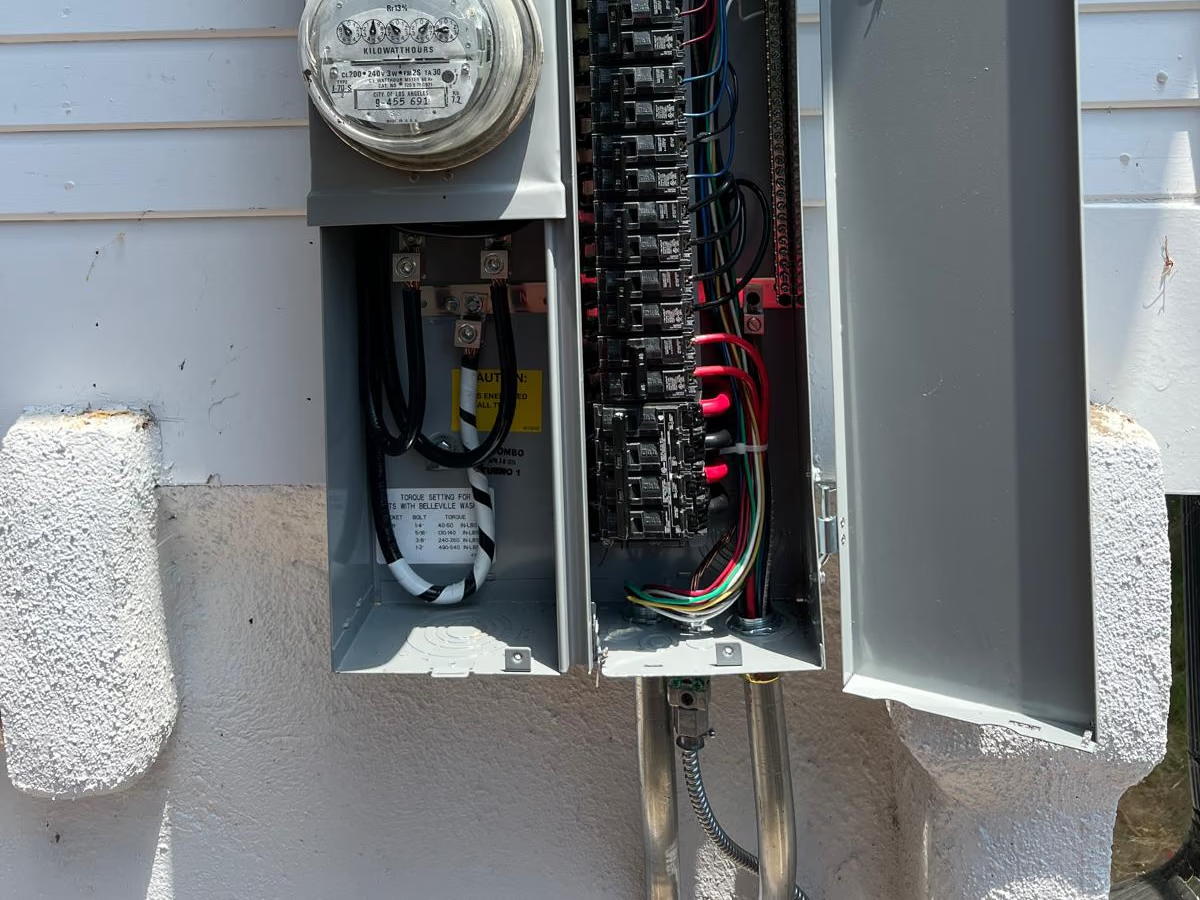
- Federal Pacific Stab-Lok breakers can stay closed during an overload, so the wire heats up instead of the breaker tripping.
- Zinsco breakers clamp onto an aluminum bus bar that corrodes, and a breaker can weld to it while the handle still looks switched off.
- The label inside the panel door names the brand: look for Federal Pacific Electric, FPE, Stab-Lok, Zinsco, GTE-Sylvania, or Magnetrip.
- Swapping individual breakers does not remove the hazard, because the bus bar and the breaker design stay the same.
- In the City of Los Angeles a panel replacement needs an LADBS permit, a utility disconnect at the meter, and a final inspection.
Why do electricians replace Federal Pacific panels?
The breaker is the one part of a panel that has to work on its worst day. Federal Pacific breakers have a record of not working on that day. A breaker exists to open the circuit when the current climbs past what the wire can carry. Stab-Lok breakers can sit closed through that overload while the wire behind your drywall cooks.
Federal Pacific Electric shipped these panels by the truckload from the 1950s into the 1980s, and Valley tract homes soaked them up. Walk a street of 1960s ranch houses in Northridge, Van Nuys, or Woodland Hills and a good share still carry the original gray can. Age makes the problem worse, since springs weaken and contacts pit over decades.
The U.S. Consumer Product Safety Commission looked into Stab-Lok breakers in the early 1980s and closed the file without ordering a recall, citing the cost of further testing. A New Jersey court later found the company had sold breakers labeled as UL-listed that had not passed the testing behind that label. That history is why home inspectors, insurers, and electricians treat the brand as a replace item rather than a watch item.
What goes wrong inside a Stab-Lok breaker?
A Stab-Lok breaker plugs onto the bus with a spring clip instead of bolting on, which is where the name comes from. The clip loosens over the years, and a loose stab makes heat right at the connection. That heat cooks the breaker's internal parts, and a cooked trip mechanism can stick.
The second failure shows up on the test bench. Push double the rated current through a healthy modern breaker and it opens within seconds. In independent testing over the years, a meaningful share of Stab-Lok breakers stayed closed or tripped far later than they should have. A breaker that trips late has already let the wire reach a temperature it cannot handle.
There is a third problem that surprises people. In some Stab-Lok breakers the handle can sit in the off position while the contacts inside remain closed. A homeowner flips the breaker, checks that the light went out, and starts working on an outlet that still has power on one leg. We test every circuit with a meter before touching it in these panels, and you should insist on the same.
Why are Zinsco panels on the same list?
Zinsco is the other brand on every inspector's watch list in Los Angeles. You will also see it under the GTE-Sylvania name, since that company bought the line in the 1970s. The design uses an aluminum bus bar with breakers that clamp onto it. Aluminum corrodes, the clamp loosens, and the connection starts to arc.
Arcing builds heat, and enough heat welds the breaker contact to the bus. A welded breaker can no longer open. The handle may flip to off, the circuit stays live, and an overload on that circuit has nothing left to stop it. We have pulled Zinsco breakers off a bus and found the aluminum melted into a groove behind them.
Zinsco panels also tend to be small. Many hold a 100-amp main and a handful of spaces. That suited a 1965 kitchen. It does not suit central air, an electric dryer, and an EV charger. The same 200-amp replacement usually solves the safety problem and the capacity problem in one job.
How do I read the label on my own panel?
Open the outer door of the panel, not the inner cover, and look for the manufacturer label. It usually sits on the inside of the door or along the edge of the breaker face. You are looking for the words Federal Pacific Electric, FPE, or Stab-Lok, and for Zinsco, GTE-Sylvania, or Magnetrip. If the label has peeled off, the breakers themselves give it away.
Stab-Lok breakers carry a red or orange stripe on the tip of the handle, and the handles sit in two tight vertical columns. Zinsco breakers are thin, often color-coded with red, green, or blue handles, and they slide onto the bus rather than snapping on. A sticker from a previous electrician sometimes covers the original label, so peek behind it.
What the label and the breakers tell you
| What you see | Likely brand | What it means |
|---|---|---|
| Federal Pacific Electric, FPE, or Stab-Lok on the label; breakers with red or orange handle tips | Federal Pacific | Documented failure-to-trip history; plan a permitted replacement |
| Zinsco, GTE-Sylvania, or Magnetrip on the label; thin breakers with colored handles | Zinsco | Breakers can weld to the aluminum bus; plan a permitted replacement |
| Square D, Eaton, Siemens, GE, or Cutler-Hammer | Modern brand | Repairable; upgrade only when you need more capacity |
| No readable label, screw-in fuses, or a panel painted over | Unknown | Send a photo of the open door, or book an inspection |
Check the subpanels too. A 1960s Valley house often keeps a Federal Pacific subpanel in the garage or laundry room even after someone replaced the main. A photo of the open door, texted to us, is usually enough to identify the brand. A full check of the wiring, grounding, and outlets is what an electrical safety inspection covers, with a written report you can hand to an insurer.
Why does swapping breakers not fix the problem?
Homeowners ask this every week, usually after a handyman offers to replace the breakers for a fraction of a panel job. The honest answer is that the breaker is only half of the failure. The bus bar, the stab connection, and the enclosure stay exactly as they were. On a 50-year-old panel those parts have corroded and pitted right along with the breakers.
Aftermarket breakers that fit a Stab-Lok bus still exist, but they clip onto the same worn stabs and inherit the same design. On a Zinsco, a fresh breaker clamps onto the same corroded aluminum. Neither swap changes what an inspector writes on the report, because the brand on the label triggers the flag. Your insurer reads the label, not the breaker date code.
There is one honest use for a breaker swap: buying a few weeks while the permit and the utility appointment line up. When a single breaker on a modern panel fails, that is a normal electrical repair and we treat it as one. On Federal Pacific or Zinsco equipment, we say plainly that the swap is a bridge and not a cure.
What will my insurer or home inspector say?
Expect a flag. Most California insurers now ask about the panel brand on a new application. Many decline to write a policy on a home with an active Federal Pacific or Zinsco panel until you replace it. Others add a surcharge or set a deadline. On a renewal, an inspection photo of the panel can trigger the same letter.
Escrow is where it bites hardest. A buyer's inspector opens the door, sees Stab-Lok, and writes a line recommending evaluation by a licensed electrician. That line turns into a repair credit request or a stalled closing. Sellers in Sherman Oaks and Burbank have called us mid-escrow more than once to get the swap permitted before the contingency deadline.
A permitted replacement clears the objection for good. The LADBS permit record shows that a licensed contractor replaced the panel under inspection, which is exactly what an underwriter wants to see. Keep the signed-off permit with your house papers, since the next buyer's agent will ask for it too.
What does replacement involve in Los Angeles?
A Federal Pacific panel replacement in the City of Los Angeles runs through three offices: the contractor, LADBS, and the utility. We start with a load calculation to size the new service, which lands on 200 amps for nearly every Valley house. Then we file the electrical permit with LADBS. Burbank, Glendale, and Pasadena run their own building departments, so the counter changes with your address.
The utility comes next. LADWP has to drop power at the meter before the old panel comes out, then restore it once the new one is in. That appointment sets the work date. In Burbank and Glendale the city utility handles the disconnect instead. On the day, the crew pulls the old can, sets the new panel, and lands every circuit on a correctly sized breaker. Fresh ground rods and bonding bring the grounding up to current code.
We fill in the new directory, patch the stucco around the can, and LADBS inspects the finished work on a later day. Power is off for a good part of that work day, so plan around it. Current ranges for the job are on our panel upgrade page. The written quote you approve before work starts covers the permit, the panel, the grounding, and the patching.
What else should you check while the panel is open?
A panel swap is the best moment to look at everything that lands in it. Houses of the Federal Pacific era, roughly 1960 to 1975, often carry aluminum branch wiring from the years when copper spiked in price. Aluminum loosens at terminations, so we check a sample of connections while the wires are out in the open and tell you whether pigtails or a rewire make sense.
The same visit answers the capacity questions people put off: room for an EV charger, a subpanel for a garage conversion, or a dedicated circuit for a heat pump water heater. A+ Electric & Plumbing is a licensed electrician and plumber serving Los Angeles and the San Fernando Valley from Tujunga. The same crew can look at the water heater and its gas line, with no second contractor pointing at the first.
If you only want a second opinion on the box on your wall, start with a photo. Send it, call (818) 421-5290, or read through the rest of our electrical services in Los Angeles. As an electrician and plumber in Los Angeles, we would rather tell you the panel is fine than sell you one you do not need.
Frequently asked questions
Is every Federal Pacific panel dangerous, or only some of them?
Every one shares the design, and condition varies from panel to panel. There is no field test that tells a good Stab-Lok breaker from one that will stick, because the failure only shows under a real overload. That is why inspectors and insurers treat the whole brand the same way. A panel that looks clean and has never tripped is not evidence that it will trip when it matters.
Can I keep living in the house until the new panel goes in?
Usually, yes, with a little care. Keep heavy loads off shared circuits, so no space heater and window air conditioner on the same run, and know where the main breaker is. If the panel cover feels warm, buzzes, or smells like hot plastic, stop using the heavy circuits and call an electrician right away. Those symptoms mean a connection is already arcing.
Does a Federal Pacific subpanel have to go too?
Yes. A subpanel uses the same Stab-Lok breakers on the same style of bus, so it carries the same failure mode as a main panel. Insurers and buyers' inspectors flag it the same way. Many Valley homes have a replaced main and an original Federal Pacific subpanel in the garage, and the subpanel is often the one nobody remembers.
Will replacing the panel mean rewiring the house?
No. A panel replacement reuses your existing circuits, and each one lands on a new breaker sized to its wire. The inspector looks at what enters the panel, so the crew corrects damaged or undersized conductors at the panel end. Aluminum branch wiring or cloth-covered wire may earn a note in the report, but that is a separate decision from the panel itself.
How long is the power off during the swap?
Plan on most of a work day without power. The utility drops service at the meter in the morning. The crew removes the old panel, sets the new one, and reconnects every circuit. The utility then restores power once the work is ready for it. A closed refrigerator holds its temperature for several hours, and we tell you the expected window before the day.
Do Burbank and Glendale handle the permit differently?
Yes. Both cities run their own building departments instead of LADBS, with their own forms, fees, and inspectors. Their city utilities, Burbank Water and Power and Glendale Water and Power, handle the disconnect and reconnect at the meter instead of LADWP. The work itself is the same. We file with whichever office your address falls under and meet that city's inspector.
Related services
Need this handled? Start here
Get a free estimate
Tell us what's going on and a licensed tech calls you back fast, with the exact price before any work starts. Electrical and plumbing, one team.
Estimates for quoted work are free. Troubleshooting or diagnosis may carry a $100-$250 service call, credited to your repair when you approve the work.
- Exact price in writing before we start
- Licensed, bonded & insured (CSLB #942404)
- One team for electrical and plumbing
Prefer to talk? Call (818) 421-5290, answered 24/7.