
Electrical guide
Knob and Tube Wiring: What Los Angeles Homeowners Should Know Before Escrow Closes
Knob and tube wiring is the original electrical system in most Los Angeles homes built before about 1950. Single copper wires sit on ceramic knobs off the framing, with no ground wire anywhere. It was a sound design for its day. The trouble is age, attic insulation piled on top of it, and modern loads it was never built to carry. That is why insurers and inspectors now treat it as a replace item.
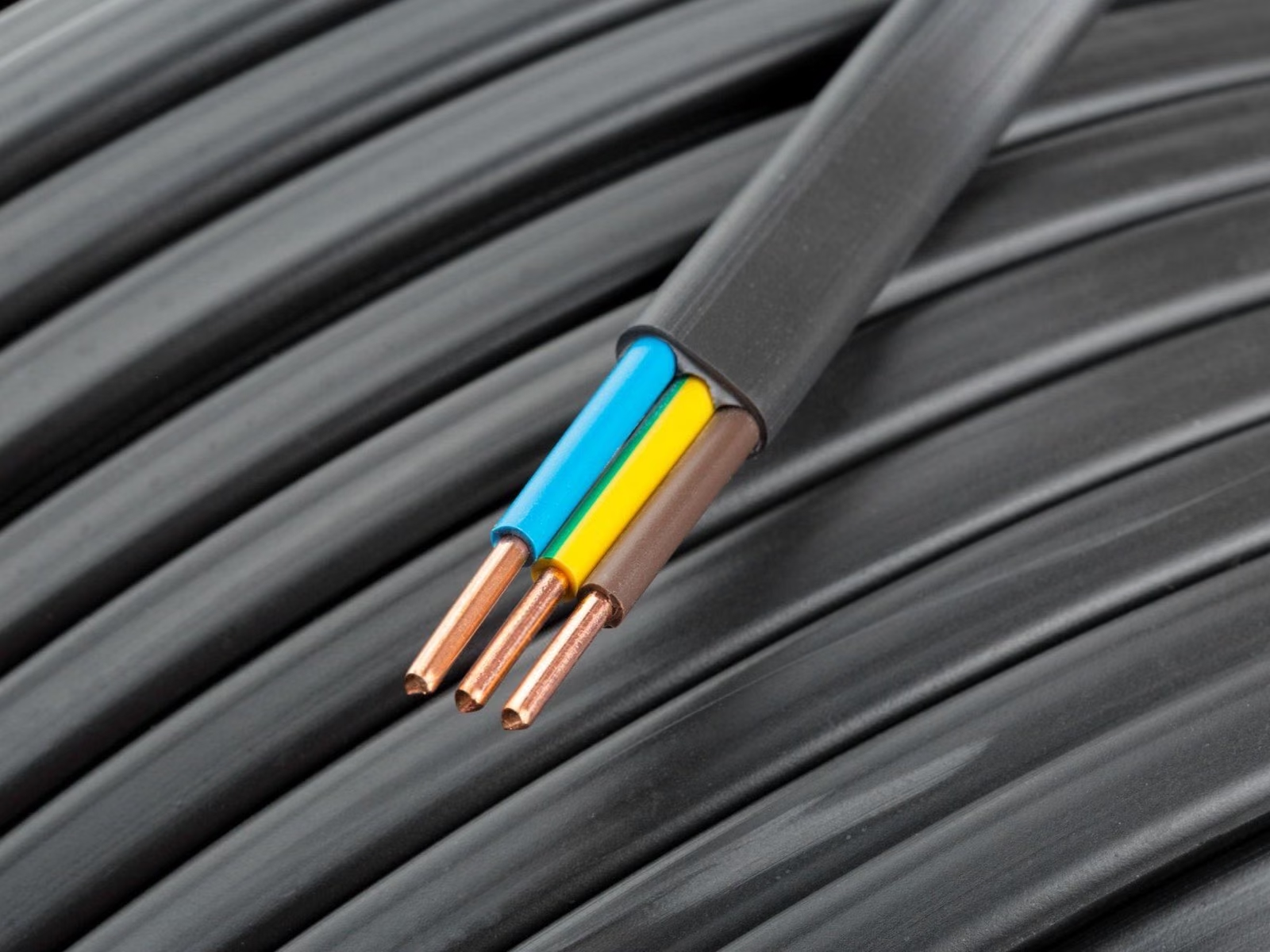
- Knob and tube shows up as white ceramic knobs holding single black wires off the attic framing, almost always in homes built before 1950.
- The system has no ground wire, so a three-prong outlet on it offers no fault path back to the panel unless a GFCI protects it.
- Blown-in attic insulation traps heat the wires need to shed into open air, which is the main fire hazard today.
- Most California insurers decline or surcharge a policy on a home with live knob and tube, and the question usually comes up during escrow.
- A rewire can run in stages, circuit by circuit, with power restored each evening, so most families stay in the house.
How do I recognize knob and tube wiring in my house?
Start in the attic with a flashlight. Look along the tops of the ceiling joists for white or cream ceramic knobs, each one holding a single wire an inch or so off the wood. Where a wire passes through a joist you will see a short ceramic tube lining the hole. The hot and the neutral run separately, several inches apart, instead of bundled together in one cable.
The covering on the wire is cloth over rubber, usually black or faded brown, and on an 80-year-old run it cracks when you bend it. Do not bend it. Inside the house the clues are two-prong outlets in every room and one ceiling light per room on one switch. A fuse box, or a small breaker panel with very few circuits, rounds it out.
Be careful about the opposite conclusion. Plenty of Highland Park and Pasadena bungalows have modern cable in the kitchen and bathroom from a 1980s remodel. The bedrooms still run on the original knob and tube. A remodel permit from decades ago does not tell you what is live today. A tester on each circuit does, which is part of what an electrical safety inspection checks.
Why is insulation blown over it a fire hazard?
The design depends on air. Each wire sits alone in open space, and that space carries away the heat a loaded wire makes. Energy retrofits over the last 40 years blew cellulose or fiberglass into attics across the Valley. In many older homes it landed right on top of the knob and tube. The wire now runs inside a blanket.
Trapped heat cooks the rubber under the cloth until it cracks and falls away, leaving bare copper resting against dry cellulose. Add a space heater on that circuit in January and you have the ingredients for the attic fires that keep this wiring on every insurer's list. The electrical code bars loose or blown insulation from covering knob and tube. California carves out an exception only when a licensed electrician inspects and certifies the wiring first and the local building department signs off.
Splices are the other weak point. The original installers soldered and taped every joint, and those held up well. The trouble is the handyman joints added since. We see wire nuts twisted onto brittle conductors, new cable spliced in outside any box, and ceiling fans hung from runs meant for a 60-watt bulb. We find at least one of those in almost every attic we open in Eagle Rock or Burbank.
What will the insurer ask during escrow?
Three questions come up on nearly every older-home purchase in Los Angeles. Is there knob and tube? Is it active? Has anyone replaced it under a permit? Most California carriers decline a new policy on a home with live knob and tube. The ones that will write it add a surcharge or a deadline for replacement.
That matters during escrow because a lender wants proof of insurance before funding, and the insurance quote depends on the answer. The general home inspector usually writes one line: knob and tube observed, recommend evaluation by a licensed electrician. That line is vague on purpose, and it is the moment buyers call us.
What you want before the contingency deadline is a written report that says which circuits are live, what condition they are in, and what a staged replacement would involve. Sellers sometimes get ahead of it by rewiring before listing, and buyers sometimes negotiate a credit instead. Either path starts with the same inspection. A permitted rewire produces the record the underwriter wants, and a permit history search at LADBS shows whether one already exists.
Does knob and tube have to come out right away?
Not always tonight, but yes, on a plan. Knob and tube that nobody has touched, that sits in open air with intact insulation and carries only a couple of ceiling lights, can run a while longer. Knob and tube under attic insulation, feeding a bedroom with a window air conditioner and a hair dryer, is a different situation, and we say so.
The loads are the real change since 1940. A single hair dryer pulls around 1,500 watts, a window unit close to that, and a space heater the same again. The original circuits ran a few 60-watt bulbs. Extension cords and power strips let modern life plug into a system with no spare capacity, and the wire heats every time.
Knob and tube: what you find, what it means, what to do next
| What you find | What it means | Next step |
|---|---|---|
| Open-air runs, intact cloth, lights only | Lowest risk of the four | Inspect, keep insulation off it, plan the replacement |
| Runs buried under attic insulation | Heat trapped, the top hazard | Pull the insulation back or rewire that circuit first |
| Three-prong outlets on ungrounded circuits | A plug that thinks it has a ground | GFCI stopgap now, rewire soon |
| Wire-nut splices outside boxes, crumbling insulation | Active fire risk | Take the circuit off line and rewire it now |
| Fuse box or Federal Pacific panel feeding it | No spare capacity, no arc protection | Panel upgrade with the rewire |
Code allows a GFCI outlet labeled No Equipment Ground as a stopgap on an ungrounded circuit, and it does cut shock risk. It does nothing for the heat problem, so treat it as a bridge, not a fix. Our house rewiring page holds the current ranges for full and partial knob and tube wiring replacement in Los Angeles.
Can you replace knob and tube in stages while we live here?
Yes, and that is how most Los Angeles rewires happen. The crew works circuit by circuit. It runs new grounded copper cable through the attic and crawlspace, fishes drops down to each existing box, and reconnects power before leaving each evening. You live around some furniture moving and a few small wall openings, not a construction site.
Staging follows risk. The first pass usually takes the attic runs under insulation and the circuits feeding kitchens, bathrooms, and any room with a heater or air conditioner. The second pass picks up bedrooms and living areas. Some owners stop there for a season and finish the remaining circuits later, which insurers accept only if the final pass actually happens.
The old wire does not always come out. Once a circuit is dead at both ends and the new cable carries the load, the knobs and tubes can stay in the attic. They stay only if nothing feeds them. The inspector wants the abandoned runs disconnected and the new work visible, not the plaster stripped. Rough patching of the openings the crew cuts is normal practice; texture and paint stay with your painter.
What does the old panel have to do with it?
A knob and tube house almost always has an undersized service. Many still run a 60-amp fuse box. The ones upgraded in the 1960s often got a 100-amp panel that is now full, or a Federal Pacific or Zinsco panel with its own failure history. New circuits need breaker spaces, and code requires arc-fault protection in bedrooms and living areas and ground-fault protection in kitchens, baths, garages, and outdoors.
That is why a rewire and a panel upgrade usually travel together. A modern 200-amp panel gives the new circuits a home and brings the grounding electrode system up to code. It also makes room for the loads people add next: central air, an EV charger, an induction range. Doing both under one permit while the crew is already on site takes fewer labor hours and inspection trips than doing them a year apart.
One more reason to think about the panel at the same time. LADWP handles the utility disconnect for a panel swap in the City of Los Angeles, and the city utilities handle it in Burbank and Glendale. Lining that appointment up with the rewire schedule saves a second outage.
What does an inspection report say about old wiring?
A good report is specific. It names each circuit that still runs on knob and tube, says whether it is live, and describes the condition of the insulation, the splices, and the boxes. It notes where attic insulation covers the runs. It records the panel brand and size, whether a ground exists, and any three-prong outlets on ungrounded circuits.
Then it ranks what it found: fix now, monitor, or fine for now. A ranked list is what lets you plan the stages above, satisfy an insurer, or negotiate an escrow credit. Real findings beat a vague line about evaluation. Photos of the worst spots go with it, so the next electrician or the next buyer sees what we saw.
A+ Electric & Plumbing is a licensed electrician and plumber serving Los Angeles and the San Fernando Valley from Tujunga. We write these reports for buyers, sellers, and owners answering an insurer's letter. The one-license setup matters in these houses more than most. A home with 1940 wiring usually has 1940 galvanized pipe rusting shut in the same walls. The same walkthrough can scope the repipe, and one crew opens the walls once.
Which permits cover a rewire in Los Angeles?
Every rewire needs an electrical permit and a final inspection. Inside the City of Los Angeles, which includes most of the Valley, that runs through the Los Angeles Department of Building and Safety. Burbank, Glendale, and Pasadena run their own building departments with their own inspectors and fees. The contractor files it, and the fee sits inside the written quote.
The inspector visits at rough-in, when the new cable is in place and visible but the walls are still open at the cut points, and again at final. They look for cable secured and protected where it enters boxes, grounds landed, AFCI and GFCI protection where code calls for it, and the old knob and tube disconnected. That signed-off permit is the document your insurer and your future buyer will ask for.
Unpermitted rewiring surfaces at the worst moment, usually when a buyer's inspector spots new cable with no record behind it. If you want a second set of eyes on your attic, call (818) 421-5290; a live person answers around the clock. You can browse the rest of what we handle as an electrician and plumber in Los Angeles, or start with our electrical services page.
Frequently asked questions
Can I add insulation to my attic if it still has knob and tube?
Not over live knob and tube. The electrical code bars loose, rolled, or foam insulation from enveloping the wires. California allows it only after a licensed electrician inspects the circuits and certifies them in writing, with the building department's sign-off. The practical order is rewire first, then insulate. If the insulation is already there, pull it back from the runs until the rewire happens.
Is knob and tube wiring illegal in California?
No. The code lets existing knob and tube stay in service, but it does not let anyone extend it, splice new cable into it outside a box, or bury it in insulation. The practical pressure comes from insurers, who decline or surcharge homes with live runs, and from buyers' inspectors, who flag it in every report. Legal to keep and easy to insure are two different things.
Can I replace two-prong outlets with three-prong ones myself?
Only one way is legal on an ungrounded circuit: a GFCI outlet, or a regular outlet protected by an upstream GFCI, with the sticker that reads No Equipment Ground. A plain three-prong outlet screwed onto knob and tube gives the plug a ground pin that connects to nothing. The GFCI cuts shock risk. It does not cool the wire, so it is a bridge until you rewire the circuit.
How long does a staged rewire take?
Plan on roughly a working week of wiring for a typical 1,500 square foot house, plus the inspection days the city adds to the calendar. Staging changes that shape. Some owners take the attic runs and the kitchen this year and the bedrooms next spring. The schedule for each pass goes into the written quote, so you know which rooms are in play on which days.
Will my insurer accept a partial rewire?
Only if it removes every live knob and tube circuit. A partial job that leaves two bedroom circuits on the old wire usually keeps the flag in place. The application asks whether any knob and tube is active, not how much. Some carriers also want a letter from the electrician confirming the remaining wiring is modern and grounded. Ask your agent what they need before you decide where to stop.
Do you find knob and tube in houses newer than 1950?
Now and then. Some Los Angeles homes built into the early 1950s still got it, especially from smaller builders using up stock. Plenty of older houses also have additions from that era tied into the original runs. The year on the county record is a hint, not a verdict. A tester on each circuit and a look in the attic settle it in an hour.
Related services
Need this handled? Start here
Get a free estimate
Tell us what's going on and a licensed tech calls you back fast, with the exact price before any work starts. Electrical and plumbing, one team.
Estimates for quoted work are free. Troubleshooting or diagnosis may carry a $100-$250 service call, credited to your repair when you approve the work.
- Exact price in writing before we start
- Licensed, bonded & insured (CSLB #942404)
- One team for electrical and plumbing
Prefer to talk? Call (818) 421-5290, answered 24/7.