
Electrical guide
Landscape Lighting Installation: How to Get a Low-Voltage System Right in a Los Angeles Yard
A good landscape lighting installation runs on 12 volts. A transformer plugs into a GFCI-protected outdoor outlet and steps house power down. Direct-burial cable carries it to LED fixtures, and a photocell or astronomical timer switches everything without help. Size the transformer with 20 to 30 percent headroom, pick wire gauge by run length, and choose brass or copper where salt air or Valley sun would punish aluminum.
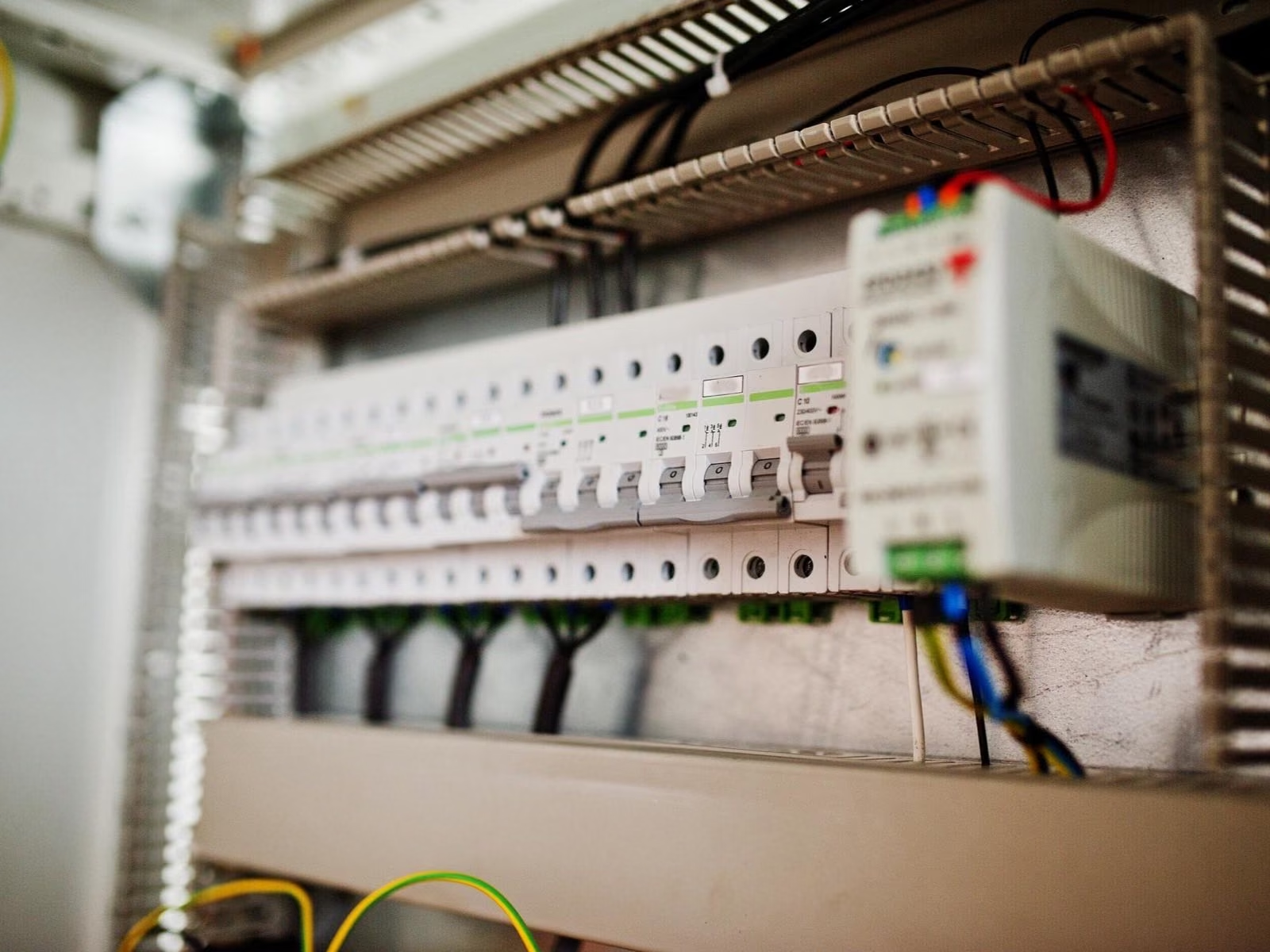
- A low-voltage system steps 120-volt house power down to about 12 volts at a transformer, so the cable in the yard carries no serious shock risk.
- Loading a transformer to roughly 70 or 80 percent of its rating leaves room to add fixtures later without buying a second unit.
- Voltage drop grows with run length and load, so long hillside runs need heavier cable or a hub layout instead of one thin daisy chain.
- The transformer needs a GFCI-protected, weather-resistant outdoor receptacle with an in-use cover, and new 120-volt wiring is permit work in the City of Los Angeles.
- Solid brass and copper fixtures outlast powder-coated aluminum in coastal salt air and in full San Fernando Valley sun.
What goes into a low-voltage landscape lighting system?
Four parts: a transformer, cable, fixtures, and a control. The transformer hangs on an outside wall near an outlet and turns 120-volt house power into roughly 12 volts. Two-conductor direct-burial cable leaves it, runs through the planting beds, and feeds each fixture.
Twelve volts is why this approach suits almost every residential yard. Put a shovel through 12-volt cable and you have a splice to make, not a trip to urgent care. The cable sits about 6 inches down with no conduit, and a fixture can move in minutes once a hedge fills in.
LED changed the math. A path light that once burned 20 watts of halogen now draws 3 or 4. As a result, one mid-size transformer feeds a whole front yard, and lamps last for years. Most LED fixtures accept a range of voltage, which forgives small layout errors. It does not forgive big ones.
A+ Electric & Plumbing is a licensed electrician and plumber serving Los Angeles and the San Fernando Valley, with outdoor wiring jobs that run from the Tujunga foothills to the beach cities. Our page on landscape lighting installation in Los Angeles shows how a project runs from first visit to final aiming.
How big should the transformer be?
Add up the draw of every fixture you plan, then add the ones you will want next year. LED fixtures list watts and often a second figure called VA, short for volt-amps. VA runs a little higher than watts, and it is the number the transformer feels.
Next, leave headroom. We load a transformer to about 70 or 80 percent of its rating, which keeps 20 to 30 percent in reserve. Take fifteen fixtures at 5 VA each: that is 75 VA. A 150-watt unit carries that easily and still has room when the back yard phase arrives.
Look for a multi-tap model. Its low-voltage side has terminals at 12, 13, 14, and 15 volts. A long run lands on a higher tap, so the far fixture still sees about 12 volts after the cable takes its share.
Placement matters too. Most makers want the unit a foot or more above grade, and we keep it clear of sprinkler spray. A west-facing stucco wall in Woodland Hills or Chatsworth gets hot enough in August to shorten the life of smart-transformer electronics. A north or east wall, or a shaded side yard, treats it better.
What wire gauge and layout prevent voltage drop?
Every foot of cable uses up a little voltage. More load and thinner wire mean more loss. At the end of a long, thin run, fixtures glow dim or flicker.
Landscape cable comes in 16, 14, 12, and 10 gauge, and the lower number is the thicker wire. Twelve-gauge is the workhorse for most yards. We step up to 10-gauge for long runs: a deep lot in Encino, a driveway in La Canada Flintridge, a slope behind a hillside house.
Layout matters as much as gauge. A daisy chain sends one cable from fixture to fixture. It is quick and works for a short path of four to six lights. Each fixture down the line sees a little less voltage, though.
A hub layout fixes that. One heavy cable runs from the transformer to a junction point in the bed, and equal-length leads fan out to five or six fixtures. Every fixture sees nearly the same voltage, so brightness matches.
Splices deserve the same care. The pierce-point clips in box-store kits let moisture into the copper, and sprinkler water finishes the job. Gel-filled connectors made for direct burial go on every joint we make.
Which lighting technique goes where, and how do you avoid glare?
Good yards mix a few techniques and leave darkness between them. Start with steps and the main walk, then pick two or three features worth showing off.
Landscape lighting techniques, fixture types, and typical placement
| Technique | Fixture type | Typical placement |
|---|---|---|
| Path lighting | Short-stem path light with a shielded top | Staggered along a walk, roughly 6 to 8 feet apart, set back from the mower edge |
| Uplighting | Adjustable bullet spot on a ground stake | A foot or two from the base of a tree or column, aimed up into the canopy |
| Wall wash | Wide-beam wash light | A few feet out from stucco, a fence, or a hedge, spreading even light |
| Step lighting | Recessed riser light or under-cap hardscape light | In stair risers, under tread noses, or under wall caps at each change of level |
| Downlighting from trees | Tree-mounted downlight with a long glare shield | High in a mature tree, aimed down through branches onto a patio or lawn |
| Security lighting | 120-volt motion-sensor flood | Under the eaves at the driveway, side gate, and back door, heads tilted down |
Do the final aiming after sunset. Glare is invisible at noon and obvious at nine at night. On a slope, an uplight pointed at your sycamore can land squarely in the uphill neighbor's bedroom window. Shielded fixtures, modest output, and beams that stop inside the lot line keep the peace.
Security and ambience are not opposites. Steady low light across the yard removes hiding places, while one or two motion floods cover the driveway and the side gate. Tilt the flood heads downward so a camera sees a lit face instead of a white flare.
Which fixtures hold up in coastal air and Valley sun?
The housing decides how long a fixture lasts, since the LED inside is rarely the first part to fail. Solid brass and copper have no coating to lose. They darken to a brown or green patina and keep working for decades.
Near the water in Venice, Playa del Rey, or San Pedro, salt air goes after powder-coated aluminum. The finish bubbles, the stake seizes in its socket, and the lens ring will not unscrew when the lamp needs changing.
The Valley attacks differently. Summer sun in Northridge or Van Nuys chalks and fades powder coat, and plastic stakes turn brittle under UV until a gardener's blower hose snaps them off. Brass asks more per fixture on day one. Cheap aluminum usually means buying the set twice.
Lamp style is the other choice. An integrated fixture seals the LED inside the body, but a failure means a whole new fixture. A drop-in fixture takes a replaceable lamp, so beam spread, brightness, and color change with a simple swap. We lean toward drop-in lamps for uplights, because trees grow.
What controls does outdoor lighting need in California?
At minimum, something automatic. A photocell turns the system on at dusk, and a timer shuts it off at the hour you choose.
An astronomical timer does the same job with no sensor at all. It knows your location and the date, works out sunset each day, and shifts itself through the seasons and the daylight saving change. A porch light cannot fool it, and bougainvillea cannot grow over it.
Smart control adds zones, dimming, and scenes on a phone. That helps on nights when the patio needs full brightness for guests and only the path lights after midnight. It needs a solid Wi-Fi signal where the transformer hangs, so we test that first.
The California energy code, Title 24, expects automatic controls on outdoor lighting attached to a home. A photocell paired with a time switch or motion sensor, or an astronomical time clock, are the usual ways to comply. How far that reaches into a plug-in yard system depends on the project, the code cycle, and the plan checker. We build automatic shutoff into every design anyway.
Where does 120-volt power come into a landscape lighting installation?
It comes in at the transformer plug first. The transformer needs an outdoor receptacle with three features:
- GFCI protection, either at the receptacle itself or from the breaker that feeds it.
- A weather-resistant rating, which shows as WR on the face of the device.
- An in-use cover, the deep bubble type that closes over a plug with the cord still in it.
A flat flip lid only protects an empty outlet.
Plenty of Los Angeles houses lack that outlet. Bungalows from the 1920s in Highland Park and Eagle Rock often have no exterior receptacle at all. Valley tract homes from the 1950s and 1960s usually have one by the back door, with no GFCI and a cracked cover. The job then starts with outdoor outlet and GFCI installation on the wall where the transformer will hang.
Some lighting stays at line voltage: motion floods, gate post lights, and fixtures for very tall trees. That wiring goes underground in conduit or burial-rated cable, and the California Electrical Code sets the burial depth by wiring method. Most residential methods land between one and two feet, far deeper than low-voltage cable needs.
Inside Los Angeles city limits, a new receptacle, a new circuit, or line-voltage yard lighting needs an electrical permit from LADBS. Burbank, Glendale, and Pasadena issue theirs through separate building departments. A listed plug-in 12-volt kit is often treated as permit-exempt, but the Los Angeles exemption for low-voltage wiring is narrow on wattage, so we check with LADBS on larger systems. Porch lights, eave downlights, and garage coach lights sit on the house wiring instead of the transformer, and they fall under our lighting installation work.
How do Los Angeles hillsides, gravel yards, and pools change the installation?
Hillside lots in the Hollywood Hills, Mount Washington, and south of Ventura Boulevard stack three problems: long runs, stairs, and soil that moves. We split a slope into separate runs and use 10-gauge on the long ones. Every change of level gets a step light. Winter atmospheric-river storms wash short stakes out of loose soil, so we use longer stakes or fasten fixtures to hardscape.
Many lawns here have given way to decomposed granite and native planting, often through the LADWP turf replacement program. Decomposed granite compacts and erodes, so cable laid shallow under it surfaces within a season.
We bury cable about 6 inches down in the soil beneath the granite and sleeve it in conduit under every path. A loop of slack at each fixture lets it move as the sage and ceanothus fill in.
Yard trenches cross other trades. The lighting trench often meets drip irrigation, and sometimes a gas line to a fire pit. Our crew carries both the electrical and the plumbing license, so we fix a nicked water line on the spot and nobody argues over whose fault it was.
The California Electrical Code keeps low-voltage lighting back from the water's edge unless the fixture and its power supply carry a listing for that location. Ten feet is the figure most installers work from. Listings and local inspectors vary, so we check before placing anything near a pool, spa, or fountain.
What maintenance does landscape lighting need?
Little, but not none. Walk the yard after dark twice a year and look for fixtures that have gone dim or dead, or been knocked out of plumb.
Hard water is the local nuisance. Much of Los Angeles has hard water, and sprinkler overspray dries into a white calcium crust on lenses. Wipe lenses with diluted white vinegar and a soft cloth. Better yet, re-aim the sprinkler head or shift the fixture out of its arc.
Plants grow, so aim changes. The uplight that grazed a young olive tree sits buried in its canopy three years later. Pull it back, or swap to a wider-beam lamp. Check tree-mounted downlights after Santa Ana winds, which knock fixtures off aim and drop palm fronds onto path lights.
Once a year, unplug the transformer, snug the low-voltage terminal screws, press the GFCI test button (makers recommend doing that monthly), and confirm the timer still shows the right time. After a planting job, walk the cable runs, because cut cable is our most common repair call.
If you want the layout, the outlet, and the permit handled by one crew, call (818) 421-5290. A real person picks up the phone 24/7, and estimates come free and in writing. Current ranges are on our landscape lighting page. See what else our Los Angeles electricians take on, or meet the electrician and plumber in Los Angeles behind both licenses.
Frequently asked questions
Can I install low-voltage landscape lighting myself?
The 12-volt side is within reach of a careful homeowner: setting fixtures, burying cable, and making sealed splices. DIY systems usually go wrong on sizing, with thin cable, an overloaded transformer, and clip connectors that corrode. The 120-volt side is different. A new outdoor receptacle or circuit is permit work in Los Angeles and belongs with a licensed electrician.
How many lights can one transformer run?
Divide the usable capacity by the draw per fixture. A 300-watt transformer loaded to 80 percent carries 240 VA, which is forty-eight 5 VA fixtures on paper. In practice, voltage drop limits each cable run long before the transformer fills up, so we spread that load across several runs or hubs.
Are solar path lights a reasonable substitute for a wired system?
For marking a path edge, a decent solar stake works for a season or two. It cannot uplight a tree, and it fades as the battery ages. Solar also sits dark under a shady oak or on the north side of a house. A wired 12-volt system gives the same brightness every night on a schedule you choose.
Does low-voltage cable need conduit?
Not for most of the run. Makers build direct-burial landscape cable to sit in soil, and about 6 inches of cover is the usual depth. We add conduit sleeves under walks, driveways, and decomposed granite paths, along lawn edges where edgers cut, and where gophers are active. A sleeve under a new walk also lets you pull fresh cable later without breaking concrete.
What color temperature looks best in a yard?
Warm white, 2700K, suits stucco, wood, stone, and most plants. A slightly cooler 3000K can flatter agave, palms, and blue-green foliage. Some designers go cooler still for downlights high in trees to mimic moonlight. Whatever you choose, keep it consistent across each view, because mixed color reads as a mistake.
Related services
Need this handled? Start here
Get a free estimate
Tell us what's going on and a licensed tech calls you back fast, with the exact price before any work starts. Electrical and plumbing, one team.
Estimates for quoted work are free. Troubleshooting or diagnosis may carry a $100-$250 service call, credited to your repair when you approve the work.
- Exact price in writing before we start
- Licensed, bonded & insured (CSLB #942404)
- One team for electrical and plumbing
Prefer to talk? Call (818) 421-5290, answered 24/7.