Homeowner guide guide
One Contractor for Electrical and Plumbing: Why It Matters on Real Jobs
Hiring one contractor for electrical and plumbing means a single crew, under a single California license, handles both sides of a job that crosses trades. You get one schedule instead of two, one permit file instead of two, and one company responsible when a problem sits between the pipe and the wire. It only works when the license carries both classifications, C-10 and C-36, which takes two minutes to check at the CSLB.
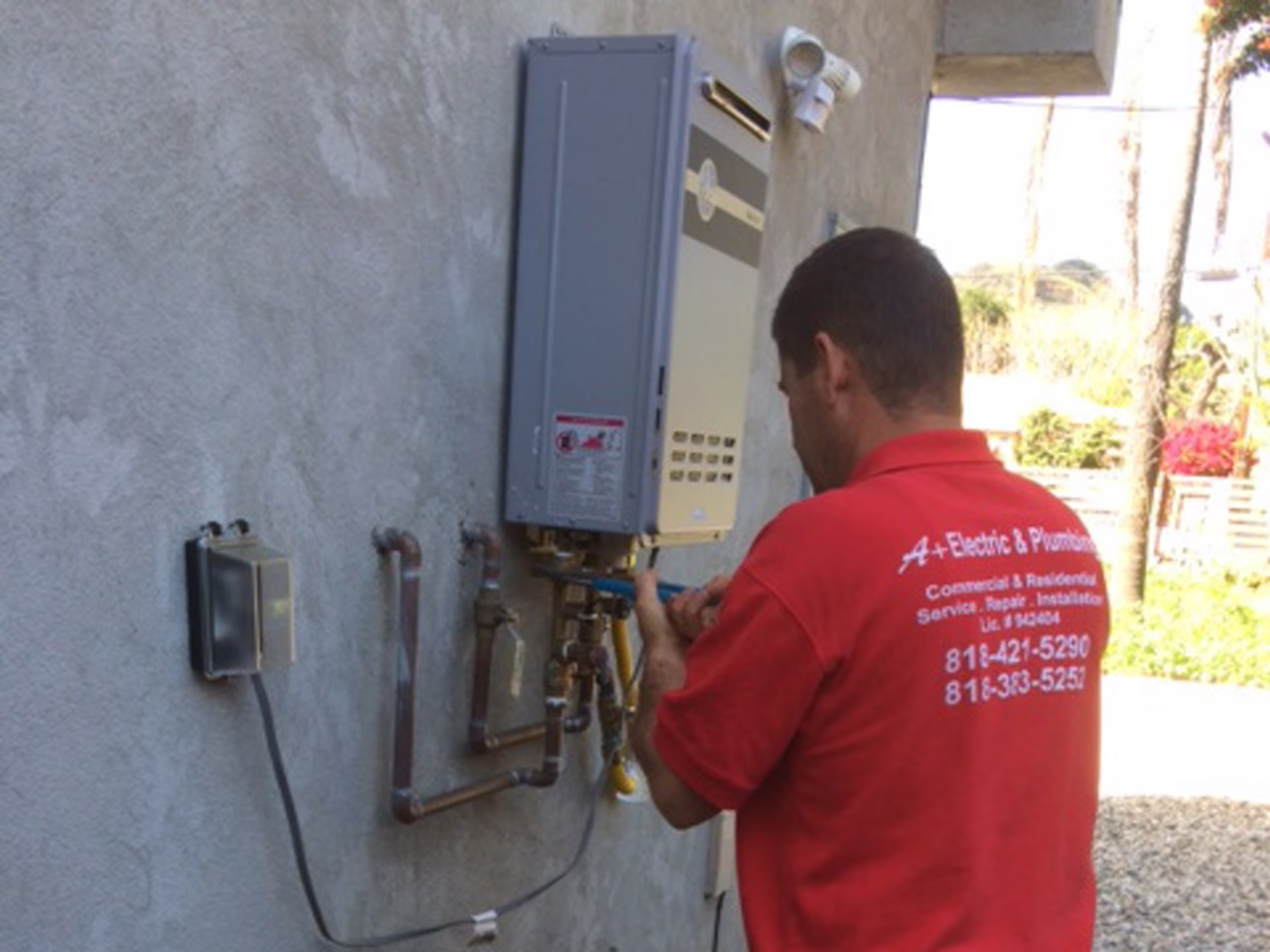
- Tankless water heaters, standby generators, EV chargers with a panel upgrade, remodels, disposals, and sump pumps all need both a plumber and an electrician.
- California licenses electrical work under classification C-10 and plumbing under C-36, and a contractor may hold both on one license number.
- With two contractors, the gaps show up as scheduling delays, inspections on separate days, and finger-pointing when a fault sits between the trades.
- Anyone can verify a contractor's classifications, bond, and workers' comp status free at cslb.ca.gov before signing anything.
- A+ Electric & Plumbing holds C-10 and C-36 under CSLB #942404 and runs both trades from one office in Tujunga.
What does one contractor for electrical and plumbing actually change?
Three things. First, one crew sequences the work, so the gas line, the vent, and the outlet for a tankless heater go in the same morning instead of across two weeks of callbacks. Second, one company owns the result. When the heater throws an error code, nobody argues about whether the fault is the wiring or the gas pressure, since the same license covers both.
Third, the paperwork shrinks. The City of Los Angeles still issues an electrical permit and a plumbing permit as separate documents, but one office files both and books the inspections back to back, rather than on two different days with two contractors waiting on each other.
A+ Electric & Plumbing is a licensed electrician and plumber in Los Angeles, holding the C-10 and C-36 classifications on one license, and most of what follows comes from jobs where a second contractor would have been the normal answer.
Which jobs touch both trades?
More than most homeowners expect. Anything with a burner and a control board, anything with a motor and a drain, and anything that opens a wall for one trade tends to need the other. The table lists the jobs where we see it most.
Common jobs and which trade owns each part
| Job | Plumbing side (C-36) | Electrical side (C-10) |
|---|---|---|
| Tankless water heater conversion | Upsized gas line, new venting, condensate drain | 120-volt outlet for ignition and controls |
| Standby generator | Gas line sized for the generator's full draw | Transfer switch, panel tie-in, unit wiring |
| EV charger with a panel upgrade | Bonding jumpers on metal water and gas lines | 200-amp panel, dedicated 240-volt circuit |
| Kitchen or bathroom remodel | Moved drains, vents, supplies, shower valve | GFCI outlets, exhaust fan, lighting, new circuits |
| Garbage disposal | Drain, trap, dishwasher connection | Switched outlet or dedicated circuit under the sink |
| Sump or sewage ejector pump | Pit, check valve, discharge line | GFCI-protected circuit and float switch wiring |
| Heat pump water heater | Water lines, condensate drain, seismic straps | Dedicated 240-volt circuit, often a panel check first |
The three biggest sit on their own pages: tankless water heater installation, standby generator installation, and remodel plumbing, each with the electrical half handled by the same crew. The smaller ones, a disposal swap or a sump pump, cross the line just as often.
What goes wrong with two contractors?
Scheduling first. The plumber sets the tankless unit on Tuesday, but the outlet is not there, so the heater sits cold until the electrician's next open slot. Reverse the order and the electrician wires an outlet to a wall the plumber later moves. Every handoff is a gap, and gaps turn into days.
Blame second. A generator that will not start under load might have a starved gas line or a transfer switch wired wrong, and the two trades rarely agree on which. Each one bills a return visit to prove it was the other guy. The homeowner referees and pays twice for the same diagnosis.
Paperwork third. Two contractors mean two permit applications, two inspection appointments on different days, and two invoices with two warranties that each stop at the trade line. If the problem sits exactly where one trade's work ends and the other's begins, neither warranty wants it.
What do C-10 and C-36 on a single license mean?
California licenses contractors by classification. C-10 is the electrical classification, covering panels, circuits, EV chargers, and generator transfer switches. C-36 is the plumbing classification, covering water, drain, and vent piping, water heaters, and gas piping inside the property line. A contractor earns each one separately, with its own trade exam and its own documented experience.
One license number can carry several classifications, and that is the arrangement that matters here. Each classification on the record means the qualifying person passed that trade's exam and the CSLB accepted years of hands-on work in it. A general building contractor, classification B, is a different animal: a B license lets a builder run a whole project and hire specialty subs, but it does not make the builder an electrician or a plumber.
Holding both specialty classifications on one license is uncommon, since the contractor must prove the experience twice. Plenty of companies with both trades in the name subcontract one of them. Our about page explains how the two trades share one office and one schedule board at A+ Electric & Plumbing.
How do you verify a license on cslb.ca.gov?
Two minutes, no account needed. Go to the Contractors State License Board site, open the license check tool, and search by license number, business name, or the name of a person on the license. Every California contractor has to print the license number on ads, business cards, and contracts, so it should be easy to find.
- Status: active is the only acceptable answer; suspended or expired means walk away.
- Classifications: look for both C-10 and C-36 on the same record if the job crosses trades.
- Bond: a contractor bond must be on file, with the surety company named.
- Workers' compensation: a policy on file, or an exemption that only makes sense for a contractor with no employees.
- Complaint disclosure: citations, legal actions, and any past suspensions appear on the same record.
Match the name on the license to the name on the truck and the estimate. A license held by a cousin's company does not cover the crew in your driveway. If the classifications leave out one of the trades on your job, the contractor either plans to sub it out or plans to do it unlicensed, and either answer changes the conversation.
When is a single trade the right call?
Often. A slow kitchen drain, a running toilet, or a dead outlet needs one trade, one visit, and nothing more. Hiring a dual-license company for that job does no harm, but it is not the point of this guide.
The two-trade question matters when the job has a wire and a pipe in the same scope, or when opening a wall for one trade exposes work the other should do. A repipe in a 1950s Valley house is the classic case: the walls come open for new PEX, and the original cloth wiring sits right there in the same stud bays. A dual-license crew scopes both while the drywall is already off.
The honest test is simple. Ask whoever quotes the job which parts of it fall under a different classification than the one on their license. A good single-trade contractor names the other trade and tells you to book it. A dual-license contractor puts both on one estimate.
How does permitting work with one office filing both?
The permits stay separate, and the process gets shorter. In the City of Los Angeles, which covers most of the San Fernando Valley, electrical and plumbing permits both come from LADBS, each with its own inspection. Burbank, Glendale, and Pasadena each keep a separate building department, so the permit counter depends on the address.
With one contractor, one office pulls both permits at the same time and requests both inspections for the same window. The inspector sees the gas line and the transfer switch on one trip. With two contractors, each waits for the other to finish before requesting an inspection, and a failed item on one side can stall the sign-off on both.
The permit record also outlives the job. When you sell, the buyer's inspector looks for a plumbing permit on the water heater and an electrical permit on the panel, and a single contractor's file has both. One missing half is enough to hold up escrow in Los Angeles.
What should you ask before hiring for a two-trade job?
Five questions settle most of it, and they work on any bidder, including us.
- Which classifications are on your license, and can I see the number?
- Who physically does the electrical side, your crew or a sub?
- Will the plumbing and electrical permits go in together?
- If the finished system has a fault, who comes back, and does the warranty cover both trades?
- Can the estimate show both scopes on one page?
A+ Electric & Plumbing runs both trades from one office in Tujunga, the person who quotes your job is the person responsible for it, and every job carries a one-year workmanship guarantee. The electrical services and plumbing services hubs list what each side covers, and the current ranges for every job live on its own service page rather than here.
A live person answers (818) 421-5290 at any hour, and written estimates are free. Bring the fixture list, the generator size, or the remodel drawings, and one estimate will show both trades side by side.
Frequently asked questions
Does one contractor for electrical and plumbing cost more than two?
Usually less, since the overlap disappears. Two contractors each bill a trip and a diagnosis, each pulls a permit run, and the scheduling gap between them can add return visits. One crew makes one trip for the shared work. The exact number depends on the job, which is why each service page carries its own current ranges instead of this guide.
Can a general contractor with a B license do my wiring and plumbing?
Not with their own hands, in most cases. A B license covers framing and general building, and it lets the holder hire licensed subs for the trades. If a general contractor's own crew wires your panel, ask which C-10 license covers that work. The answer is usually a sub, and you are entitled to that sub's license number too.
What if the license shows C-36 only and the plumber promises an electrician friend?
Get the friend's license number and check it the same way. A promise is not a classification. The risk is that the electrical half ends up unpermitted or done by a handyman, and the inspector, the insurer, and the next buyer will all find it. Two verified licenses on one job is fine; one verified license and a handshake is not.
Does a dual license matter for an emergency call?
It matters most then. A burst pipe under a slab can soak a junction box, and a failing water heater can trip a breaker and disguise the real problem. One tech who reads both systems finds the cause faster than two dispatched separately. A live person answers our line around the clock, though we still quote a middle-of-the-night visit before anyone drives out.
How do I know the same crew really does both trades?
Watch who shows up and what they carry. A crew that sets a tankless unit and then installs its outlet with the same truck, the same permit file, and the same foreman is doing both. Ask to see the license number on the estimate, then check the classifications online. Look for both C-10 and C-36 on the same record, not on two records.
Is it worth switching contractors mid-project to get both trades?
Rarely, unless the current one has stalled. Changing horses halfway through a remodel means a new permit holder, a new inspection history, and two companies arguing over whose rough-in is which. Finish the trade in progress, then bring the dual-license crew in for the scope that remains. Plan the next project around one license from the start.
Related services
Need this handled? Start here
Get a free estimate
Tell us what's going on and a licensed tech calls you back fast, with the exact price before any work starts. Electrical and plumbing, one team.
Estimates for quoted work are free. Troubleshooting or diagnosis may carry a $100-$250 service call, credited to your repair when you approve the work.
- Exact price in writing before we start
- Licensed, bonded & insured (CSLB #942404)
- One team for electrical and plumbing
Prefer to talk? Call (818) 421-5290, answered 24/7.