
Plumbing guide
Sewer Camera Inspection Before Buying a Home in Los Angeles
Yes, order a sewer camera inspection before buying any Los Angeles home built before the mid-1980s. The general home inspector runs water and watches it drain; the camera sees the actual clay or Orangeburg pipe under the yard, where roots, bellies, and offsets hide. Book it early in the inspection contingency, keep the recording, and use it to ask for a credit, a repair, or your deposit back.
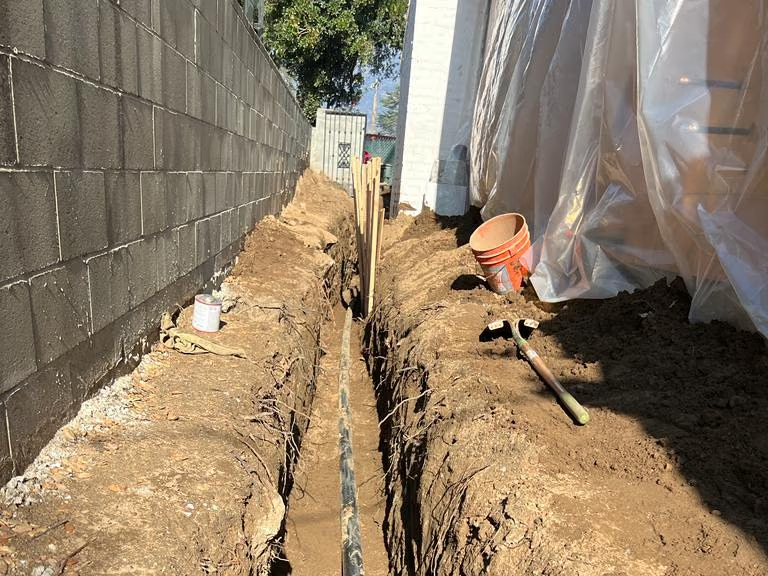
- Most Los Angeles homes built before the mid-1980s drain through clay laterals with a joint every few feet, and roots enter at those joints.
- A general home inspection does not include the sewer lateral; only a camera shows the pipe from the house to the city main.
- In Los Angeles the homeowner owns and maintains the lateral all the way to the city main, including the section under the sidewalk and street.
- The buyer usually orders and pays for the scope, and the recording becomes the evidence for a repair credit inside the inspection contingency.
- Orangeburg pipe, a tar-and-fiber product used in some postwar tracts, deforms and collapses with age and almost always calls for replacement.
Why should a sewer camera inspection be part of LA escrow?
A sewer camera inspection before buying a home is the one inspection that looks at the most expensive pipe you are about to own. The lateral runs from the house to the city main, usually 50 to 100 feet on a Valley lot, and in Los Angeles it belongs to the homeowner for its entire length, sidewalk and street included. A failed lateral is the buyer's problem the day after closing.
The general inspector cannot see it. They fill tubs, flush toilets, and watch the water go, which tells you the pipe is open today. It says nothing about the root mass three feet from the property line or the belly under the driveway. A camera on a push cable travels the whole run and records every joint on the way to the main.
Los Angeles has no point-of-sale sewer rule. Some Bay Area cities require a lateral certificate at every sale, but here the buyer has to think of it and order it. Buyers' agents across the Valley add the scope to the general inspection day for exactly that reason. Current ranges are on our sewer camera inspection page.
What is under a 1920s to 1950s Los Angeles house?
Vitrified clay pipe, almost every time. From the 1920s bungalows of Highland Park and Eagle Rock through the postwar tracts of Van Nuys, North Hollywood, and Burbank, laterals went in as short clay sections, each two or three feet long, with a mortar or tar joint between them. Clay itself lasts a century. The joints do not.
Every joint is a seam, and a 75-foot lateral can have 25 to 35 of them. Ground movement opens the seams, thirsty parkway trees find the moisture, and roots grow in. Ficus and camphor trees planted in the 1950s and 60s are the usual suspects in the Valley, and jacaranda roots do the same job on the Westside.
Orangeburg is the other postwar material. It is a tar-soaked wood fiber pipe that builders used when metal was scarce in the 1940s and 50s. It is less common in LA than clay, though it turns up in some tracts. It absorbs water over decades, goes soft, and squashes into an oval before it collapses. On camera it looks blistered and misshapen, and the honest recommendation is replacement rather than repair.
Cast iron shows up too, mostly under the slab and inside the house on 1950s to 1970s homes. It rusts from the inside, and the camera catches the rough, channeled bottom of the pipe before it opens up. Homes built after the mid-1980s usually have ABS plastic laterals, which have their own problems, like construction debris and bad tie-ins, but far fewer of them.
What does the camera find in old laterals?
Five things, in rough order of how often we see them on escrow scopes.
- Root intrusion: white or brown hairs at a joint, or a full mass that blocks most of the pipe.
- Offsets: one section shifted against the next, leaving a lip that snags paper and grease. Decades of small quakes cause most of them.
- Bellies: a low spot where the pipe lost its slope. The camera dips under standing water, and solids settle there until the line clogs.
- Cracks and breaks: a line along the pipe, a missing chunk, or a section that has caved in so the camera cannot pass.
- Tie-ins and old repairs: a bathroom addition connected without a permit, a sleeve from a past fix, or a change from ABS to clay at the property line.
Most Valley recordings show a mix of light roots, one or two small offsets, and mineral scale. That is normal for a 70-year-old pipe, and it is not a reason to walk. The rare finds, a crushed section under a driveway or a collapsed Orangeburg run, are the ones that reshape the deal. Our sewer line repair page explains which fix matches which finding.
What does the recording actually show?
The video runs from the access point to the city main with a footage counter on screen, so every defect has a distance from the house. A transmitter in the camera head lets the technician stand in the yard with a locator, find the head under the ground, and read its depth. That spot gets a paint mark and a line in the report.
Read the recording with three questions in mind. Where does the pipe change material, usually plastic to clay at the old property line? Where does water stand instead of draining, which shows a belly? Where does the view tilt or stop, which shows an offset or a break? The technician should narrate all three while you watch.
Agents, a second plumber, and the seller's side all need the same file, and a full recording ends arguments about what was or was not there. We hand over the recording with the surface marks and depths listed, and we keep a copy on file in case escrow drags.
When should you book it inside the inspection contingency?
Early. A sewer camera inspection before buying only helps if there is time left to act on it. The standard California purchase agreement gives the buyer an inspection contingency, often 17 days unless the offer shortened it, and every inspection, negotiation, and repair quote has to fit inside that window. In a hot Valley market, buyers trim the contingency to win the house, which makes the first few days even more valuable.
Book the scope for the general inspection day or the day after. A clean recording ends the question. A bad one leaves room for a repair estimate, a second opinion, and a Request for Repair to the seller before the contingency has to be removed in writing. Wait until day 15 and you are choosing between a rushed number and a lost deposit.
Access shapes the schedule too. Most LA homes have a ground-level cleanout near a hose bib or in the front yard, and the scope goes through it with normal showing access. No cleanout means a roof vent or a pulled toilet, which needs the seller's permission and a line in the inspection request, so ask the listing agent before the appointment.
Who pays for the scope and the repairs?
The buyer orders and pays for the scope in almost every LA transaction, the same as the general inspection and the termite report. It is your due diligence, and it produces a recording you own. Some sellers pre-scope before listing to head off a renegotiation. A seller-provided video is worth watching, and it is still worth verifying with your own camera if the house is old enough to worry about.
Repairs are a negotiation, not an assignment. A finding on the recording goes into a Request for Repair, and the seller can agree to fix it, offer a credit, split the difference, or refuse. Most experienced agents push for a credit rather than a seller repair, because a seller fixing a pipe on the way out the door hires the cheapest crew and the buyer inherits the result.
There is a quiet second effect. Once a seller sees a report that documents a broken lateral, California disclosure law treats it as a known defect they must tell future buyers about. That gives the seller a strong reason to settle with you rather than relist, and good agents use it.
What does a bad result change in the deal?
It depends on what the camera saw, and the table below is how those findings usually play out in a Valley escrow. A defect near the street costs more to fix than the same defect in the front yard, since work in the public right-of-way needs an LADBS permit for the lateral plus a street permit, and sometimes traffic control. The repair page explains each method with current ranges, so this table stays with the negotiation.
What the footage shows and what it usually changes
| What the camera shows | What it means | What it usually changes |
|---|---|---|
| Fine roots at a few joints | Clay joints loosening with age | Nothing, or a small credit toward jetting |
| Root mass blocking most of the pipe | The joint is open and feeding roots | Jetting plus a re-scope; credit if the joint has failed |
| Standing water in one section | A belly where the pipe lost slope | Spot repair credit; deep bellies need digging |
| A lip at one joint | Offset from ground movement | Spot repair or lining credit |
| Cracks or a missing chunk of pipe | Structural failure | Lining or replacement, a large credit |
| Oval, blistered pipe wall | Orangeburg near collapse | Full replacement; many buyers renegotiate hard or walk |
| Camera cannot pass a point | Collapse or heavy blockage | Assume the worst until cleared; repair before close or walk |
Two more outcomes are worth knowing. A buyer who cannot get a fair credit can cancel inside the contingency and get the deposit back. A buyer who loves the house can also close with the defect priced in and schedule the repair on their own timeline, which is often the smartest path when the lateral runs under a driveway you planned to redo anyway.
Should you jet the line before the camera goes in?
When grease coats the line or roots pack it, yes. A camera pushed into sludge records sludge. Hydro jetting first strips the pipe wall so the lens sees clean clay, and cracks and offsets that grease was hiding show up on the second pass. On a fresh escrow scope with a free-flowing line, the camera goes in first and jetting waits for the findings.
One caution. Jetting cannot fix anything, and nobody should push it through a pipe that is already collapsing. A licensed crew looks first, jets only what can take it, and scopes again. If the seller's report says the line was jetted right before the listing went up, ask what the camera saw afterward.
A+ Electric & Plumbing is a licensed electrician and plumber serving Los Angeles and the San Fernando Valley, and buyers' agents book our escrow scopes because the recording comes back with locations and depths marked. The same visit can include a look at the electrical panel, which matters on the same 1950s houses, since Federal Pacific and Zinsco panels hang on many of those walls. One electrician and plumber in Los Angeles means one report and no finger-pointing between two contractors when the findings overlap. Start with our Los Angeles plumber team and mention the escrow date when you call.
Frequently asked questions
Can the seller refuse to let me scope the sewer?
They can refuse invasive access, like pulling a toilet, but a scope through an exterior cleanout is a normal inspection under the purchase agreement, and a refusal is itself a red flag. If there is no cleanout, put the roof vent or toilet access in your inspection request so the seller signs off in advance. A seller who blocks the scope is telling you something about the pipe.
Is a sewer camera inspection before buying a newer home worth it?
For a house built after the mid-1980s with an ABS plastic lateral, problems are rarer but not gone. We find construction debris, settled sections, and additions tied in without permits on homes from the 1990s. If the sale price justifies a general inspection, the scope is a small addition to it. On a 1920s to 1970s house, treat it as mandatory.
How far does the camera go, and does it check the city side?
The camera runs from the cleanout to the connection at the city main, which is the full length you own. It does not travel into the main itself, which the city maintains. If the main is the problem, the recording shows the lateral clean all the way to the tap and water backing up from there, and that footage is what you send to the city.
What if the scope finds a problem under the street?
It is still the homeowner's pipe in Los Angeles, all the way to the main. A repair in the public right-of-way needs the lateral permit plus a street excavation permit, and sometimes traffic control. That is the most expensive kind of lateral repair, so a defect near the tap deserves a bigger credit than the same defect in the front yard would.
Do I need to be there for the scope?
No, though it helps. With normal showing access and a cleanout, the technician can run the scope with the buyer's agent present and send the recording afterward. Buyers who attend get the narration live, which makes the footage easier to read later. Either way, the report lists each finding with its distance from the house and its depth below grade.
Can I use the recording to get a lower price instead of a repair?
Yes, and a price reduction or a closing credit is usually the better outcome for the buyer. You pick the contractor and the method, and nobody rushes a pipe repair to hit a closing date. A credit also lets you combine the lateral work with other projects, like a new driveway or a repipe, so the yard only gets opened once.
Related services
Need this handled? Start here
Get a free estimate
Tell us what's going on and a licensed tech calls you back fast, with the exact price before any work starts. Electrical and plumbing, one team.
Estimates for quoted work are free. Troubleshooting or diagnosis may carry a $100-$250 service call, credited to your repair when you approve the work.
- Exact price in writing before we start
- Licensed, bonded & insured (CSLB #942404)
- One team for electrical and plumbing
Prefer to talk? Call (818) 421-5290, answered 24/7.