
Plumbing guide
Signs of a Hidden Water Leak, and the Two-Minute Test That Confirms One
The clearest signs of a hidden water leak are a rising bill with unchanged habits and a meter that turns with every tap off. Add a warm spot on the floor, a musty smell in one room, or low pressure at every fixture. One sign is a hint. Two together, confirmed by a two-minute meter test, mean water is escaping somewhere between the meter and your fixtures.
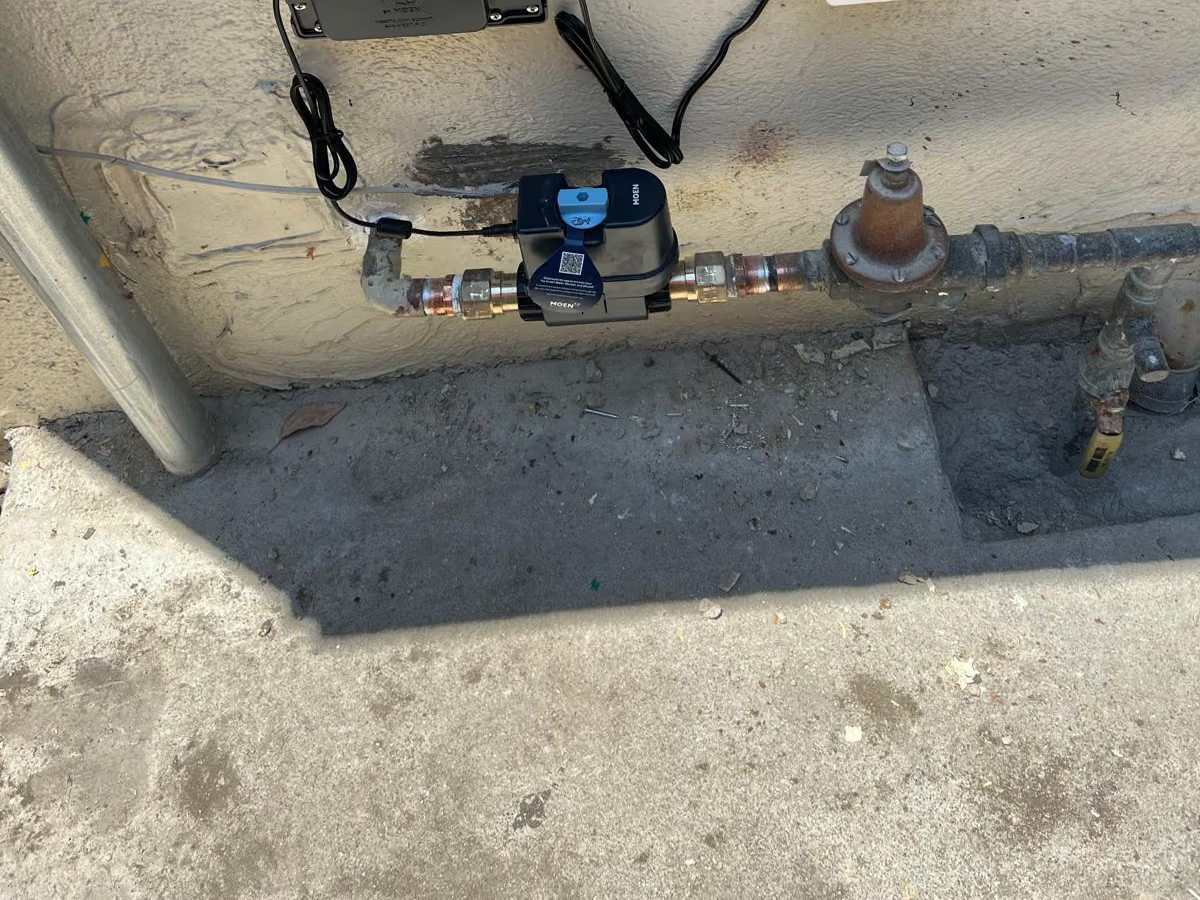
- A water meter that keeps turning with every fixture, appliance, and sprinkler off is the single most reliable sign of a hidden leak.
- Closing the main house valve and rechecking the meter tells you whether the leak sits in the yard or inside the building.
- A warm patch on a concrete floor almost always means a hot-water line leaking under the slab, common in 1950s-70s San Fernando Valley homes.
- Running toilets waste more water than any other quiet leak, so a dye test in each tank comes before any wall gets opened.
- Acoustic listening and thermal imaging locate most leaks within about a foot, so the repair means one small opening instead of exploratory holes.
How does the meter test work, step by step?
You can confirm a leak before calling anyone, and the result shapes the whole visit. The test needs the house quiet, so pick a moment when nobody will flush, shower, or run the dishwasher for half an hour.
Turn off every fixture and appliance that uses water. That means faucets, the ice maker, the washing machine, the irrigation controller, and the pool autofill if you have one.
Find the meter box at the curb or sidewalk, lift the lid, and wipe the face of the meter so you can read it.
Watch the small triangle or star on the dial for two full minutes. Some newer digital meters show a dripping-faucet icon instead when flow never stops.
Write down the full reading, wait 30 minutes with no water used, and read it again. Any difference is water you paid for and never used.
Close the main shutoff where the line enters the house and watch the dial again. Still moving means the leak sits in the yard or the irrigation. Stopped means it sits inside or under the house.
Tell us what you saw, including how fast the dial moved. We then start the visit knowing which half of the property to test first. That head start is the difference between a quick pressure check and an afternoon of hunting.
Why is the bill up when nothing changed?
Rule out the honest causes first. A new sprinkler schedule, a filled pool, house guests, and a rate change all move the bill without a leak. Compare the usage figures on the statement, not the dollar totals, since usage is the number a leak changes.
If usage climbed and habits did not, look at the toilets before anything else. A flapper that no longer seals lets water trickle from the tank to the bowl around the clock, and the meter counts every drop. Put a few drops of food coloring in the tank and wait fifteen minutes without flushing. Color in the bowl means the flapper is leaking.
The EPA puts household leaks at nearly 10,000 gallons a year for the average family. It also says one home in ten has leaks wasting 90 gallons or more a day. Most of that is toilets and dripping fixtures, which is good news, since those are quick to fix compared with anything under a slab.
What does a warm floor spot mean?
A warm patch on the floor, with no heater vent or window to explain it, is the classic sign of a hot-side slab leak. Thousands of San Fernando Valley homes from the 1950s through the 1970s have copper supply lines cast into the slab. Hot water corrodes copper faster than cold. When a hot line pinholes, the escaping water warms the concrete above it.
Two companions confirm it. The water heater runs more than it used to, since it heats water that never reaches a tap. Hot water also takes longer to arrive at the shower. A quick test: close the cold-water valve on top of the water heater and check the meter. If the dial stops, the leak is on the hot side.
Slab leaks head down, not into the room, so bills climb long before a floor shows anything. The fix is a slab leak repair, either a spot repair through one small opening or a reroute overhead that abandons the failed line. Cracks in tile, a lifting floor, or a doorway that sticks mean the leak has run a long time.
Musty smell, low pressure, and the sound of running water
A musty smell in one room, one closet, or the cabinet under a sink means damp material behind a surface. Mold needs only about two days of moisture to get started. Treat the smell as a reason to look now. Pull the cabinet contents, check the supply lines and the drain trap, and press the drywall around the baseboard for softness.
Low pressure tells you where to look by how widespread it is. One weak faucet is almost always a clogged aerator. Weak pressure at every fixture points upstream, to a failing pressure regulator or to the buried water line from the meter. The regulator is the simpler part to test first.
Hissing or the sound of water moving with every fixture closed is worth chasing at night, when the house is quiet. Put an ear to the wall near the water heater, the kitchen, and each bathroom. Pressurized water escaping through a pinhole makes a steady hiss, and the loudest spot is usually within a few feet of the leak.
Slab, wall, or yard: where is the leak?
The meter test with the house valve closed makes the first cut. A dial that keeps moving puts the loss outside: the service line from the meter, the irrigation system, or a pool fill line. A dial that stops puts it inside the building, in a wall, under a floor, or beneath the slab.
Yard leaks leave their own tracks. A green stripe of lawn in a dry August, a soft patch of ground, or a dip in the driveway trace the service line. Wall leaks show as stains, bubbling paint, swollen baseboards, and that musty smell. Slab leaks give the warm floor, the hissing, and the water heater that never rests.
Ownership matters for the outdoor case. LADWP owns the pipe from the street main to the meter, and you own everything from the meter to the house. A leak on the house side of the meter is your repair. Inside a wall, water often shares the cavity with wiring. Wet drywall around an outlet is an electrical problem as well as a plumbing one.
What do acoustic and thermal detection actually do?
Once the meter test says inside, the job is to find one pinhole in a pipe you cannot see without turning the house into Swiss cheese. Four tools do that from the surface.
- Acoustic listening: a ground microphone picks up the hiss of pressurized water leaving the pipe. The loudest point along the line marks the leak, often within a foot.
- Thermal imaging: an infrared camera shows the warm trail a hot-water leak leaves across a slab or up a wall. That narrows the search before anyone listens.
- Pressure isolation: closing valves one section at a time and watching a gauge names the guilty branch, house, irrigation, or pool, without opening anything.
- Dye testing: harmless dye traces leaks in toilets, shower pans, and pool fittings that pressure tools cannot tell apart.
No single tool wins every job. A cold-side slab leak leaves no heat trail, a deep yard line can be silent at the surface, and plastic pipe carries sound poorly. A good crew cross-checks with a second method before marking the floor. Current ranges for a detection visit are on our leak detection page, and the search itself opens nothing.
When should you stop watching and call?
Call as soon as the meter moves with everything off, since the signs of a hidden water leak never improve on their own. Water under a slab or inside a wall does not fix itself. A slow leak that runs for months does more damage in flooring, drywall, and mold than the repair ever would. If water is actively pooling, close the main house valve first, then pick up the phone. A live person answers (818) 421-5290 around the clock.
Original copper from the 1950s and 1960s seldom stops at one pinhole. Mineral-heavy water and stray electrical current eat copper from the inside, and once the first pinhole opens, more usually follow. One leak in otherwise solid pipe earns a spot repair. A second or third within a year is the house asking for whole-house repiping. The pipe wall we see at the repair opening tells us which case you have.
Our Los Angeles plumber team locates the leak, marks it, and puts the repair in writing before anything gets cut. The crew that finds it can fix it with your approval. If you would rather have a licensed electrician and plumber in Los Angeles read the meter with you, that is a fair start too.
Frequently asked questions
My meter is moving but I cannot find any water. Where is it going?
Down, most likely. A slab leak drains into the soil under the foundation, and a yard leak soaks into the ground. Neither shows a puddle for a long time. Close the main house valve and recheck the meter to split the property in half. Look for a warm floor inside or a soft, green patch outside. If nothing shows, acoustic detection finds it from the surface.
Can a leak be on the hot side only?
Yes, and it is the most common slab leak we find. Hot water corrodes copper faster, so the hot line under the kitchen or a hallway fails first. Close the cold-water valve on top of the water heater and watch the meter. A dial that stops means the leak is on the hot side. That single test also explains the warm floor and the heater that never rests.
Does the water company fix leaks on my property?
No. LADWP, or the city utility in Burbank, Glendale, and Pasadena, owns the pipe from the street main to the meter and repairs that side. Everything from the meter to the house, including the buried service line and the irrigation tee, belongs to the property owner. A leak the meter records is on your side by definition, since the meter sits at the boundary.
How long can I wait once I know there is a leak?
Not long, and the reason is not the water alone. Drywall and framing begin to grow mold after roughly two days of steady moisture. A slab leak can wash out the soil under a footing, and insurers look hard at damage from a leak the owner knew about. A slow drip is not tonight's emergency, but it belongs on this week's list.
Will detection tear up my floors or walls?
No, the search is non-invasive. Listening discs, the infrared camera, a pressure gauge, and dye all work from the surface, so the house stays intact while we look. Cutting happens only after you approve a repair. Even then it is one targeted opening at the marked spot, about the size of a floor tile, instead of exploratory holes.
Could the leak be my irrigation instead of the house?
Often, yes, and it is easy to miss. On many Los Angeles lots the irrigation tees off the service line before the house shutoff. A cracked lateral or a stuck valve then keeps the meter turning even with the house valve closed. Shut the irrigation valve as part of the meter test, and check the controller for a zone that runs at three in the morning.
Related services
Need this handled? Start here
Get a free estimate
Tell us what's going on and a licensed tech calls you back fast, with the exact price before any work starts. Electrical and plumbing, one team.
Estimates for quoted work are free. Troubleshooting or diagnosis may carry a $100-$250 service call, credited to your repair when you approve the work.
- Exact price in writing before we start
- Licensed, bonded & insured (CSLB #942404)
- One team for electrical and plumbing
Prefer to talk? Call (818) 421-5290, answered 24/7.