
Electrical guide
Smoke Detector Requirements in California: Where Alarms Go, and When They Must Be Hardwired
California smoke detector requirements for an existing home come down to three spots. Put an alarm inside every bedroom, in the hallway outside each sleeping area, and on every level, basement included. Homes with a gas appliance, a fireplace, or an attached garage also need carbon monoxide alarms. Battery-only units must be the sealed ten-year type. Hardwired, interconnected alarms apply when you build, add a bedroom, or pull a permit that opens the walls.
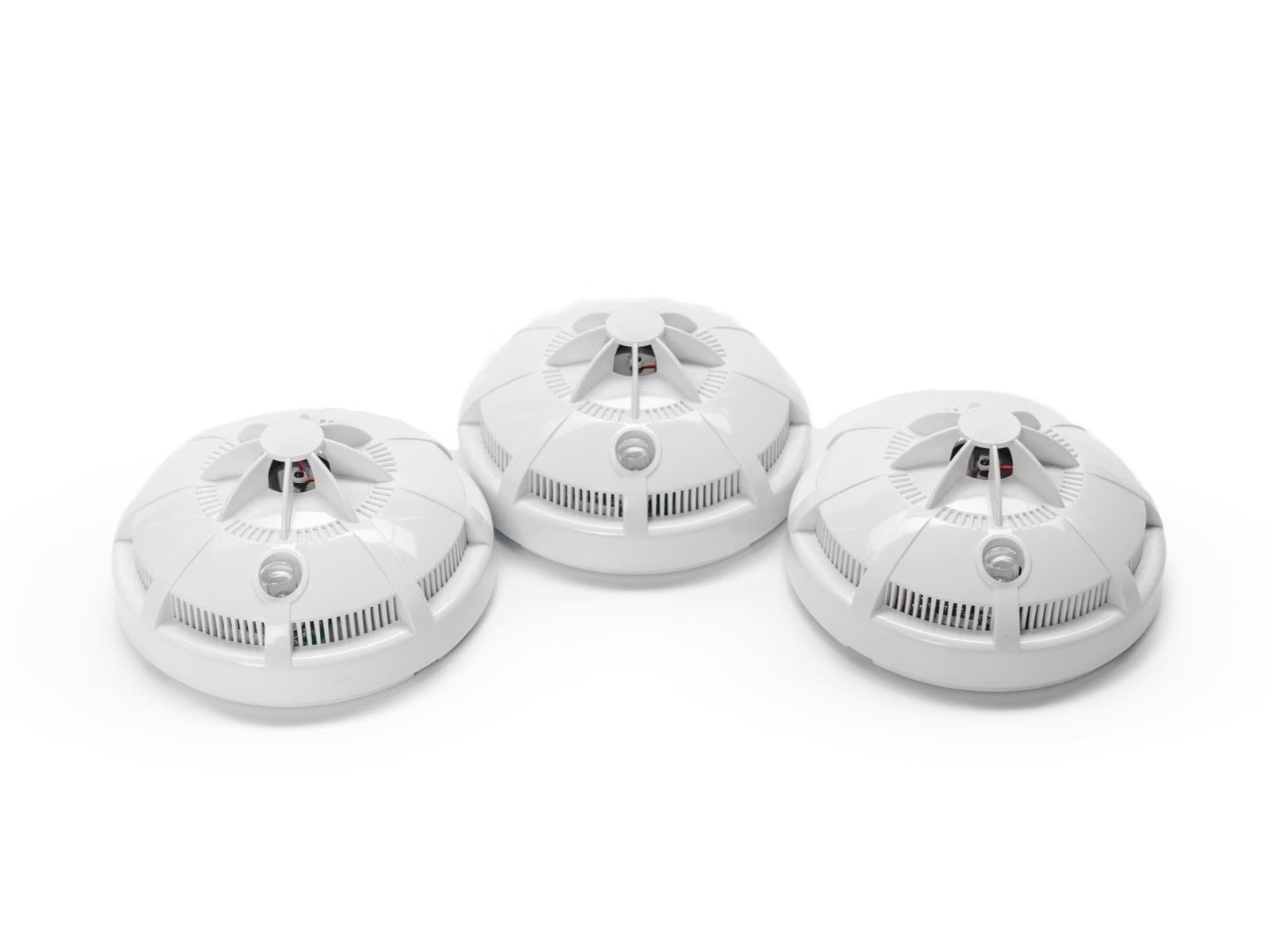
- California requires a smoke alarm inside every bedroom, in the hallway outside each sleeping area, and on every level of the home, including a basement.
- Homes with a gas appliance, a fireplace, or an attached garage also need carbon monoxide alarms outside each sleeping area and on every level.
- Any battery-only smoke alarm sold in California since 2014 must have a sealed battery rated for ten years, and every alarm needs a State Fire Marshal listing.
- Hardwired, interconnected alarms with battery backup are the standard for new construction, and a permit that touches the bedrooms usually brings that standard into an older house too.
- Smoke alarms age out ten years after their manufacture date, and carbon monoxide alarms at five to ten years depending on the model.
Where does California require smoke alarms in an existing home?
Start with the bedrooms. Every room used for sleeping needs its own alarm, including a den with a bed in it or a converted garage. The hallway that serves those bedrooms needs one too, close enough that a sleeper hears it through a closed door.
Every level gets at least one alarm, even a level with no bedrooms. A finished basement or a bonus room over the garage each count as a level. A split level less than a full story down, with no door between, can share the alarm on the upper level. The California Residential Code sets these placements, and it borrows them from NFPA 72, the national alarm standard.
Smoke and carbon monoxide alarm requirements by location in a California home
| Location | Smoke alarm | Carbon monoxide alarm |
|---|---|---|
| Each bedroom | Required, one per room | Only when a fuel-burning appliance sits in the bedroom or its bathroom |
| Hallway outside the bedrooms | Required, one per sleeping area | Required in homes with a gas appliance, a fireplace, or an attached garage |
| Each level, including a basement | Required, at least one | Required in those same homes, one per level |
| Living room, family room, den | Serves as the level's alarm when no bedroom sits on that floor | Serves as the level's CO alarm |
| Kitchen | Not required; keep the nearest alarm at least 10 feet from the stove | Not required |
| Bathroom | Not required; keep alarms 3 feet from a shower or tub door | Not required |
| Attached garage | Not required inside the garage | Not in the garage; the garage triggers CO alarms in the living space |
| Furnace or water heater closet | Not required | Not in the closet; the appliance triggers CO alarms in the living space |
Count it out for a one-story, three-bedroom Valley ranch: three bedroom alarms plus one in the hall, and a CO alarm in that same hall. Add a second floor or a basement, and the count grows by one alarm of each kind per level.
Which homes need carbon monoxide alarms, and where do they go?
Nearly every house in Los Angeles qualifies. The state's Carbon Monoxide Poisoning Prevention Act covers any home with a fuel-burning appliance, a fireplace, or an attached garage. A gas water heater, a gas furnace, a gas range, or a wood-burning fireplace each trigger the rule on its own. A car idling in an attached garage is the reason the garage counts.
CO alarms go outside each sleeping area, in the same hallway as the smoke alarm, and on every level of the home. If a bedroom has its own gas wall heater or fireplace, that bedroom gets a CO alarm inside as well. Height matters less than people think, because carbon monoxide mixes evenly with room air. The maker's mounting instructions govern, and a ceiling unit, a high wall unit, or a plug-in unit with battery backup can all pass.
Here is what we see in the Valley: 1950s and 1960s houses with a gas wall heater and no CO alarm anywhere. The heater is original, nobody has looked at the vent in decades, and the family sleeps ten feet from it. That is the exact home the law had in mind. A combination smoke and CO alarm in the hallway is the quickest fix, and the same visit can include a look at the vent.
Do battery alarms still count under the smoke detector requirements?
Yes, in an existing home with no open permit. California does not force you to hardwire an older house on its own. What the state changed in 2014 is the alarm itself: any battery-only smoke alarm sold here must have a sealed battery rated for ten years. The nine-volt door on the back is gone, and so is the yearly battery swap.
Every alarm sold in California also carries a listing from the Office of the State Fire Marshal, which keeps the approved list at osfm.fire.ca.gov. Since 2015 the units show a manufacture date on the back, a space to write the install date, and a hush button. If an alarm in your house has none of those, it predates the rule and has probably passed its ten years anyway.
Two limits apply to battery alarms. First, they do not talk to each other unless you buy a wireless-interconnect model. A fire in the garage may not wake the far bedroom. Second, once you pull a permit that touches the bedrooms, the battery units stop satisfying the rule and hardwired alarms take over. The next section draws that line.
When does a permit force hardwired, interconnected alarms?
New construction always has hardwired alarms with battery backup, interconnected so every unit sounds together. Existing homes inherit that standard through the permit process. Add a bedroom, convert a garage, or open the walls for a remodel, and the code asks for alarms as if the house were new.
There is a practical exception. If the permitted work never removes wall or ceiling finishes, and no attic or crawl space offers a route for the wire, the inspector can accept sealed ten-year battery alarms instead. Most one-story Valley houses have an attic, which is why the exception rarely applies to them. A slab home with a flat roof and no attic access is the case where it does.
Under the state code, exterior-only work such as new windows, and plumbing-only or mechanical-only permits, usually do not force hardwiring, and battery alarms are accepted. Cities differ, though. The City of Los Angeles asks for working smoke alarms, battery allowed, on a reroof above a small valuation threshold, and many cities want an alarm sign-off on any permit above a similar threshold. Kitchen, bath, remodel, and addition permits bring the alarm rule every time, so ask your building department what your permit triggers. If you are already opening the hallway ceiling for recessed lights, that is the moment to run the interconnect wire. The drywall is open, and the extra work is small next to fishing wire later. Our residential electrician team handles that wiring under the same permit as the rest of the job.
What do inspectors check at a permit final or a home sale?
In the City of Los Angeles, LADBS inspectors look at the alarms on the final of most permits, whatever the permit covered. The inspector presses a test button, expects every alarm to sound together on a hardwired set, and counts the bedrooms against the alarms. Burbank, Glendale, and Pasadena run their own building departments, and their inspectors follow the same state code with their own local habits.
A missing bedroom alarm is one of the most common reasons a final gets held up. A CO alarm nobody bought is another. Both take minutes to fix, so have the units in place before you call for the inspection rather than after.
At sale, the seller signs a statement of compliance that covers smoke alarms and water heater strapping on one form, and confirms the carbon monoxide alarms on the disclosure statement. The City of Los Angeles adds its own Residential Property Report, often called the 9A, and alarms sit on its retrofit list next to the seismic gas valve. Escrow gathers these late, so many sellers meet the smoke detector requirements for the first time a week before closing. Listing soon? An electrical safety inspection before the sign goes up catches alarm age and placement along with the panel, so the buyer's inspector finds nothing to write up.
Which placement mistakes make a smoke alarm fail the check?
The alarm itself is rarely the problem. Where it sits is. These are the mistakes we correct most often in Los Angeles and Valley homes:
- Too close to the kitchen: an ionization alarm within 10 feet of the stove trips on toast. Someone pulls the battery, and now the hallway has no alarm at all.
- Beside a ceiling fan or a supply register: moving air pushes smoke away from the sensor. Keep alarms at least 3 feet from fan blades and air vents.
- In the dead-air corner: smoke moving along a ceiling skips the corner where ceiling meets wall. Many makers still ask for ceiling units at least 4 inches from any wall, and wall units go within 12 inches of the ceiling. Follow the sheet in the box.
- Painted over: a coat of ceiling paint seals the vents, and we find these in nearly every flipped house. A painted alarm is a dead alarm and needs replacing, not cleaning.
- Within 3 feet of a bathroom door: shower steam sets it off and trains the household to ignore alarms.
- At the very apex of a vaulted ceiling: a pocket of dead air can hang at the top. Keep the unit at least 4 inches down from the peak, but within 3 feet of it.
Short hallways in 1950s tract plans cause the first mistake on their own. The hall is eight feet long, the kitchen opens right off it, and the only spot that clears the stove by 10 feet is inside a bedroom doorway. A photoelectric alarm, which reacts to smoldering smoke rather than cooking particles, handles that layout with far fewer nuisance trips.
How old is too old for a smoke or CO alarm?
Ten years from the manufacture date for a smoke alarm, whatever the test button says. The button only proves the horn and the battery work. The sensing chamber loses sensitivity with dust and age, and nothing on the outside shows it. Carbon monoxide sensors wear out faster, at five to ten years depending on the model. Most newer units chirp an end-of-life pattern when they reach it.
Flip a unit over and read the date. No date means it predates 2015 and is due. Most hardwired sets in the Valley went in with the original build or the last big remodel, so the whole set ages out together. Replace them as a set, since mixing brands on one interconnect line usually breaks the interconnection.
Combination smoke and CO units replace two devices in the hallway with one, and they make sense for the sleeping-area spot. In bedrooms, a plain smoke alarm is enough unless the room has its own gas appliance. When we replace a set, we write the install date on each unit with a marker, in the space the code put on the back for that purpose.
What can a homeowner install, and when do you need an electrician?
You can do more than you might think. Swapping a battery-only alarm for a sealed ten-year unit is a screwdriver job. Replacing a hardwired unit with the same brand's current model usually means turning the breaker off, unplugging the old harness, and plugging the new unit onto the same bracket. Test the full chain afterward, and every alarm should sound.
Call an electrician for the rest. Adding a hardwired location where none existed, running interconnect wire through finished ceilings, mixing an old set with a new brand, or tying alarms into a permit all sit on the electrical side. Our smoke detector installation page covers the hardwired and interconnected work, and current ranges live there rather than here.
A+ Electric & Plumbing is a licensed electrician and plumber serving Los Angeles and the San Fernando Valley, with one license covering both the alarm wiring and the gas appliance behind the CO rule. One crew checks the furnace vent and wires the alarm, with no finger-pointing between two contractors. The wider list of electrician services in Los Angeles starts at the panel and ends at the alarms on the ceiling. If you would rather have a licensed electrician and plumber in Los Angeles count the rooms with you, a live person answers (818) 421-5290 around the clock.
Frequently asked questions
Do I need a smoke alarm in the kitchen or the garage?
No. The code does not call for a smoke alarm in either room, and one in the kitchen would trip on cooking until someone disabled it. Keep the nearest alarm at least 10 feet from the stove. The garage matters for a different reason. An attached garage triggers the carbon monoxide rule, so a CO alarm belongs in the hallway, not out by the car.
Can I replace one dead hardwired alarm with a different brand?
You can, but it may not talk to the others. Interconnect signals differ between manufacturers, so a mixed set often fails the all-sound-together test at an inspection. Match the brand family already on the ceiling, or replace the whole set at once. Since hardwired sets usually share one manufacture date, the rest are probably close to their ten-year limit anyway.
Who is responsible for smoke alarms in a Los Angeles rental?
The owner. California puts the smoke detector requirements on the landlord for every rental unit, and the same goes for carbon monoxide alarms. Tenants must not disable them and should report a dead unit. In the City of Los Angeles, the housing department's periodic rental inspections check alarms along with the rest of the unit. Owners of small Valley rentals usually meet the rule that way.
All my alarms went off at once with no smoke. What happened?
On an interconnected set, one unit triggered and the rest followed, which is the system doing its job. Find the one with a flashing or solid red light; that is the originator. Dust, a spider in the chamber, steam, or a sensor near the end of its life are the usual causes. Vacuum it and press the hush button. If it repeats within a few days, replace that unit.
How do I find the age of an alarm?
Take the unit off its bracket and look at the back. Every alarm sold in California since 2015 carries a printed manufacture date, and most also have a space for the install date. No date at all means the unit predates that rule and has almost certainly passed ten years. Write the replacement date on each new unit so the next check takes seconds.
Do I have to throw out working battery alarms that are not the ten-year type?
Not on their own. The 2014 rule governs what stores may sell, not what stays on your ceiling. An older nine-volt unit that still tests and is under ten years old can stay for now. Replace it with a sealed ten-year model when the battery dies, when the unit hits ten years, or when a permit or a sale brings an inspector through.
Related services
Need this handled? Start here
Get a free estimate
Tell us what's going on and a licensed tech calls you back fast, with the exact price before any work starts. Electrical and plumbing, one team.
Estimates for quoted work are free. Troubleshooting or diagnosis may carry a $100-$250 service call, credited to your repair when you approve the work.
- Exact price in writing before we start
- Licensed, bonded & insured (CSLB #942404)
- One team for electrical and plumbing
Prefer to talk? Call (818) 421-5290, answered 24/7.