
Electrical guide
Tesla Wall Connector vs NEMA 14-50: Which Should You Install?
Install the Tesla Wall Connector if you charge at home nightly and own the house: hardwired on a 60-amp breaker, it charges at 48 amps and needs no GFCI breaker. Pick the NEMA 14-50 outlet if you rent, plan to move, or want the Mobile Connector to travel with you. In the Tesla Wall Connector vs NEMA 14-50 decision, the outlet caps charging at 32 amps and needs a GFCI breaker by code.
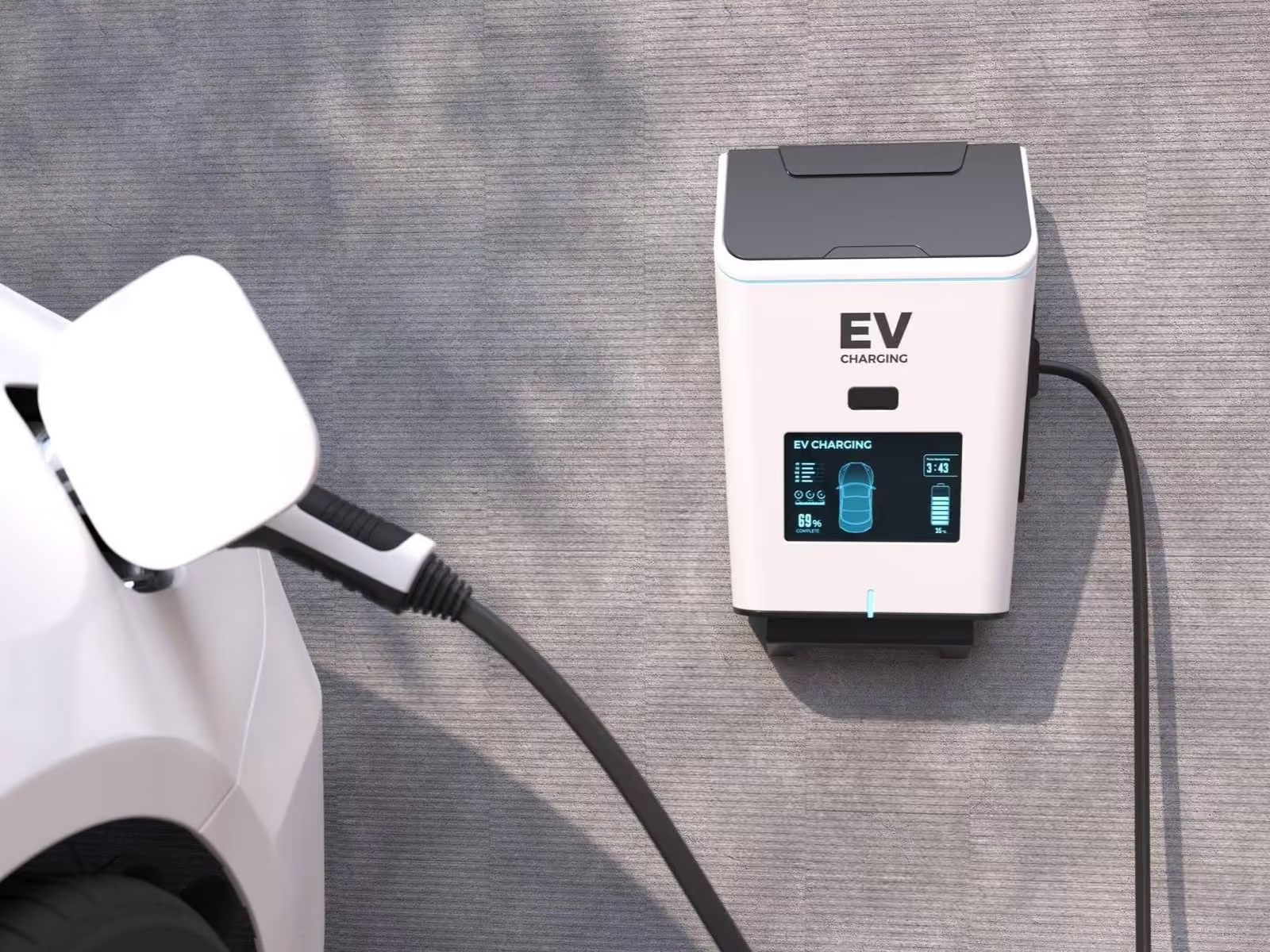
- The Tesla Wall Connector hardwires to a 60-amp breaker and charges at up to 48 amps, while the Mobile Connector on a NEMA 14-50 outlet is capped at 32 amps.
- Code treats EV charging as a continuous load, so every charging circuit is sized at 125 percent of the charger's setting.
- Current California code requires a GFCI breaker on an EV outlet, and that breaker can nuisance-trip with the Mobile Connector; the hardwired Wall Connector has its protection built in and runs on a standard breaker.
- Both setups need an electrical permit in every Los Angeles-area city, and both refill a typical commute overnight.
- The outlet wins on portability for renters and movers; the Wall Connector wins for daily charging, outdoor mounting, and two-Tesla homes.
Which one should you install: Wall Connector or 14-50 outlet?
The Wall Connector is the setup Tesla recommends for daily charging, and it earns that for three reasons. It hardwires to a 60-amp circuit and charges at up to 48 amps. It carries its own ground-fault protection inside the case, so the breaker stays a plain two-pole unit. It also mounts outdoors in its own rated enclosure, which matters for the many Valley homes that park in a driveway or carport.
The NEMA 14-50 outlet is the range-style receptacle that the Mobile Connector plugs into through a 14-50 adapter. It runs on a 50-amp breaker, and the Mobile Connector draws 32 amps through it. That still refills a normal commute overnight. The outlet wins on flexibility: unplug the cord, pack it in the trunk, and plug in at a rental or an RV park on a road trip.
Which side of the Tesla Wall Connector vs NEMA 14-50 question you land on comes down to ownership and habits. Homeowners who charge nightly get more from the hardwired unit. Renters, frequent movers, and two-home households get more from the outlet. Current ranges for both setups are on our Tesla charger installation page.
How much faster does the Wall Connector charge?
Running at 48 amps, the Wall Connector puts roughly 44 miles back on a Model 3 or Model Y for every hour it stays plugged in. The Mobile Connector on a 14-50 outlet adds roughly 30 miles per hour on the same cars. Heavier vehicles like the Model X and the Cybertruck gain fewer miles from either setup, since they use more energy per mile.
Over a full night the gap matters less than the hourly numbers suggest. A 40-mile commute refills in under two hours on the outlet and in about an hour on the Wall Connector. Both are done long before morning. The speed difference starts to count when you come home near empty and leave early, or when two Teslas share one garage.
The Wall Connector also adjusts. During setup the installer commissions its output anywhere from 12 to 48 amps, so a home with a tight 100-amp panel can run the unit at 32 or 40 amps today and raise it after a panel upgrade later. The outlet has no such dial; the Mobile Connector draws its 32 amps or nothing.
Why does a 48-amp charger need a 60-amp breaker?
The electrical code treats EV charging as a continuous load, meaning anything that runs at full draw for three hours or more. Continuous loads get sized at 125 percent. A charger set to 48 amps needs a circuit rated for 60 amps, so the breaker is a 60 and the wire is sized to match, usually 6-gauge copper.
The same rule runs down the whole ladder. Set the unit to 40 amps and the breaker is a 50. Set it to 32 and the breaker is a 40. The 14-50 outlet sits on a 50-amp breaker, which would allow a 40-amp plug-in charger, but Tesla caps the Mobile Connector at 32 amps, so the outlet never uses all of its headroom.
Two mistakes show up in Valley garages more than any other. The first is a Wall Connector set to 48 amps on a 50-amp breaker, which trips partway through a long charge and wears the breaker out. The second is a bargain range receptacle used for the 14-50 outlet. Those are built for a range that cycles on and off, not for 32 amps straight through the night, and we have replaced more than one with scorched terminals.
Why do GFCI breakers trip on EV outlets?
Current California code requires ground-fault protection on receptacles in garages and outdoors, and the EV article of the code adds it for any outlet installed for charging. For a 14-50 outlet that means a two-pole 50-amp GFCI breaker in the panel. The Mobile Connector carries its own ground-fault detection in the plug-in brick, so the circuit now has two devices watching for the same fault.
Two layers of protection sound safer, yet in practice they argue. The Mobile Connector runs a self-test at the start of each session, and some GFCI breakers read that test as a fault and trip. The car sits unplugged all night, and you find out at dawn. Some breaker and cord combinations behave, others trip every few nights, and the pattern is hard to predict before the install.
The Wall Connector sidesteps the problem. It is hardwired, so the receptacle rule does not apply, and Tesla's install manual calls for a standard breaker because the unit already has ground-fault protection built in. Putting it on a GFCI breaker anyway invites the same nuisance trips. This is the single biggest technical reason we steer daily chargers toward hardwiring.
Wall Connector vs NEMA 14-50: side-by-side comparison
Here is the whole Tesla Wall Connector vs NEMA 14-50 decision in one view. The numbers assume a Model 3 or Model Y, a 60-amp circuit for the Wall Connector, and a 50-amp circuit for the outlet.
Wall Connector and 14-50 outlet, side by side
| Factor | Tesla Wall Connector | NEMA 14-50 outlet with Mobile Connector |
|---|---|---|
| Connection | Hardwired to the circuit | Plug-in through a 14-50 adapter |
| Max charging current | 48 amps, adjustable down to 12 | 32 amps, fixed |
| Breaker | 60-amp two-pole, standard | 50-amp two-pole GFCI |
| Range added per hour | Up to about 44 miles | Roughly 30 miles |
| GFCI breaker required | No, protection is built into the unit | Yes, under current California code |
| Nuisance trips | Rare | Possible, depends on breaker and cord |
| Portability | Stays with the house | Cord travels with the car |
| Outdoor mounting | Rated for outdoor use | Outlet needs an in-use cover; cord should not live outside |
| Daily use | Tesla recommends it for daily charging | Tesla pitches it as the on-the-go option |
| Permit | Required | Required |
The right-hand column is not the lesser choice. For a renter or a household that splits time between two homes, the cord that travels is the whole point. The left column is for the car that lives in the same garage for years.
Where should the charger go in the garage?
Tesla puts the charge port on the rear driver's side, so the charger belongs on the side of the garage that corner of the car ends up nearest when you park. The Wall Connector ships with a 24-foot cable and the Mobile Connector cable runs about 20 feet, so neither has to sit within arm's reach of the port. Mount the unit at roughly 40 to 48 inches so the connector hangs above bumper height.
Distance to the panel matters more than distance to the car. Many Valley garages have the panel on an outside wall a few feet away, which keeps the run short. A panel on the far side of the house means conduit along the exterior or a run through the attic, and that run is what drives the labor. Ask about both mounting spots before you decide.
For a 14-50 outlet, keep it out of the splash zone and away from the water heater. Outdoors, the outlet needs a weatherproof in-use cover, and the Mobile Connector should come inside when you are done, since it is not built to hang in the rain. Our 240-volt outlet installation page covers the receptacle side in more detail.
Do you need a permit for either setup in Los Angeles?
Yes, both ways. A new 240-volt circuit needs an electrical permit whether it ends in a receptacle or a hardwired unit. In the City of Los Angeles the permit goes through LADBS, which handles many residential charger permits online. Burbank, Glendale, and Pasadena run their own building departments with their own forms.
The inspection is short. The inspector checks the breaker size against the charger setting, reads the wire gauge, looks for the GFCI breaker on an outlet install, and confirms the unit or receptacle is listed and mounted properly. On a Wall Connector they often ask what amperage it is commissioned at, so keep the app handy.
Skipping the permit is the wrong way to save. An unpermitted 60-amp circuit surfaces in a home sale disclosure, and it hands an insurer a reason to argue about a garage fire. A+ Electric & Plumbing is a licensed electrician and plumber serving Los Angeles and the San Fernando Valley, and we pull the permit and meet the inspector on every charger job, outlet or hardwired.
One more note for two-car households. If the second car is not a Tesla, a universal unit or the Universal Wall Connector charges both through one circuit. Our EV charger installation page compares the brand-neutral options.
When does the outlet make more sense than hardwiring?
The outlet is the better answer more often than Tesla's marketing suggests. Pick the 14-50 route when any of these fit.
- You rent, and the landlord will approve an outlet but not a mounted unit.
- You plan to move within a few years and want the cord to come along.
- You split time between two homes and want one cord for both.
- You drive a plug-in hybrid or a second EV that charges slowly anyway, so 32 amps loses nothing.
- Your panel is tight: a 32-amp draw asks less of the load calculation than 48 amps, though a Wall Connector dialed down does the same.
Pick the Wall Connector when the car lives in the garage for the long haul, when you charge outdoors, or when two Teslas will share the circuit, since Wall Connectors can share power across one feed. Buyers also treat a hardwired unit as a feature of the house, the way they treat a tankless water heater.
Whichever you choose, the circuit behind it is the part that has to be right. Start with our Los Angeles electrician team for the circuit and the permit, or come to us as the electrician and plumber in Los Angeles who can also check the water heater or gas line in the same garage on the same visit. One team, both licenses, and no finger-pointing if the job touches both trades.
Frequently asked questions
Can I plug a Wall Connector into a NEMA 14-50 outlet?
No. The Wall Connector has no plug and is designed to hardwire to the circuit. If you want a plug-in setup, the Mobile Connector with its 14-50 adapter is Tesla's answer, and several other brands sell 40-amp plug-in units that draw more from the same outlet. A plug-in unit on a 14-50 still needs the GFCI breaker and the same permit.
Is a NEMA 6-50 better than a 14-50 for a Tesla?
Either works. The 6-50 is a three-prong outlet without a neutral, and the 14-50 has four prongs with a neutral the charger never uses. Tesla sells adapters for both. The 14-50 is the RV park standard, so a cord built for it travels better. The 6-50 saves one conductor on a long run. We usually install the 14-50 unless the cord will never leave the garage.
Does the Mobile Connector come with the car?
Not anymore. Tesla stopped including the Mobile Connector with new cars in 2022, so it is a separate purchase, and the 14-50 adapter is a separate add-on to that. Check the trunk before you order, since used cars often still have one. If you plan to charge daily on an outlet, buy the adapter that matches the receptacle you have installed.
Can the Wall Connector run on a 100-amp panel?
Often, at a lower setting. The unit adjusts from 12 to 48 amps during setup, and a load calculation tells us what your panel can spare after the AC, range, and dryer. Many 1950s Valley tract homes on 100-amp service carry it at 24 or 32 amps. If the math fails at every setting, a panel upgrade comes first, and we price both paths in writing.
Will a hardwired charger help when I sell the house?
Buyers' agents now ask about EV charging the way they once asked about central air. A permitted Wall Connector shows up as a feature in the listing, with a signed-off permit to back it. A 14-50 outlet helps too, since the buyer can plug in any brand. The unpermitted version of either one becomes a disclosure problem, so keep the paperwork.
Which do you recommend, the Tesla Wall Connector vs NEMA 14-50 outlet?
For a homeowner who charges nightly, the Wall Connector. It charges faster, skips the GFCI breaker headaches, and lives outdoors. For renters, frequent movers, and two-home households, the 14-50 outlet with the Mobile Connector. Both need a permit and a dedicated circuit, and both refill a normal commute overnight. Call (818) 421-5290 and we will look at your panel and parking before you buy hardware.
Related services
Need this handled? Start here
Get a free estimate
Tell us what's going on and a licensed tech calls you back fast, with the exact price before any work starts. Electrical and plumbing, one team.
Estimates for quoted work are free. Troubleshooting or diagnosis may carry a $100-$250 service call, credited to your repair when you approve the work.
- Exact price in writing before we start
- Licensed, bonded & insured (CSLB #942404)
- One team for electrical and plumbing
Prefer to talk? Call (818) 421-5290, answered 24/7.