
Plumbing guide
Why Is My Toilet Leaking at the Base, and What Is the Right Fix?
A toilet leaking at the base usually means the wax seal between the bowl and the drain flange has failed. The seal breaks when the toilet rocks, the closet bolts corrode, or the flange cracks or sits too low. Before blaming the seal, dry the floor and rule out condensation and a dripping supply line. The fix is to pull the toilet and reset it, never to caulk over the puddle.
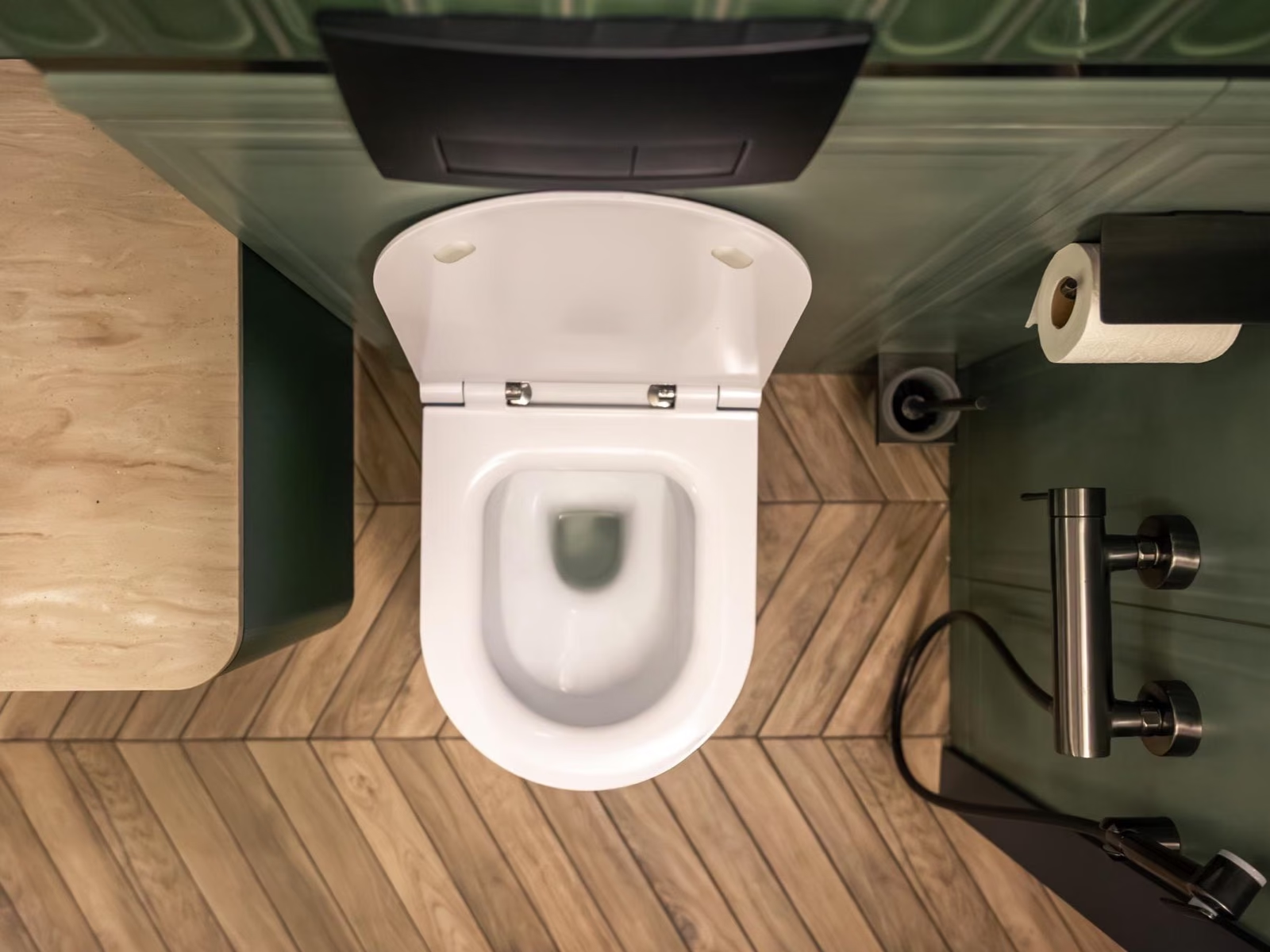
- Water at the base of a toilet that appears only after a flush points to the wax ring or the closet flange, not the tank.
- Clear water that shows up between flushes usually comes from tank condensation, a weeping supply line, or the tank-to-bowl bolts.
- Caulking a leaking toilet to the floor traps the water under the bowl, where it rots the subfloor out of sight.
- Cracked or corroded closet flanges are common on the cast-iron and lead closet bends in Los Angeles homes built before 1950.
- Sewage on the floor, more than one fixture backing up, or a stain on the ceiling below all turn a base leak into an emergency call.
Why is my toilet leaking at the base?
The bowl sits on a wax ring, and the wax ring sits on a closet flange screwed to the floor. Every flush sends a few gallons through that joint. When the seal is sound, nothing escapes. When it is not, a little water pushes out under the bowl each time, and a puddle forms at the base.
Most people notice the puddle before the cause. On a 1960s Valley tract house the trigger is usually a toilet that has started to rock on the tile. On a 1920s bungalow in Highland Park or Eagle Rock it is more often a corroded brass flange on a lead closet bend. Both leave the same wet ring on the floor.
A toilet leaking at the base has a broken seal, and the seal broke for a reason. Find the reason first, since a fresh wax ring on a cracked flange leaks again within months. Our toilet repair page covers running tanks and weak flushes; this guide stays on the floor.
How do I rule out condensation and a supply-line leak first?
Water on the floor around a toilet is not always coming from under it. Three other sources drip down the outside of the bowl and pool in the same spot. Ten minutes with a roll of paper towels sorts them out before anyone pulls a toilet.
Dry everything. Wipe the tank, the bowl, the supply line, the angle stop at the wall, and the floor. Lay a dry paper towel around the base.
Check for sweat. A tank of cold water fogs up in a warm, steamy bathroom, and the drops run down to the floor. A tank beaded with moisture means condensation, not a leak.
Feel the supply line and the tank bolts. Run a dry tissue along the braided line, the nut at the angle stop, the nut under the tank, and the two tank-to-bowl bolts. A damp tissue names the source.
Put food coloring in the tank. Ten drops, one flush, and a short wait. Colored water on the towel at the base came through the bowl and out the failed seal.
Flush and watch. A base leak shows within a minute or two of a flush and dries up between flushes. Condensation and a weeping supply nut keep the floor damp all day.
Condensation is rare in our dry climate, yet it happens in August in a bathroom with no fan, and near the coast where the air stays damp. A dripping tank bolt or supply nut is a tighten-or-replace fix. Only colored water at the base means the toilet has to come up.
What is actually leaking under the toilet?
Once the dye test points under the bowl, one of five things has failed, listed here in the order we find them.
- A failed wax ring. Wax does not reseal once the bowl shifts. A toilet reset on the old ring, or one that has rocked for a year, leaks with every flush.
- Loose or corroded closet bolts. The two bolts holding the bowl to the flange rust through, or the nuts back off. One side lifts a hair, and the seal opens.
- A rocking toilet on an uneven floor. Tile with a high spot, or a bowl set without shims, rocks every time someone sits down. Each rock works the wax.
- A cracked or corroded flange. Old cast-iron flanges rust until the bolt slots break away. The brass ring on a 1920s lead closet bend corrodes until nothing holds the bolt.
- A flange set too low. After a new tile floor the flange can sit half an inch below the finished surface. The wax never compresses, and the seal was thin from day one.
What you see, the likely cause, and the repair
| What you see | Likely cause | Repair |
|---|---|---|
| Puddle right after a flush, dry between flushes | Failed wax ring | Pull, scrape the flange, new ring, reset |
| Toilet rocks or tilts when you sit | Loose or rusted closet bolts, uneven tile | New bolts, plastic shims, new ring |
| Bolts spin and never tighten | Cracked flange or broken bolt slot | Repair ring or new flange, then reset |
| Leak back months after a new ring | Flange below the finished floor | Flange extender or raised flange, thick ring |
| Soft floor, dark grout, sour smell | Long-running seal leak into the subfloor | Flange repair plus subfloor patch before reset |
| Bowl weeps with no flush at all | Hairline crack in the bowl or trapway | Replace the toilet |
| Water rises at the base and in the tub | Main drain backup, not the toilet seal | Clear the drain, then check the flange |
Why does caulking the base make it worse?
Caulk feels like the obvious fix. The puddle stops, the bathroom looks finished, and the toilet moves less. The water has not stopped, though. It now runs under the bowl instead of out from it, into the flange screws and the subfloor.
We pull toilets in Van Nuys and Reseda that someone caulked shut years ago. The tile looks fine. Under it the plywood is black, the flange screws hold nothing, and only the caulk kept the bowl in place. A wax ring leak became a subfloor job.
The California Plumbing Code, which follows the Uniform Plumbing Code, does want the joint between a floor-mounted fixture and the floor made watertight. That rule assumes a sound seal underneath. The trade habit is to caulk the front and sides after the toilet sits tight and passes a flush test, and to leave a short gap at the back. A future leak then shows itself instead of hiding.
What does a proper repair involve?
The repair is a reset, done in an order that catches the real cause instead of covering it.
Close the angle stop, flush, and sponge the tank and bowl dry. Disconnect the supply line and unbolt the bowl. Rusted bolts get cut off with a small saw.
Lift the toilet onto a drop cloth and scrape every trace of old wax off the flange and the bowl horn. A rag stuffed in the drain keeps sewer gas out of the room.
Inspect the flange. Check the bolt slots, the ring, the screws into the floor, and the height against the finished tile. Press the subfloor around it for softness.
Repair or replace the flange. A broken slot takes a stainless repair ring. A corroded ring on a cast-iron or lead bend gets cut back for a new flange. A low flange gets an extender stack with sealant between layers.
Set the new ring, lower the bowl straight down, and snug the new bolts evenly. Shim any gap at the base until the bowl cannot rock, then trim the shims flush.
Reconnect the supply, flush several times, and check the base with a dry towel. Caulk the front and sides only after the joint has passed that test.
Lead closet bends deserve a word. Many pre-1950 houses in Bungalow Heaven, Silver Lake, and Boyle Heights still drain the toilet through a lead bend wiped onto a cast-iron stack, with a brass flange ring on top. Lead thins and splits under a flange that has rocked for decades. Replacing the bend is a plumbing alteration, so inside the City of Los Angeles it goes through LADBS; Burbank, Glendale, and Pasadena run their own permit counters. A reset or a wax ring swap is maintenance and needs no permit. A straight toilet swap is usually treated the same. The City of Los Angeles does issue an express permit for fixture replacement, though, so check with LADBS or ask us before the swap.
When does replacing the toilet make sense?
A reset saves a sound toilet. Some toilets are not worth setting back down, and the moment the bowl is up is the time to decide.
- A hairline crack at the base of the bowl or across the trapway. Cracks grow, and a bowl that lets go under load floods the room.
- A crack in the tank, or a tank someone patched with epoxy. Tanks hold water around the clock, so a slow crack becomes a flood while you are at work.
- An old high-volume tank. Most toilets from before the early 1990s flush three and a half gallons or more, while a new WaterSense model uses 1.28 or less. LADWP has run rebates on those swaps for years. The current program asks for a premium model at 1.1 gallons per flush or less from its qualifying list, so check the terms before you buy.
- Flange screws sitting in rotten wood. If the subfloor needs a patch, an old bowl with a scratched glaze and a weak flush rarely earns a second setting.
- Repeat clogs in the same bowl. A toilet that plugs every week with a clear drain line has a trapway problem no wax ring fixes.
Repair wins when one part failed and the porcelain is sound. Replacement wins when the bowl has a crack, the tank is a water hog, or the floor under it needs work anyway. Current ranges for both are on our toilet repair page, and we give the honest call on site rather than a push toward the bigger job.
When is a leaking toilet an emergency?
Most base leaks are a this-week repair. Close the angle stop, stop using that toilet, and book the reset. Three situations change that.
- Sewage on the floor. Water that comes out under the bowl after a flush is wastewater, not tap water. If it is brown, smells, or carries solids, the room needs a cleanup as well as a plumber.
- More than one fixture backing up. Water rising at the base while the tub or shower gurgles means the main drain has a blockage. The seal is the weakest point, so the backup exits there first. Stop running water anywhere in the house.
- Water reaching the ceiling below. A stain, a sag, or dripping from a light fixture under an upstairs bathroom means water has soaked through the subfloor. If the fixture is wet, do not touch it or its wall switch. Turn that circuit off at the panel, as long as the panel and the floor in front of it are dry.
In those cases call our emergency plumber line at (818) 421-5290. A live person answers 24/7, and a backup gets a drain machine, and a camera if needed, before anyone resets the toilet. A+ Electric & Plumbing is a licensed electrician and plumber serving Los Angeles and the San Fernando Valley, and a wet ceiling with a light fixture in it is exactly why both licenses ride on the same truck. One crew dries out the wiring and resets the toilet, with no second contractor to schedule and no finger-pointing.
What damage does a slow leak do to floors and health?
The water that leaves a failed seal is bowl water. It carries whatever went down with the last flush, and it soaks into whatever sits under the tile. Plywood swells and delaminates. Particleboard underlayment, common in 1970s and 1980s Valley remodels, turns to mush. The diagonal 1x6 sheathing under a 1920s bungalow rots along the grain.
Rot feeds the leak. Flange screws lose their grip in soft wood, the flange lifts, the toilet rocks more, and the seal opens wider. Mold gets going in damp wood within about two days. In a raised-foundation house the crawlspace under the bathroom takes the water; in a slab house it spreads sideways under the tile and shows up as dark grout two feet away.
If the floor feels soft, the grout has darkened, or a sour smell hangs in the bathroom with the toilet dry, water has run under there for a while. Our leak detection tools show how far it went, with a moisture meter on the floor and a thermal camera on the ceiling below. From there the Los Angeles plumbing team can scope the flange, the subfloor, and the drain in one visit. If you would rather start with a call to a licensed electrician and plumber in Los Angeles, that works too.
Frequently asked questions
Can I just tighten the bolts and stop the leak?
Sometimes, if the bowl rocks and the wax ring is still intact. Snug each nut a quarter turn at a time, alternating sides, and stop the moment the bowl stops moving. Porcelain cracks under a wrench long before the bolt strips. If the toilet still leaks after a flush, the seal has already opened, and tightening will not close it. The toilet has to come up.
Should I use a wax ring or a waxless seal?
Both work when the flange sits at the right height. Wax is cheap, forgiving, and has sealed toilets for a century, but it gives you one try, since a bowl lifted off wax cannot go back down on it. Rubber waxless seals suit a flange that sits slightly low, or a toilet that may come up again for a floor job. We carry both and pick by flange height.
Why did the leak come back a few months after a new wax ring?
The ring was never the whole problem. A flange that sits below the tile, a bolt slot that has broken away, or a bowl that still rocks will open a fresh ring within a season. Stacking two wax rings, a common shortcut, squeezes out sideways and fails the same way. The lasting fix raises or repairs the flange, then shims the bowl until it cannot move.
Is the water coming out of a toilet base dangerous?
Treat it as sewage, because that is what it is. Water that exits under the bowl went through the bowl first, so it carries bacteria from every flush. Keep kids and pets out of the room, disinfect the floor, and wash anything porous it touched. A soaked rug or a wet ceiling below usually needs to come out rather than dry in place.
Do I need a permit to fix a toilet leaking at the base in Los Angeles?
Not for a reset, a new wax ring, or new bolts; those are maintenance. A straight toilet swap usually counts too. The City of Los Angeles has an express permit for fixture replacement, though, so ask LADBS or us first. Replacing the closet bend or drain piping under the flange is an alteration, and the city wants a permit for that. Burbank, Glendale, and Pasadena run their own counters, with rules that are close but not identical.
My flange sits below a new tile floor. Does the tile have to come up?
No, in almost every case. A flange extender kit adds plastic rings on top of the old flange, with sealant between the layers, until the top sits level with or just above the tile. On a badly damaged flange we cut the old one back and fit a new one at the right height. Neither option touches the tile, and both hold a standard wax ring.
Related services
Need this handled? Start here
Get a free estimate
Tell us what's going on and a licensed tech calls you back fast, with the exact price before any work starts. Electrical and plumbing, one team.
Estimates for quoted work are free. Troubleshooting or diagnosis may carry a $100-$250 service call, credited to your repair when you approve the work.
- Exact price in writing before we start
- Licensed, bonded & insured (CSLB #942404)
- One team for electrical and plumbing
Prefer to talk? Call (818) 421-5290, answered 24/7.