
Plumbing guide
Is Your Water Pressure Too High? The 80 psi Rule and the Fix
Is your water pressure too high? If a gauge on an outside hose bib reads above 80 psi, yes. The California Plumbing Code caps a home supply at 80 psi, and many hillside and Valley addresses take 100 psi or more from the street. The fix is a pressure reducing valve, also called a PRV or regulator, set to 50-70 psi, often paired with a thermal expansion tank. Test first, then decide.
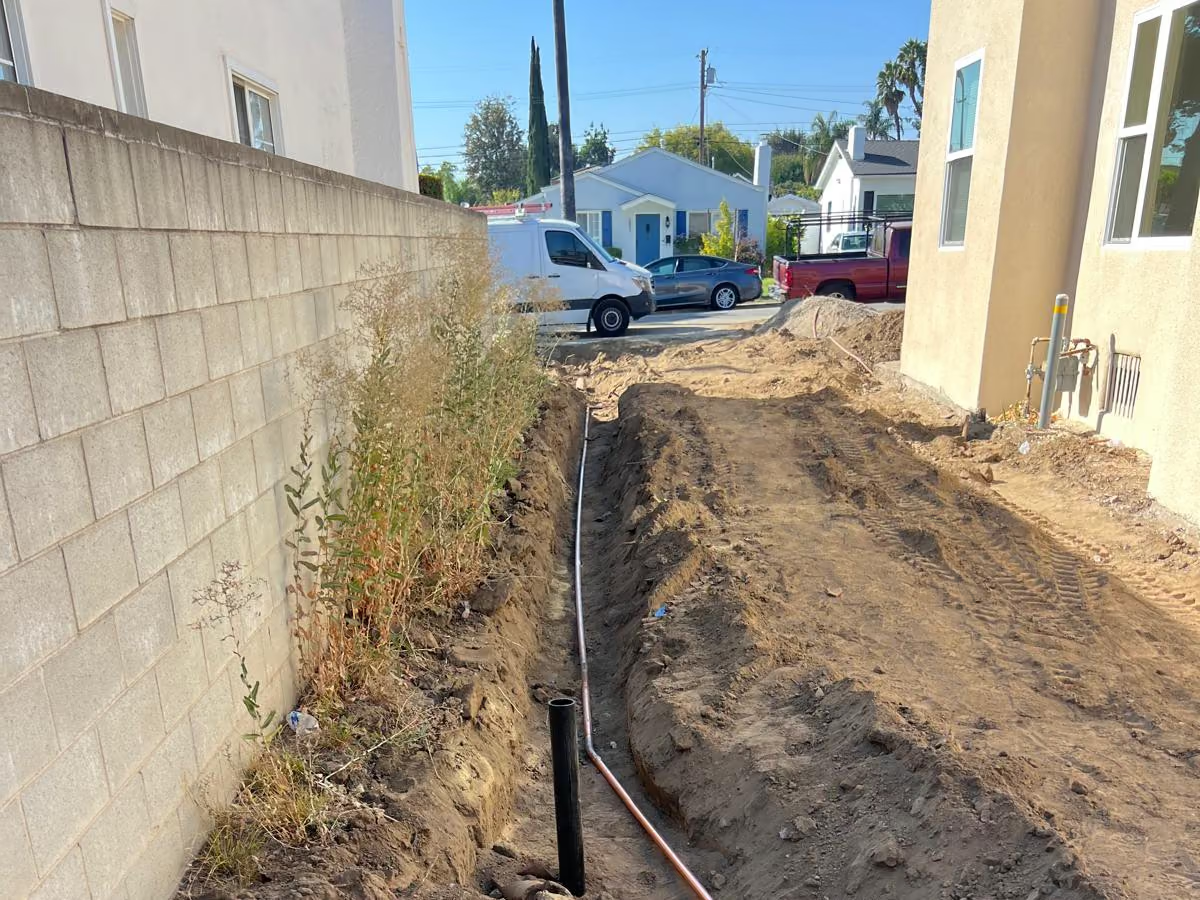
- California plumbing code sets 80 psi as the maximum static pressure for a home, and anything above it calls for a pressure reducing valve.
- Many Los Angeles hillside and San Fernando Valley addresses receive 100 psi or more at the curb, since the mains must push water uphill and feed hydrants.
- Banging pipes, burst washer hoses, a dripping water heater relief valve, and short-lived faucets are the classic signs of excess pressure.
- A hose-bib gauge from any hardware store gives you the number in two minutes; test once at dinner time and again after midnight.
- A modern regulator closes the system, so most homes also need a thermal expansion tank at the water heater.
What counts as water pressure too high?
Anything above 80 psi. The California Plumbing Code draws the line there, and inspectors apply it whenever plumbing comes under review, not only on new construction. Once the main runs hotter than that, a pressure reducing valve belongs on the supply line.
The comfortable range is 50 to 70 psi, and that is where a plumber sets a new valve. That range gives a strong second-floor shower without stressing fill valves, supply hoses, and appliance solenoids. Readings under 40 feel weak at the tap and point to a different problem entirely.
Two numbers matter when you test. Static pressure is the reading with every fixture off, and that is the one code cares about. Working pressure is what you see with a shower running, always a little lower. A house showing 76 psi at dinner may hit the mid-90s after midnight, when neighborhood demand drops and the mains climb.
Why does Los Angeles street pressure run so high?
Terrain. LADWP moves water across hills and canyons, so the mains carry enough force to reach hydrants and the highest house in each zone. A home sitting low in that zone takes whatever gravity delivers, and nobody at the utility trims it for individual addresses.
The pattern shows up on the gauge. Flat Valley streets in Van Nuys and North Hollywood often read 90 to 110 psi. Foothill neighborhoods below a storage tank, Tujunga and La Crescenta included, can pass 130 psi at the curb. Burbank and Glendale run their own water utilities with their own zones, and the same physics applies there.
No fixture on the market expects that squeeze around the clock. Washer hoses, toilet fill valves, ice maker lines, and dishwasher solenoids all carry ratings well under what the street delivers. The regulator exists so the house never sees the raw number.
Which symptoms point to excess pressure?
Water pressure too high for your fixtures rarely shows up as a number. It shows up as noise and a string of small failures, and homeowners often chase each one separately for months. The table sorts the common complaints.
Symptom to likely cause when pressure runs high
| What you notice | What high pressure does | Other causes to rule out |
|---|---|---|
| Pipes bang or thud when a faucet or the washer shuts off | Water hammer: moving water slams to a stop harder at high pressure | Loose pipe straps, missing hammer arrestors |
| Washer or dishwasher supply hose bulges, weeps, or bursts | Rubber hoses fatigue faster under a constant squeeze | Hose past 5 years old, kinked line |
| Steady drip from the water heater relief valve pipe | Pressure spikes past the T&P valve setting on a closed system | Failed valve, thermostat set too hot |
| Toilets hiss and refill on their own at night | Fill valves cannot hold against the nightly pressure climb | Worn flapper, mineral scale in the valve |
| Faucets spit, or new cartridges fail within a year or two | Seals and cartridges wear out under high flow velocity | Hard water scale, debris after a repair |
| Pinhole leaks in copper, one patch after another | Fast water erodes the inside of fittings and elbows | Water chemistry, poor original soldering |
One item on the list is a maintenance call. Three or four together usually trace back to one missing or failed valve near the main shutoff, and the gauge settles the question before anyone buys parts.
How do I test with a hose-bib gauge?
Buy a pressure gauge with a garden hose thread at any hardware store. Shut off every fixture inside, thread the gauge onto an outside hose bib, open the bib all the way, and read the dial. That reading is your static pressure.
- Above 80 psi: the regulator is missing, stuck, or worn out.
- 50 to 70 psi: healthy, leave it alone.
- Under 40 psi: a regulator failing closed, a clogged inlet screen, or corroded galvanized pipe.
- Wild swings between two readings: a diaphragm that has started to drift.
Take two readings if you can, one in the early evening and one after midnight. Demand drops overnight, the mains climb, and the late reading is the one that quietly kills hoses and fill valves. Write both numbers down before you call anyone.
If the house already has a regulator, test on both sides of it. A hose bib at the front of the house often sits before the valve and shows street pressure. A bib in the back yard sits after it and shows what the house actually gets. A big gap between the two means the valve is working; no gap means it is not.
What does a pressure reducing valve actually do?
The valve itself is a brass bell on the main line, and you will usually find it right after the main shutoff, in the garage, or on the wall that faces the street. A spring and a rubber diaphragm inside meet in the middle: the street pushes on one face, the spring pushes back, and the outlet settles at whatever the adjustment screw allows.
The rubber is the part that ages. After 10 to 15 years the diaphragm stiffens or splits, and grit from the main can jam the seat. A worn valve drifts high, lets full street pressure through, or fails closed and starves the house. All three failures end with a new valve, since a rebuild rarely beats a straight swap.
There is an adjustment screw on top, and turning it does change the setting. Adjust only with a gauge on a bib so you can watch the result. A valve that ignores the screw, or will not hold the new number, is done. Details on replacement, including current ranges, sit on our water pressure regulator page.
Why do closed systems need a thermal expansion tank?
Regulators built in the last couple of decades include a check valve, so the house becomes a closed loop: water flows in from the street and never flows back. Water expands as it warms, and a 40 or 50 gallon heater produces enough extra volume to matter. Trapped behind the check valve, that volume drives pressure up fast.
The first place that shows is the temperature and pressure relief valve on the heater, the T&P valve. It opens near 150 psi by design, dumps the excess down its discharge pipe, and closes again. A drip from that pipe every time the heater runs is the closed system talking.
A thermal expansion tank absorbs the swell instead. It is a small steel tank, an air cushion on one side of a diaphragm, and it mounts on the cold line close to the heater. California code calls for one on a closed system. Ask for it whenever a regulator goes in. A T&P valve that keeps dripping once the tank is in place points at the heater itself, which our water heater installation page covers.
Does high pressure explain the pinhole leaks in my copper?
Often, partly. Pressure alone does not punch holes in copper, but it raises the speed of the water through every elbow and tee. Fast water scours the thin protective layer inside the pipe, and the scouring concentrates at fittings, which is exactly where most Valley pinholes show up.
Water chemistry and old flux do the rest. Copper installed under the 1960s and 1970s slab tracts of Reseda, Northridge, and Van Nuys has had fifty years of both. Drop the pressure into the 50s and the leaks slow down; they rarely stop completely once the pipe wall has thinned.
Galvanized steel is a different story. Pre-1960 houses in North Hollywood, Burbank, and Glendale still carry it, and it rusts shut from the inside regardless of pressure. If the gauge reads high at the bib yet the upstairs shower runs weak, the pipe is choking the flow, and a regulator will not bring it back. That is repiping territory, and a new regulator goes in as part of that job.
Who should fix it, and what happens on the visit?
A licensed plumber, for two reasons. The regulator sits on the main line, so the water is off for the swap, and the old fitting often hides a shutoff valve that no longer closes. A new valve set by feel is a guess; a valve set with a gauge on the line is a fix.
A+ Electric & Plumbing is a licensed electrician and plumber in Los Angeles, based in Tujunga, and pressure calls are routine work for the plumbing side of the company. The visit runs the same way each time: a gauge test at the bib, the new valve fitted with unions so nobody needs a torch next time, the outlet dialed to 50-70 psi with the gauge on the line, and every fixture run while we watch the T&P discharge pipe.
One detail earns the dual license. Older homes often use the metal water line as part of the electrical grounding path, so cutting out a section of pipe can leave the panel without a proper ground. The same crew holds the C-10 electrical classification, so it checks the bonding jumper in the same visit, with no second contractor and no finger-pointing. Current ranges for a regulator and an expansion tank sit on the regulator page, and a live person answers (818) 421-5290 around the clock.
Frequently asked questions
Can I just turn the regulator down instead of replacing it?
Sometimes. The screw on top adjusts the spring, and a valve with a healthy diaphragm will follow it. Put a gauge on a hose bib first, turn the screw a quarter turn at a time, and watch the number. A valve that ignores the screw, or drifts back up within a week, has a failed diaphragm and needs replacing.
Why is my pressure fine during the day but the hoses still burst?
Night pressure is the culprit. Demand across the neighborhood drops after midnight, the mains climb, and a house reading 75 psi at dinner can see 95 or more at two in the morning. That nightly spike fatigues rubber hoses and fill valves while you sleep. Test late once, and if the number crosses 80, the regulator has a job to do.
Does high water pressure void a water heater warranty?
It can. Several manufacturers list supply pressure limits in the warranty terms, and a service tech who finds a T&P valve that has been dripping for months may write it down. Beyond paperwork, pressure spikes flex the tank steel and shorten its life. A regulator plus an expansion tank is the simplest protection a new heater can get.
My house has no regulator at all. Is that legal?
Legal is the wrong lens; it depends on your street pressure. Code requires a regulator once static pressure passes 80 psi, so a house on a 65 psi main needs none. Plenty of older Valley houses never had one, and street pressure may have been lower when they went up. Test at a bib; above 80, the fix is overdue, whatever an old inspection said.
Where should the expansion tank go, and how big?
On the cold water line near the heater, usually within a few feet of the inlet, with a proper support strap since it hangs full of water. Size follows the heater: a small residential tank suits most 40 and 50 gallon units, and the installer sets the air charge inside to match the house pressure before the water goes on. A tank with no pre-charge does nothing.
Will lowering the pressure make my shower weak?
Not at 50 to 70 psi. A second-floor shower gives up roughly half a psi per foot of climb, so even 55 at the bib leaves plenty upstairs. What makes a shower weak is flow, not pressure: a clogged head, a corroded galvanized branch, or a regulator failing closed. Lower pressure through clean pipe still feels strong.
Related services
Need this handled? Start here
Get a free estimate
Tell us what's going on and a licensed tech calls you back fast, with the exact price before any work starts. Electrical and plumbing, one team.
Estimates for quoted work are free. Troubleshooting or diagnosis may carry a $100-$250 service call, credited to your repair when you approve the work.
- Exact price in writing before we start
- Licensed, bonded & insured (CSLB #942404)
- One team for electrical and plumbing
Prefer to talk? Call (818) 421-5290, answered 24/7.