
Electrical guide
Whole House Fan vs Air Conditioning: What Works in the San Fernando Valley?
In the Valley a whole house fan beats the air conditioner on most nights: dry air drops 25 to 35 degrees after sunset, and the fan pulls it through the house on a few hundred watts. It loses on humid monsoon nights, smoke days, and heat waves with overnight lows near 80. For most Valley homes the whole house fan vs air conditioning answer is both: fan at night, AC for the afternoon peak.
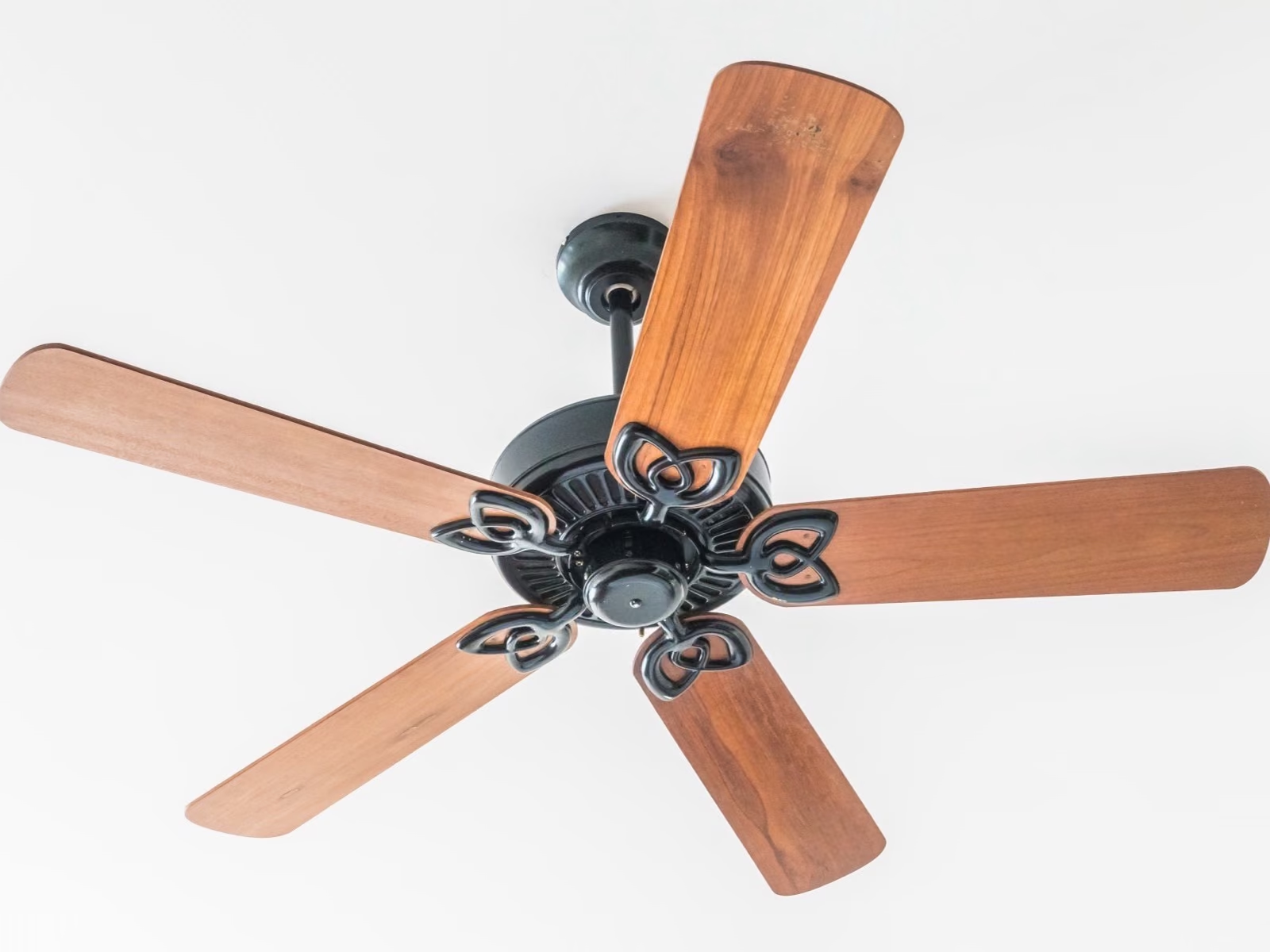
- A whole house fan draws about 200 to 700 watts, while central air conditioning pulls 3,000 watts or more.
- The fan only works when outdoor air is cooler than indoor air, which in the San Fernando Valley means evening, night, and early morning on most summer days.
- It pulls unfiltered outdoor air inside, so it stays off on wildfire smoke days and during Santa Ana dust events.
- Size it at 2 to 3 CFM per square foot of living space, with about 1 square foot of net attic vent area for every 750 CFM.
- Most Valley homes get the best result from pairing the two: fan at night to flush the house, AC for the afternoon peak.
When does a whole house fan beat air conditioning in the Valley?
On a typical July night in Van Nuys or Northridge the outside air falls from the high 90s to the mid 60s by ten at night. The house does not follow. Stucco, framing, and drywall soak up heat all afternoon and give it back until well past midnight, which is why the bedroom still reads 82 at bedtime with the AC off. A whole house fan pulls that mid-60s air through every open window and dumps the heat out the attic vents. Twenty minutes later the house is close to the outside temperature.
The air conditioner does the same job with more effort. It has to cool the air and then keep fighting the heat stored in the walls, and it does that on 3,000 watts or more. The fan does it on a few hundred, because it moves outside air instead of manufacturing cold. On every night when the outside is cooler than the inside, the fan wins the whole house fan vs air conditioning contest on cost, and the house wakes up cooler than the AC would have left it.
The Valley is unusually good territory for this. The marine layer that keeps Santa Monica muggy rarely climbs over the hills, so Valley nights are dry, and dry air cools fast after sunset. Foothill neighborhoods like Sunland, Tujunga, and La Crescenta get an extra push from cool downslope air. Current ranges for the fan and the circuit are on our whole house fan installation page.
How does a whole house fan actually work?
The fan sits in the ceiling of a central hallway, between the living space and the attic. You open windows in the rooms you want cooled, turn the fan on, and it pulls outdoor air in through those windows, across the rooms, up through the grille, and into the attic. The attic vents let it out. The whole house turns into a slow, steady breeze pointed at the roof.
Two things happen at once. The rooms fill with cooler outside air, and the attic, which can sit at 130 degrees after a Valley afternoon, gets flushed with the same air. That second part matters because a hot attic radiates down through the ceiling all evening. Cool the attic and the bedrooms stop reheating.
The routine is the whole trick. Run the fan for an hour or two after sunset, or on a timer until you fall asleep, then run it again for an hour at dawn when the air is coldest. Close the windows and blinds by mid-morning to trap the cool. On a dry Valley day a well-flushed house can hold into the afternoon before the AC needs to start.
Does your attic have enough venting?
The fan can only push out what the attic can let out. The rule of thumb is about 1 square foot of net free vent area for every 750 CFM of fan, so a 4,500 CFM fan wants roughly 6 square feet of open vent. Net free area is the actual opening after the screen and louvers, and a stock gable vent counts for much less than its frame size suggests.
Most 1950s and 60s Valley tract homes have a couple of gable vents and a few soffit vents, sized for passive airflow, not for a fan. Under-vented attics show up as a fan that sounds strained, a grille that whistles, and doors that slam when the fan starts. That back-pressure also cuts the airflow, so the house never gets the flush it was sized for.
The fix is usually more vent, not a smaller fan. Adding a second gable vent, a run of ridge vent, or a few dormer vents brings the numbers into line, and it helps the attic breathe on days the fan is off. We count the existing vents and measure the net free area before we pick a fan, because a fan that cannot exhaust is a fan you will stop using.
When should you leave it off: smoke days and humid nights?
The fan brings the outside in, whatever the outside is. On wildfire smoke days, when the AQI climbs past 150 and the sky goes orange, running it fills the house with smoke. The same goes for Santa Ana wind days, which carry dust and ash even without a fire. The air conditioner wins those days outright, because it recirculates indoor air through a filter and never opens the house.
Humidity is the other limit. Late summer brings monsoon moisture up from Arizona and Mexico, and on those nights the Valley stays sticky and the low sits at 74 instead of 62. The fan pulls warm, damp air in and the house feels worse, not better. A whole house fan moves air but does not remove moisture; only the AC coil does that.
Heat waves are the third case. When Woodland Hills spends a week with overnight lows near 80, the fan has nothing cool to work with. Give the house to the AC for the week and bring the fan back when the night air drops again. The rule is simple: check the outdoor temperature and the air quality before you open the windows.
What size do you need for your square footage?
Size the fan at 2 to 3 CFM per square foot of living space. A 1,200 square foot Reseda bungalow lands around 2,400 to 3,600 CFM, a 1,800 square foot Northridge ranch around 3,600 to 5,400, and a two-story Porter Ranch house past 6,000. Lean toward the high end if the house faces west, has a dark roof, or has vaulted ceilings that hold more air.
Bigger is not always better. Past the attic's venting capacity, extra CFM just adds noise and back-pressure. Two-speed and variable-speed fans solve most of that: high speed for the first 20 minutes of flush, low speed for the rest of the night at a whisper. Ducted models put the motor in the attic on a short flexible duct, so the hallway grille is nearly silent.
Ceiling height changes the math for tall rooms, and open floor plans need fewer windows opened to get the same flow. We measure square footage, count vents, and ask which rooms you sleep in before we size anything.
Does it need its own circuit?
Most whole house fans run on 120 volts. A small ducted unit draws only a few amps and can share an existing 15- or 20-amp circuit if that circuit has room. A large two-speed fan at 5,000 CFM or more draws enough on startup that we give it a dedicated 20-amp circuit from the panel, with a wall switch or a countdown timer in the hallway. A dedicated line also means the fan never trips a bedroom breaker at midnight.
Full panels are the usual snag. A 100-amp panel from a 1960s tract house may have no open slot, and a Federal Pacific or Zinsco panel should not get a new breaker at all. In that case the fan waits on a panel upgrade, and we price both in one written estimate so you can decide the order.
The wiring needs a permit. In the City of Los Angeles that goes through LADBS, while Burbank and Glendale run their own building departments. The inspector checks the circuit, the switch, and the insulated damper that seals the opening when the fan is off. A+ Electric & Plumbing is a licensed electrician and plumber serving Los Angeles and the San Fernando Valley from Tujunga, and we pull the permit and meet the inspector on every fan install.
Whole house fan vs air conditioning: side by side
The two are not really rivals. They are different tools for different hours, and the table shows where each one is the right pick.
Whole house fan and central AC compared
| Factor | Whole house fan | Central air conditioning |
|---|---|---|
| Power draw | About 200 to 700 watts | 3,000 watts or more |
| What it cools | The air, the walls, and the attic | The air inside the house |
| Works when | Outdoor air is cooler than indoor | Any time, any weather |
| Humidity | Brings outdoor moisture in | Removes moisture at the coil |
| Air quality | Pulls in unfiltered outdoor air | Recirculates through a filter |
| Noise | Whoosh at the grille; ducted models are quiet | Outdoor condenser hum |
| Circuit | 120-volt, 15 or 20 amps | 240-volt dedicated circuit, 30 to 60 amps |
| Install | Ceiling opening, attic mount, damper, switch | Condenser, air handler, ductwork, refrigerant |
| Permit in LA | Yes, electrical | Yes, mechanical and electrical |
| Best hours in the Valley | Evening, night, early morning | Afternoon peak, smoke days, humid nights |
Read down the right column and the AC looks like the safer bet, until you look at the first row. The fan's whole case is that it covers the night and morning hours on a tiny share of the power, and leaves the hard afternoon to the AC.
How do you pair the fan with the AC?
Run them in shifts. The fan takes the evening flush, the overnight hours on low speed, and an hour at dawn. Close the windows and blinds by mid-morning, and let the AC hold the house through the afternoon peak from a much cooler start. Set the thermostat a few degrees higher than you used to, since the walls are no longer radiating heat at it.
Time-of-use rates, where you have chosen one, make the split pay. LADWP's time-of-use plan prices afternoon and early evening power higher in summer, and the Burbank and Glendale utilities offer similar options. The fan's hours land in the cheap block while the AC's shrink. A countdown timer on the fan and a schedule on the thermostat make the routine automatic, and the pairing works with a mini-split or a window unit just as well as with central air.
A ceiling fan in the bedroom rounds it out. It does not lower the temperature, but the breeze on skin feels several degrees cooler, which lets the whole house fan run on low and the AC stay off longer. Start with our Los Angeles electrician team for the fan, the circuit, and the permit, or call the electrician and plumber in Los Angeles who can also look at the gas water heater's draft while the attic is open.
Frequently asked questions
Does a whole house fan work in a two-story house?
Yes, and it often works better, since heat rises and the fan sits at the top. Mount it in the upstairs hallway ceiling, open windows downstairs, and the fan pulls cool air up through the whole house on its way to the attic. Size it for the full square footage of both floors, and expect to want the higher end of the CFM range.
Can I run it with the AC on?
No, not at the same time. The fan opens the house to outdoor air, and the AC is trying to cool a sealed box, so running both wastes the AC's work. Use them in shifts: fan when the outside is cooler than inside, AC when it is not. A timer on the fan and a schedule on the thermostat keep the two from overlapping.
Will it pull in dust, pollen, and bugs?
Some, since it moves a lot of outdoor air through the windows. Keep screens in good shape and skip the fan on Santa Ana days when dust is up. Pollen-sensitive households run it late at night, when counts are lowest. The insulated damper seals the ceiling opening when the fan is off, so nothing drifts down from the attic in winter.
Which is cheaper to run, a whole house fan vs air conditioning?
The fan, by a wide margin, on the hours it can work. It draws a few hundred watts against 3,000 or more for central AC, so an evening of flushing costs a small fraction of an evening of AC. Savings depend on how many nights the Valley cools off, so we do not promise a number. Ranges for the install itself are on the service page.
What about a swamp cooler instead?
Evaporative coolers were the Valley's original air conditioning, and they still work on dry days because they cool by evaporating water into the air. They lose on humid monsoon days, they add moisture to the house, and they need a water line and regular pad changes. A whole house fan needs none of that, and it pairs with real AC for the days a swamp cooler cannot handle.
How loud is it at night?
A basic direct-mount fan makes a steady whoosh in the hallway, noticeable but not sharp. Ducted models put the motor in the attic on a flexible duct, so the grille is close to silent. Two-speed fans run on low all night at a fraction of the noise. Enough attic venting matters too, since a fan that cannot exhaust strains and gets louder.
Related services
Need this handled? Start here
Get a free estimate
Tell us what's going on and a licensed tech calls you back fast, with the exact price before any work starts. Electrical and plumbing, one team.
Estimates for quoted work are free. Troubleshooting or diagnosis may carry a $100-$250 service call, credited to your repair when you approve the work.
- Exact price in writing before we start
- Licensed, bonded & insured (CSLB #942404)
- One team for electrical and plumbing
Prefer to talk? Call (818) 421-5290, answered 24/7.