
Plumbing guide
Water Heater Repair or Replace? Seven Signs, Plus What a Permitted Los Angeles Replacement Must Include
Water heater repair or replace comes down to where the water is coming from and how old the tank is. Repair a leak at a fitting, the relief valve, an element or a thermocouple on a tank under about ten years old. Replace it when water seeps from the tank wall or bottom seam, hot water runs rusty, or an aging tank in Los Angeles hard water needs a second repair.
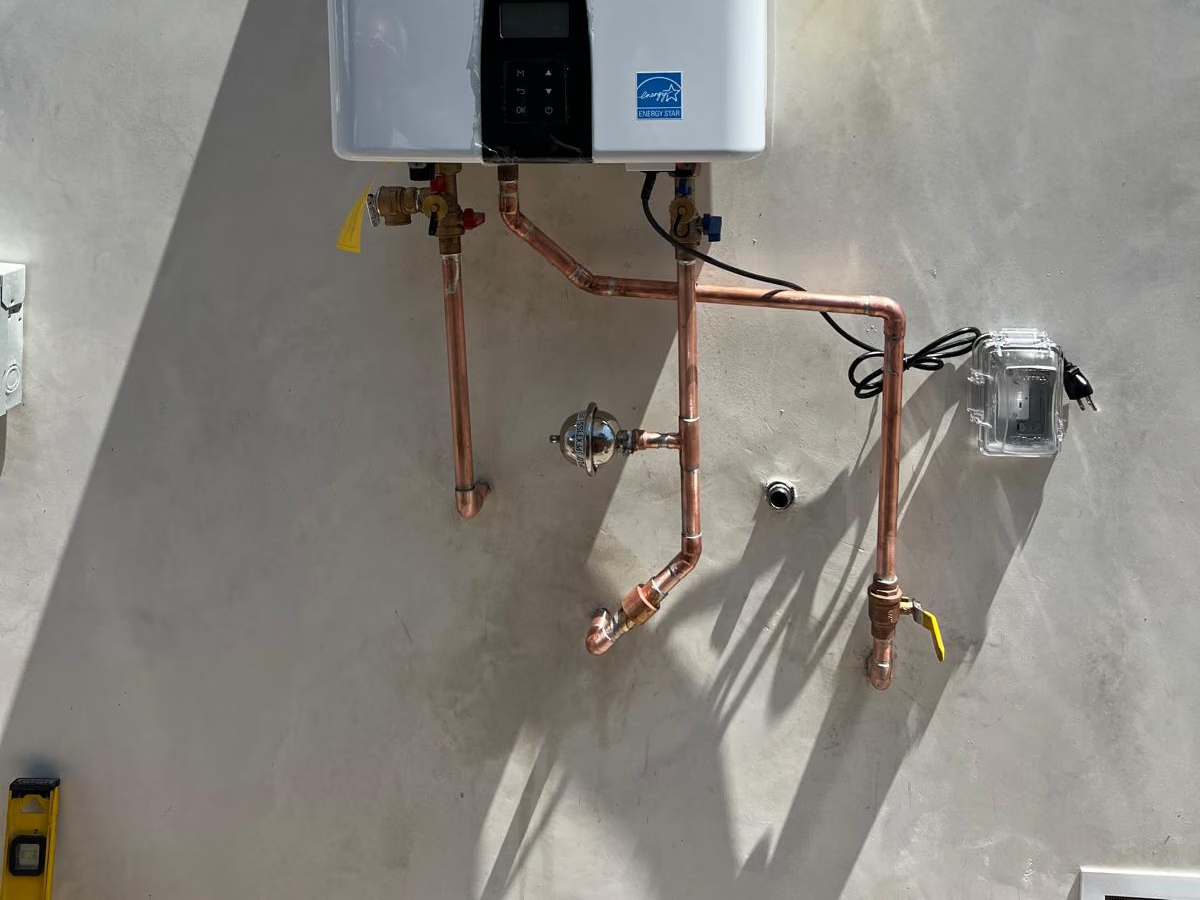
- A leak at a fitting or a valve is usually repairable, while water through the tank wall or the bottom seam means the tank is finished.
- A gas tank in Los Angeles hard water commonly gives ten to twelve years, less when nobody flushes the sediment.
- A water heater replacement in the City of Los Angeles takes an LADBS plumbing permit and a final inspection, even like-for-like; the one exception is a like-for-like swap in a detached single-family home, with no vent change, where an LADBS Certified Licensed Contractor files a Certificate of Compliance in place of the permit.
- The LADBS final checks two seismic straps, a T&P line to the outside, a drain pan and, on a closed system, an expansion tank.
- LADWP's heat pump water heater rebate requires a finaled Building and Safety permit and an application within twelve months of purchase.
Water heater repair or replace: how do you decide by symptom?
A leak at a fitting or a valve is a part problem. Water weeping through the steel is a tank problem, and no part fixes that. The seven signs below settle the water heater repair or replace question on nearly every call we take, from Tujunga to the Westside.
Seven water heater signs and the usual call
| Sign | Usual call | Call now? | What changes the call |
|---|---|---|---|
| Water at the tank body or seam, or at a fitting or valve | Tank: replace; fitting or valve: repair | For a tank leak, yes: close the cold inlet and gas control | Rust streaks below a fitting often mean a wall leak |
| Rusty or brown water on the hot side only | Replace | No | On a tank under five years, a spent anode rod may be all it is |
| Popping and rumbling that a flush no longer quiets | Replace | No | A flush that keeps a young tank quiet for a year buys time |
| Pilot or thermocouple keeps dropping out | Repair once | Leave and call from outside if you smell gas | Repeat outages on an old tank point to a tired gas valve |
| Age past the typical run in LA hard water | Replace at the next fault | No | A dry, quiet tank earns a watch, not a verdict |
| Lukewarm water or slow recovery | Repair young; replace or resize old | No | An element or dip tube is a part; a bigger family needs a bigger tank |
| Second repair inside a year | Replace | No | Only a new part failing under its own warranty |
How long does a water heater last in Los Angeles hard water?
Plan on roughly a decade from a gas tank here, and treat anything past twelve years as borrowed time. That is a rule of thumb from our own jobs, and hard water pulls it toward the short end.
LADWP blends several sources, so hardness swings by neighborhood and month. In 1950s and 1960s Valley tract garages we find an inch of sediment on the tank bottom by year eight. That layer insulates the water from the burner, the steel overheats, and the tank ages faster. Our hard water guide covers the rest of the house.
Two habits stretch the number: a flush every year or two, and an anode rod check at mid-life. Once the rod is spent, the tank wall corrodes in its place. A softener ahead of the heater slows all of it; the choices are on our water filtration and softener installation page.
Age alone is not a verdict. A dry fourteen-year-old tank in a Sherman Oaks closet stays, under watch; a nine-year-old tank with rust at the seam comes out. Let the age decide how much a repair deserves, and let the symptoms make the final call.
Is a leak at the tank body different from a leak at a fitting?
Yes, and it is the most useful thing to check before you call anyone. A fitting leak is a part. A tank body leak means the inner steel has rusted through, and only a new water heater fixes that.
Dry the tank with a rag and watch. Water beading at a nipple, the T&P valve threads or the plastic drain valve comes from a joint. Water along the jacket seam, rust streaks down the outside, or a pool under the burner compartment means the shell.
Fitting leaks are honest repairs: a new T&P valve, a brass drain valve, or new flex connectors with dielectric fittings puts the tank back in service. A wall leak is different. The lining has cracked, the steel has rusted from the inside out, and the damp patch becomes a stream within weeks. A tank in that state can let go overnight after a month of one damp spot.
If the puddle comes from the tank itself, close the cold valve above the heater and turn the gas control to off. Call (818) 421-5290 for a written replacement estimate. Current ranges are on our water heater installation in Los Angeles page.
Pilot outages, popping, rumbling and rusty hot taps: which ones are fixable?
A dropped pilot, a popping tank and a rusty hot tap are three different problems. Only the first is a routine repair.
A pilot that will not stay lit is usually a thermocouple or flame sensor, a small part swapped in one visit. On newer sealed-burner tanks, a flame arrestor screen clogged with garage dryer lint or closet dust starves the pilot of air. If the pilot drops out again within months on a tank past ten years, the gas valve is tiring, and the tank goes with it.
Popping and rumbling come from water trapped under sediment flashing to steam. A flush helps a tank under eight years old; when the noise returns within weeks, the crust is past moving, and that tank is a replacement.
Rusty water on the hot side only points at the tank, since the cold side runs clear off the same supply. On a young tank, replace the anode rod first; on an old one, rust means the lining is gone, and the leak follows. If hot and cold both run brown, suspect galvanized pipe or a hydrant flush and call a Los Angeles plumber.
Do you need a permit to replace a water heater in Los Angeles?
Yes, with one exception for registered contractors. The City of Los Angeles requires a plumbing permit and a final inspection for a water heater replacement, including a like-for-like swap. The permit comes from LADBS, usually as an express permit filed online with no plan check.
Permits filed since January 1, 2026 fall under the 2026 Los Angeles codes, which adopt the 2025 California Plumbing Code with city amendments. The water heater rules changed little, so the checklist below is nothing new. The exception comes from the LADBS permit FAQ. A contractor registered in the city's Certified Licensed Contractor program may file a Certificate of Compliance with LADBS in place of a permit for a like-for-like swap in a detached single-family home: same gallons, BTU rating and vent capacity, with no vent relocation or replacement. The installation standard does not change.
A Los Angeles mailing address does not always mean LADBS. Burbank, Glendale and Pasadena run their own permit desks under the same California Plumbing Code rules. Unincorporated pockets such as La Crescenta go through Los Angeles County. Our permits guide walks through express permits and plan check.
Skipping the permit costs you later. Escrow asks for it, insurers lean on it after a water damage claim, and the LADWP heat pump rebate needs it.
What must a permitted Los Angeles replacement include?
Two seismic straps, a relief line outside, a drain pan, an expansion tank on a closed system, and a raised garage burner. That is the core of the LADBS final.
- Straps: two, in the upper and lower thirds, the lower one at least 4 inches above the controls. The LADBS bracing bulletin calls for 1/4 inch lag screws driven 1-1/2 inches into studs, with washers, and strap of at least 22 gauge by 3/4 inch. The same bulletin rules out plumber's tape on a tank over 40 gallons.
- T&P discharge: a full-size 3/4 inch line to the outside, ending 6 to 24 inches above grade, pointed down, no trap or threads on the end.
- Drain pan: at least 1-1/2 inches deep, with a 3/4 inch drain to an approved visible spot, wherever a leak would damage the floor.
- Expansion tank: required once a check valve or a regulator with a built-in check closes the system. Our water pressure regulator replacement page explains why.
- Garage: the burner 18 inches off the floor unless the unit carries a flammable-vapor ignition resistant listing. A bollard goes in where a car could reach the tank.
- Closet off a bedroom or bathroom: a gasketed, self-closing door and combustion air from outside, or a direct-vent unit.
The inspector also checks the flue draft, the gas flex and sediment trap, and the shutoffs. In 1950s and 1960s Valley tract garages the tank sits beside the car, so the stand and bollard come up on most visits. In a 1920s bungalow it hides in a hall closet too small to feed the burner.
Is a heat pump water heater worth it in a Los Angeles garage?
Often, yes, if the garage has air to spare and the panel has room for the 240-volt circuit most models need. It pulls heat from the garage air, which a mild LA climate supplies all year.
The 2025 California Energy Code, in force for permits filed since January 1, 2026, makes heat pumps the water heating baseline in new single-family homes, per the California Energy Commission. Replacing a gas tank with another gas tank in an existing home remains allowed. Regional air regulators considered a 2027 zero-emission water heater rule and voted it down in June 2025.
The ENERGY STAR installation guide wants roughly 700 cubic feet of air around the unit, or a louvered door or ducting to borrow it. It needs a condensate drain, and most models need a dedicated 240-volt circuit; a few plug-in 120-volt units exist, sized up from the old gas tank. It hums like a window air conditioner.
LADWP's Consumer Rebate Program covers ENERGY STAR heat pump water heaters of 30 gallons or more with a UEF of 3.3 or higher. The rebate rose for units installed on or after November 1, 2025. The application needs a paid itemized invoice, the spec sheet and a final approved Building and Safety permit, postmarked within twelve months of purchase. Amounts change, so we leave them off this page.
Can one licensed plumber handle the tank, the permit, the gas line and the circuit?
Yes, when the plumber also holds the electrical license. Most replacements touch the plumbing, the gas connection and, on a heat pump, electric or power-vent unit, a circuit.
A+ Electric & Plumbing is a licensed electrician and plumber serving Los Angeles and the San Fernando Valley, and the crew that straps your new tank also runs the 240-volt circuit most heat pump units need.
When an old flue fails the draft check, a Granada Hills gas tank becomes a power-vent unit, and a power vent needs an outlet. A tankless conversion usually needs a larger gas line, a pressure test on the new piping and a 120-volt outlet. Our tankless vs tank guide weighs that switch, and the tankless water heater installation page covers the install. With one license on the truck, nobody waits on a second contractor and nobody blames the other trade.
A written estimate costs nothing, the workmanship carries a one-year guarantee, and a live person picks up the phone at any hour. That is how one electrician and plumber in Los Angeles carries the tank, the permit and the circuit as a single job.
Frequently asked questions
Can a new anode rod save an old tank?
On a tank under about five years old, a new rod is worth doing and can add years. On a ten-year-old tank the rod is usually gone and the wall has started to corrode, so a new rod buys little. Old rods often seize, so we check and swap them during a flush.
My water heater leaks from the bottom. Is it the tank or the drain valve?
Dry everything and watch where the first drop forms. A drip from the plastic drain valve spout or its threads is a valve problem, and a brass replacement fixes it. Water seeping from under the burner compartment with no wet valve above it is coming through the tank bottom, and nothing seals that.
Does a water heater installed without a permit need to come out?
Not automatically, but it has to pass. A contractor can usually open a permit after the fact and have the install inspected, with corrections where it falls short on straps, the relief line, the pan or the venting. Escrow is the usual trigger, so clear it early rather than during a sale.
Will a new tank need an expansion tank if the old one never had one?
Often, yes. The rule follows the plumbing, not the heater. A pressure regulator with a built-in check valve closes the system. The California Plumbing Code then calls for an expansion tank on a storage heater. Many Valley homes gained a regulator years after the house went up, so the old tank was out of code.
Can I keep using the water heater while I wait for the replacement?
If the leak is slow and the burner lights normally, yes, for a few days with a pan under it. Close the cold inlet and turn the gas control off the moment the drip becomes a stream or the burner area gets wet. If you smell gas, leave the house and call SoCalGas from outside.
Related services
Need this handled? Start here
Get a free estimate
Tell us what's going on and a licensed tech calls you back fast, with the exact price before any work starts. Electrical and plumbing, one team.
Estimates for quoted work are free. Troubleshooting or diagnosis may carry a $100-$250 service call, credited to your repair when you approve the work.
- Exact price in writing before we start
- Licensed, bonded & insured (CSLB #942404)
- One team for electrical and plumbing
Prefer to talk? Call (818) 421-5290, answered 24/7.