
Plumbing guide
Who Fixes a Gas Leak in Los Angeles? SoCalGas, 911 or a Licensed Plumber, and in What Order
Who fixes a gas leak depends on which side of the meter it sits. If you smell gas, leave first and call SoCalGas at 1-800-427-2200, or 911, from outside. SoCalGas finds the leak and repairs anything up to and including the meter, then shuts off and tags the house side. A licensed C-36 plumber repairs everything past the meter and pressure-tests it under an LADBS permit. SoCalGas then restores service and relights the pilots.
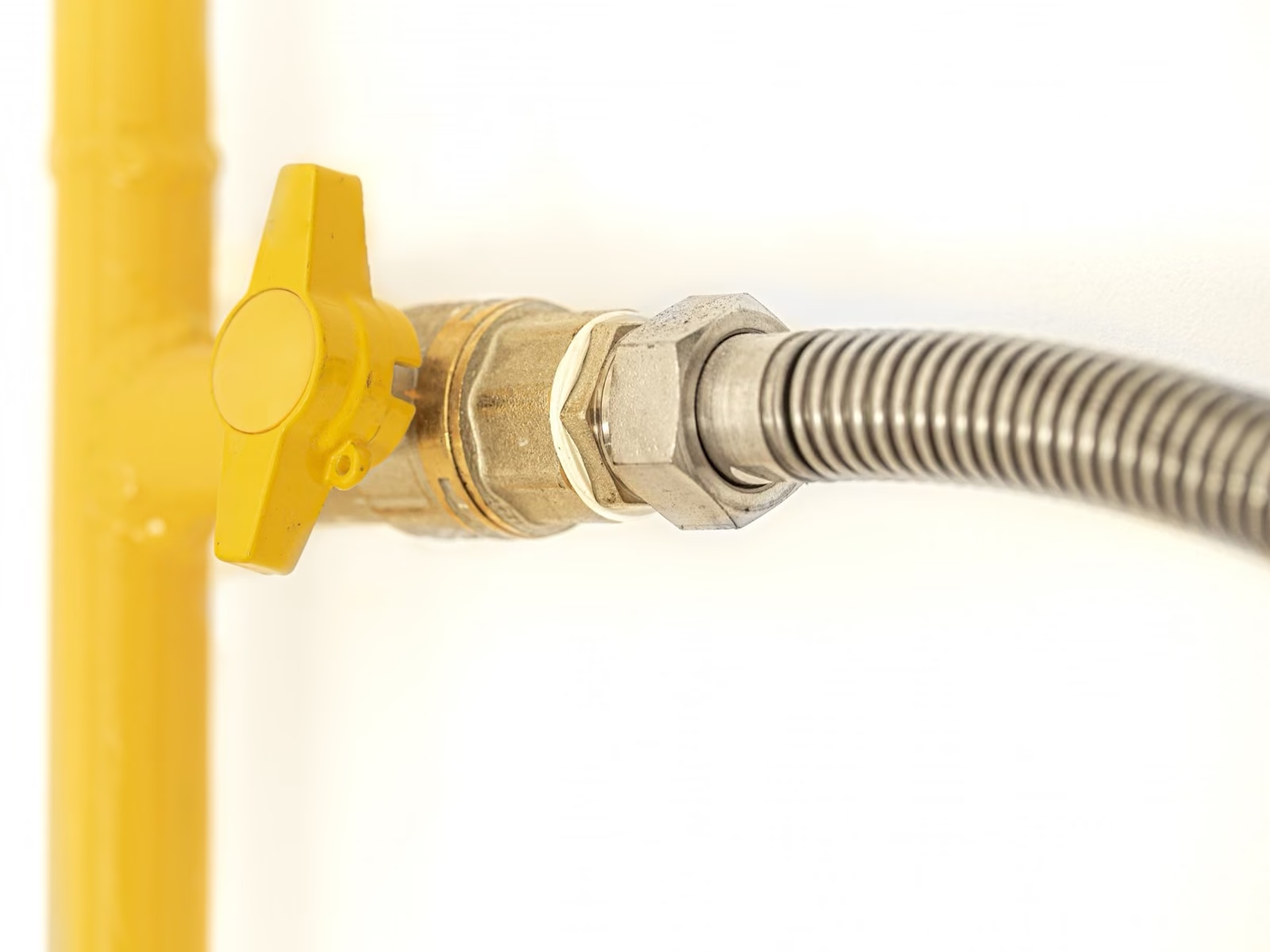
- SoCalGas maintains gas piping up to and including the meter; everything past the meter, down to each appliance connector, belongs to the property owner.
- If you smell gas, leave the building before you call, touch no switches or phones on the way out, and dial SoCalGas or 911 from outside.
- After a shutoff, a licensed plumber repairs and pressure-tests the house-side piping, an LADBS inspector witnesses the test in the City of Los Angeles, and SoCalGas then restores service.
- Under a CPUC general order, only SoCalGas or its certified contractors operate the shutoff valve at the meter, so neither you nor your plumber turns the meter back on.
- A carbon monoxide alarm does not detect natural gas, and odor fade in some soil conditions means that no smell does not prove no leak.
Who fixes a gas leak: SoCalGas, 911 or a licensed plumber?
Three parties, three jobs. SoCalGas makes the property safe and repairs its own piping up to the meter. 911 handles fire, injury, or a line struck by a car or a backhoe. A licensed plumber repairs and tests the piping on the house side.
The order matters more than the names. The utility comes first whenever there is an active smell, because its crew can shut the meter day or night. The plumber comes second, once the meter is off and tagged. The inspector comes third, and SoCalGas returns last to restore service.
Who does what after a gas leak in Los Angeles
| Situation | SoCalGas | 911 | Licensed plumber | LADBS |
|---|---|---|---|---|
| Smell of gas indoors | Responds 24/7, shuts and tags the meter | Only for fire, injury or structural damage | Repairs the house line once the meter is off | Permit and witnessed test |
| Smell at the meter or a hissing riser | Repairs its own piping up to the meter | If gas is venting hard or a vehicle hit the meter | Nothing until SoCalGas clears its side | Usually not involved |
| Red-tagged water heater | Tags the appliance, may leave the rest on | Not needed | Replaces the connector, valve or heater and tests | Permit when the heater is replaced |
| Leak on a buried pool-heater line | Shuts the meter when called | Not needed | Isolates, tests, digs and replaces the run | Permit and test before service returns |
| Earthquake valve tripped, no quake | Restores service; a reset fee can apply | Not needed; call SoCalGas if you smell gas | Resets the valve and checks the line | Usually not involved |
| No smell, but the bill jumped | Responds to a reported leak | Not needed | Pressure test to find a slow seep | Permit if a repair follows |
You smell gas: what do you do in the first five minutes?
Leave first, then call. SoCalGas's own instructions are to evacuate, call 1-800-427-2200 from a safe spot outside, and call 911 if there is damage that could endanger life or property.
Everything on the way out is about not making a spark. Leave light switches where they are, on or off. Skip the garage door opener and the doorbell, and do not start a car in an attached garage. Phones stay in your pocket until you reach the sidewalk.
Do not try to find the leak or stop it yourself, and never search for it with a flame. The utility technician carries a combustible gas detector for that job. A faint whiff near one appliance earns the same call, since a seep at the connector behind a 1960s range is the most common thing we find once the meter is off.
SoCalGas shut off your service or red-tagged an appliance: what happens next?
A red tag means the utility found a hazard and will not restore service until a licensed plumber has repaired it and proven the piping tight. The tag hangs on one appliance, or on the meter itself with a lock through the valve.
The plumber finds and repairs the leak, then pressure-tests the house line. In the City of Los Angeles the test runs under an LADBS gas permit, and an inspector witnesses the gauge. The sign-off clears SoCalGas to come back out; its technician still leak-checks the house line before unlocking the meter, restoring service and relighting the pilots.
The pattern we see most often from Sun Valley to Van Nuys goes like this. The SoCalGas tech found leaks at an appliance shutoff, locked the meter, and told the owner to call a plumber. That is not a brush-off: the utility does not work on your piping, and your plumber does not operate its meter valve.
Which side of the meter is yours?
SoCalGas owns and maintains the piping up to and including the meter. Everything downstream of the meter outlet is customer piping: the house line, the stub to each appliance, and any buried run to a pool heater, a barbecue or a detached garage.
That line falls in different places on different LA lots. In older neighborhoods with a curbside meter, the buried run from the curb to the house is yours, driveway included. On a dingbat apartment with a bank of meters on the side wall, each unit's house line past its meter belongs to the building owner.
SoCalGas puts that division in writing on its maintain your natural gas lines page, which also tells owners to hire a licensed plumbing or heating contractor for repairs. The meter valve is the one part nobody at the house reopens. SoCalGas cites CPUC General Order 112-E for the rule that only the utility or its certified contractors operate that valve. Its own safety guide does tell customers they may turn it off, earthquake or not, if they smell gas, hear it escaping or see other signs of a leak, and only if it is safe to reach; once it is off, it stays off until a SoCalGas field employee turns it back on.
If SoCalGas has locked your meter, call (818) 421-5290 from outside; a licensed plumber on our one license repairs and tests the house side so SoCalGas can turn service back on. Current ranges for the repair and the test are on our gas leak repair in Los Angeles page.
How does a plumber find the problem without tearing up walls?
Most leaks get found with a gauge, a detector and soapy water, not a saw. The plumber isolates the house line in sections and watches which section loses pressure. Next comes a walk along that section with a combustible gas detector and a soap test at each fitting until bubbles show.
Where the bubbles appear follows the age of the house. In 1950s and 1960s Valley tract homes the piping is black iron, and the threaded joints behind the range and at the water heater riser weep first. Kitchens from the 1960s and 1970s often still carry an early flexible connector, which leaks more often than the pipe. Buried steel to a pool heater rusts in wet soil, so that run gets tested as its own segment before anyone digs.
A segment that holds pressure clears without opening a wall. Drywall comes off only when the test has already named the stretch of pipe behind it.
What is a pressure test and why does LADBS want one?
A pressure test proves the whole house line is tight, not just the joint that leaked. The plumber caps the system, isolates the appliances and pumps the line with air to the test pressure. The gauge then has to hold with no drop for the time the California Plumbing Code sets.
In the City of Los Angeles that test runs under an LADBS gas permit, and the inspector watches the gauge in person before signing. LADBS forwards that release to SoCalGas, whose technician still runs a final leak check on the house line before restoring service. Burbank, Glendale and Pasadena run their own building departments, so check with your city if you live outside LA proper.
LADBS reviews permits filed on or after January 1, 2026 under the 2026 Los Angeles codes, which adopt the 2025 California codes with local amendments. The permit process itself is laid out on the LADBS site.
When does the whole house line get replaced instead of patched?
One leak at one joint gets a spot repair. Pipe that leaks in several places, or buried steel that has rusted through, gets replaced, because the next leak is already forming along the same run.
The pressure test usually makes that decision for you. If the gauge drops, the plumber repairs the first leak and tests again. A second drop in a different segment means the pipe itself has reached the end of its life, and a third leak in the same 1950s black iron is a pattern, not bad luck.
Sizing is the other reason to run new pipe. A 1960s line sized for a floor furnace and a small water heater cannot feed a tankless unit and a six-burner range at once. That job is gas line installation in Los Angeles rather than leak repair, with the same permit and witnessed test.
Can there be a leak with no smell at all?
Yes, and buried lines are the usual case. Natural gas has no smell of its own; the utility adds an odorant so you notice a leak. In some pipe and soil conditions that odorant fades before the gas reaches your nose, and SoCalGas says plainly that no smell does not prove no leak.
Gas escaping from a corroded run under a lawn can lose its odorant to the soil. The first sign is a patch of dead grass, bubbles in a puddle after the sprinklers run, or a bill that climbed with no new appliance.
A carbon monoxide alarm will not catch any of this. CO alarms sense the byproduct of incomplete combustion, not methane, so a leaking pipe never sets one off. A separate combustible gas alarm can help in a house with old piping, yet a plumber's pressure test remains the only way to confirm a line is tight.
Who relights the pilots and turns the meter back on?
SoCalGas does. After the LADBS sign-off, a SoCalGas technician leak-checks the house line first. If it holds, the technician unlocks and reopens the meter valve, checks the appliances and relights the pilots. Your plumber never reopens that valve, no matter how clean the test was.
Expect company in the queue when the first cold nights arrive and furnaces and water heaters get relit for the season. That is when the year's wave of smell-of-gas calls, shutoffs and red tags hits the Valley.
An earthquake valve is a different case. If a certified seismic valve on your house line tripped, the reset happens on the house side, not at the meter, and SoCalGas may charge a reset fee when the valve closed for a non-earthquake reason. Our guide to earthquake gas shutoff valve requirements covers the valve and the reset, while the earthquake gas shutoff valve installation page covers the install.
A+ Electric & Plumbing is a licensed electrician and plumber in Los Angeles and the San Fernando Valley, and on a gas call the same license covers the house-line repair and, where the house has CSST tubing, the bonding an inspector checks before signing. A locked meter at night is still an emergency plumber call, since a live person answers 24/7, and the rest of our plumbing work in Los Angeles runs under the same written estimate. Knowing your shutoffs pays off in any emergency, so read how to shut off the water main as well.
Frequently asked questions
Can my plumber turn the gas back on at the meter after the repair?
No. Under CPUC General Order 112-E, only SoCalGas or its certified contractors operate the service shutoff valve at the meter, and a plumber who opens a locked meter is breaking that rule. Once SoCalGas has restored service and relit the pilots, the plumber can adjust any appliance touched during the repair.
Do I need a permit for a small gas leak repair in Los Angeles?
In the City of Los Angeles, most repairs beyond a simple connector swap run under an LADBS gas permit with a witnessed pressure test. SoCalGas generally waits for that sign-off before restoring a locked meter. Outside the city limits, Burbank, Glendale and Pasadena each handle gas permits at their own counters, so ask the plumber which permit applies before the work starts.
My landlord says the gas line is SoCalGas's problem. Who is right?
SoCalGas, in writing, says piping past the meter belongs to the property, which on a rental means the owner. The tenant's job is the emergency call: leave, then dial SoCalGas or 911 from outside. The repair, the pressure test and the permit fall to the owner, who hires a licensed plumber. On a dingbat with a meter bank, every unit's house line past its meter sits on the owner's side.
Does a plumber fix a gas leak at the stove, or do I call an appliance repair company?
The question of who fixes a gas leak at the range splits at the connector. The house line, the shutoff valve on the wall and the flexible connector belong to a licensed plumber, and those three parts cause most range-area leaks we find. A leak inside the appliance, at the burner valve or the oven regulator, belongs to an appliance technician. Either way, SoCalGas gets the first call while the smell is active.
I smell gas at the street or near the meter but not in the house. Who handles that?
Still SoCalGas, and still from a distance. A smell at the curb usually points to the utility's main, the service line or the meter itself, which SoCalGas repairs on its own. Call 1-800-427-2200 from a spot upwind and let the technician trace it. If the leak sits on a buried run from a curbside meter to the house, that part is yours and a plumber takes over.
Related services
Need this handled? Start here
Get a free estimate
Tell us what's going on and a licensed tech calls you back fast, with the exact price before any work starts. Electrical and plumbing, one team.
Estimates for quoted work are free. Troubleshooting or diagnosis may carry a $100-$250 service call, credited to your repair when you approve the work.
- Exact price in writing before we start
- Licensed, bonded & insured (CSLB #942404)
- One team for electrical and plumbing
Prefer to talk? Call (818) 421-5290, answered 24/7.