
Homeowner guide guide
Flooded Garage in Los Angeles: What Is Safe to Use Again, and What Gets Checked First
A flooded garage is safe to walk into only once there is no smell of gas and the power is off to everything the water reached. After that the rule is short: whatever sat in water needs a check before it runs again. A gas control valve that was under water needs replacing, and so do outlets, GFCIs and breakers. Parts that stayed above the water line can stay in service after a look.
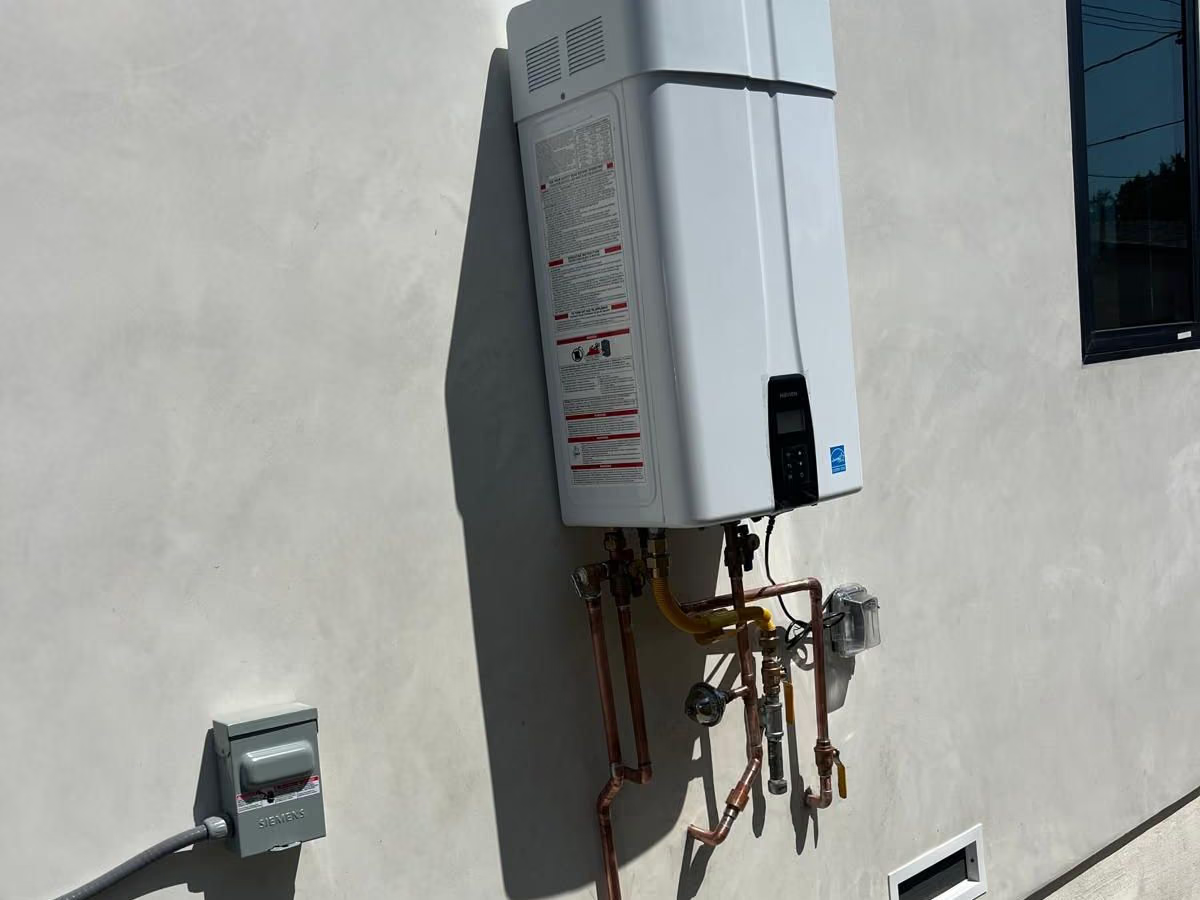
- Stay out of standing water until the power is off, and leave at once if you smell gas. The CDC says to switch off the main only from a dry location, and to call an electrician if you would have to stand in water to reach it.
- The Consumer Product Safety Commission says to replace gas control valves, circuit breakers and GFCIs that have been under water.
- Water heater makers and their trade group go further and call for a new heater once flood water has reached the old one.
- California's plumbing code keeps burners and ignition parts in a garage at least 18 inches above the floor unless the appliance has a flammable-vapor listing, so a heater on a stand often sits above a shallow flood.
- The EPA gives 24 to 48 hours to dry wet materials before mold starts, and standard homeowners insurance in California does not cover flood damage.
Flooded garage: what is safe to use, and what is not?
Go by the water line. Anything the water covered stays off until someone qualified has looked at it. Gas valves, outlets, GFCIs and breakers that were under water need replacing, and drying them does not count. Anything that stayed above the line can go back into service once someone has dealt with the power and gas to the wet items.
What the water reached, and who checks it
| In the garage | If water reached it | Who checks it |
|---|---|---|
| Gas water heater | Do not relight. A gas valve that was under water needs replacing, and the makers call for a new heater | Plumber |
| Furnace or other gas appliance | Leave it off. A gas valve that was under water needs replacing, and a heating contractor checks the rest | Heating contractor |
| Outlets, GFCIs, switches | Replace the devices and any ordinary wall cable that was under water; check the box | Electrician |
| Subpanel and breakers | Replace breakers that were under water; have the panel evaluated | Electrician |
| Washer, dryer, freezer | Unplug with the power off; have the motor and controls checked | Appliance technician |
| EV charger, cable or connector | Keep it off until the maker or an electrician clears it | Electrician |
| The car itself | If water reached the battery pack, leave it unplugged, keep it away from buildings and call the dealer | Dealer |
Is it safe to walk into a garage with standing water?
Not while the power is on to anything in the water. Outlets, cords and a charger cable can all sit below the surface. Deal with the gas and the power first, from outside the wet area.
- Stay out of the water
If an outlet, a cord or a plugged-in appliance is in or near it, do not step in. The CDC's rule is never to turn power on or off, or use an electric tool, while standing in water.
- Smell gas? Leave first
Get everyone out. Do not touch a switch, a breaker or the garage door opener, and do not start a car. Call SoCalGas from outside. Its guide says to shut the meter only if you smell or hear gas and it is safe, and then to leave it off.
- No gas smell? Cut the power from a dry spot
If the panel is dry and you can reach it on dry ground, switch off the main. A panel outdoors in the rain is a wet panel, so leave it. If the way to the panel is through the water, the CDC says to call an electrician to turn it off. Do the same when the panel itself is wet.
- Do not touch wet, plugged-in appliances
That is the Consumer Product Safety Commission's advice, and it fits the washer, the freezer and the charger too.
- Work out what the water is
Storm water runs in under the door. Water that rises from a floor drain and smells like sewage is a sewer backup.
- Take photos before you move anything
Get the water line on the walls and on each appliance, and the rating plates. FEMA's flood program asks for pictures before cleaning or throwing anything out.
Who to call from the driveway
-
Someone is in danger, a wire is down, or a car is in rising waterEmergency services911
-
You smell gas, or a gas appliance sat in waterSoCalGas, 24 hours; call from outside1-800-427-2200
-
Water at the meter or the box that holds it, or a power emergencyLADWP, 24 hours1-800-342-5397
-
Sewage still rising from a floor drain with all your water offLA Sanitation, 24 hours1-800-773-2489
-
Flooded street or blocked catch basin, nobody in dangerCity of Los Angeles 311 or the MyLA311 app311
-
Water heater, gas valve, outlets, subpanel and charger checked on one visitA+ Electric & Plumbing; a live person answers 24/7(818) 421-5290
LADWP, LA Sanitation and 311 serve the City of Los Angeles. In Burbank, Glendale and Pasadena, call the utility on your own bill.
How high did the water get?
The water line on the wall decides almost everything. Compare the dried line on the drywall, or on the side of each appliance, with the lowest working part of that appliance. Two inches of water and ten inches are different jobs.
- Gas valve and burner: above shallow water when the heater is on a stand.
- Washer and dryer: motors and wiring sit near the floor.
- Cords and power strips on the floor, then the lowest outlets.
- The charging cable and connector, if left on the floor.
- Subpanel and wall charger: usually above the water.
Garages have one thing going for them. The California Plumbing Code keeps burners and ignition parts of appliances in a residential garage at least 18 inches above the floor, unless the appliance carries a flammable-vapor ignition resistant listing. The mechanical code says the same for furnaces. On an older heater that means a stand, and a stand puts the gas valve and burner above a shallow flood.
Two setups lose that margin. Newer tank heaters with the flammable-vapor listing may stand on the floor. The same goes for a heater in a closet that opens only to the outside, which is common on Los Angeles homes with no garage. On both, the burner chamber at the base is the first thing water reaches.
Water heater: relight it, repair it or replace it?
If water reached the heater itself, do not relight it. The Consumer Product Safety Commission says gas control valves that have been under water cannot be salvaged and must be replaced. That is the floor, and the makers set the bar higher.
- AHRI, the trade group of the heater makers, says to replace a water heater exposed to flood water, gas or electric, because valves and controls corrode and the tank insulation is close to impossible to disinfect.
- A. O. Smith's bulletin and a letter from Takagi, a tankless maker, say not to operate the appliance if any part has been under water, and call for complete replacement.
- Bradford White tells owners to replace a heater that was flooded to any degree.
As we read them, none of those statements covers a wet floor under a heater on a stand. A tank leaking its own clean water is a different case from flood water. Where the dried water line stops below the base of the heater, the stand, the gas connector, the drain valve and the nearby outlet get a check, and the heater can often stay. A wall-hung tankless unit tends to stay dry while the outlet and cord below it do not.
A pilot that went out in the storm while the garage stayed dry is usually a draft down the vent. SoCalGas relights pilots and checks gas appliances at no charge on a scheduled visit. When the heater does have to go, the water heater installation in Los Angeles page covers the permit and the stand. Our guide to water heater repair or replace covers the dry-weather signs, and gas leak repair in Los Angeles covers the piping.
Outlets, cords and the subpanel: what needs replacing?
Most of it. Outlets, switches, GFCI and AFCI devices, circuit breakers and ordinary dry-location cable that sat in water are all on the replace list in NEMA's current guide to water-damaged equipment. The guide says not to wash or air dry the electronic ones, because sediment stays inside after the water is gone.
- Low outlets. The boxes they sit in get checked, and often replaced too. A GFCI that tripped did its job, and it still needs replacing if it was under water.
- Extension cords and power strips that were on the floor. Throw them out.
- The cable in the wall, where the water line on the drywall is above it.
- Breakers in a subpanel the water reached. The panel itself may be reconditioned or replaced, depending on the maker.
- The garage door opener's safety sensors, which sit a few inches off the slab. The motor at the ceiling stays dry.
Garage outlets need GFCI protection under the California Electrical Code. The permit line matters here. As we read the Los Angeles code, swapping an outlet device on its existing box, or a breaker for one of the same rating, needs no permit. Replacing the box, the cable in the wall or a subpanel is wiring work that does. The exemption holds only where the original wiring had its permit, and the code drops it for unpermitted or hazardous wiring, so ask LADBS when in doubt. An electrical safety inspection sorts which is which, and moving a low outlet higher is an outlet installation in Los Angeles job.
Can you use the washer, dryer or freezer after a flooded garage?
Not until a technician has checked each one, if water got into the cabinet. Motors, pumps and wiring sit close to the floor in most laundry machines, and the Consumer Product Safety Commission says a qualified technician should evaluate submerged motors, circuits and fans. Whole appliances may need replacing.
Unplug them only with the power off at the panel. A gas dryer has a gas valve like any other, so the under-water rule applies to it too. A freezer or second fridge that took water into its insulation is rarely worth saving. Let dry-looking machines sit until someone has opened them up, since a motor can seem fine and still fail later.
EV charger and the car: can you still charge?
Charging in the rain is fine. Charging with equipment that sat in water is not. NHTSA, the federal highway safety agency, says plug-in chargers are weather resistant, and common wall units are built for rain. A few are rated for hose-directed water. None of those ratings covers being under water.
A wall unit mounted at chest height tends to stay dry. The cable and connector are the weak point, because they end up on the floor. If the connector or a loop of cable sat in water, leave the charger off at its breaker and call the maker or an electrician. The 2026 NEMA guide lists EV charging equipment as something a manufacturer may recondition, and adds that replacement is necessary in many cases. Our EV charger installation in Los Angeles page covers mounting height. A wall hook or holster keeps the cable off the slab.
Then there is the car. Water that stayed below the underside of the car did not reach the battery pack. If flood water did reach it, NHTSA says not to park the car in a garage or within 50 feet of a house, another building or another car. Contact the dealer, or emergency services if you see smoke, and leave the car unplugged until the dealer has checked it.
Storm water or sewage, and how fast do you have to dry it?
Fast. The EPA's mold guide gives 24 to 48 hours to dry water-damaged areas before mold grows. Drywall is the slow part. FEMA's line is to remove drywall and insulation that have been in contact with flood water, and a wall often stays wet above the line you can see.
Storm water off a street carries oil, fertilizer and whatever was in the gutter, so wear boots and gloves. Sewage is worse. The EPA says to call in a professional when the damage came from sewage or other contaminated water. Our guide to a sewer backup when it rains covers that case.
Photos, serial numbers and receipts are what an insurance claim runs on, and the questions below cover what a homeowners policy leaves out. If you run a generator or a gas pump to clear the water, keep it outside, at least 20 feet from the house, and never in the garage.
How do you keep the garage from flooding again?
Keep the water from reaching the door, give what does arrive a way out, and lift everything electrical off the floor. Most garages that flood take surface water over the sill from a driveway that slopes toward them.
- Clear the trench drain across the driveway and the downspouts that feed it. Leaves are the usual reason a working drain stops.
- Use sandbags to steer water past the door, not to dam it. The Los Angeles Fire Department hands out up to 25 free ready-to-fill bags per household at its neighborhood stations.
- Where a drain cannot reach the street by gravity, a pit and pump can. Our guide on whether you need a sump pump explains when, and sump pump installation in Los Angeles covers the permit and the circuit.
- Move low outlets up, hang the charger cable, and get power strips and the spare freezer's cord off the slab.
A wetter than normal winter is more likely than not. NOAA's seasonal outlook of November 19 gives Southern California better than a 60 percent chance of a wetter than normal December through February. That is a tilt in the odds and says nothing about any single storm.
A+ Electric & Plumbing is a licensed electrician and plumber serving Los Angeles and the San Fernando Valley on one California license, so one visit covers the gas valve and the outlet beside it. If a main panel got wet too, see our guide to water in the electrical panel. Both sides of the work are listed on the Los Angeles electrician and Los Angeles plumber pages, and the home page shows why wet gas valves and wet wiring are a job for one electrician and plumber in Los Angeles.
Frequently asked questions
Can a water heater be fixed after a flood?
Usually not, if the water reached the heater. The Consumer Product Safety Commission says to replace a gas control valve that has been under water. The makers and their trade group, AHRI, go further and call for replacing the whole heater, since controls corrode from the inside and the insulation is close to impossible to disinfect. A heater that stayed above the water can often stay.
Why did my pilot light go out in the storm when the garage stayed dry?
Usually a draft. A gust down the vent or through the louvers of an outdoor closet can put out a pilot, and a tired thermocouple makes it easier. Repeat outages in calm weather point to a part. If any water reached the burner area, leave the heater off until it has been checked. With any smell of gas, skip the relight, get everyone outside and phone SoCalGas from there.
How long after an outlet gets wet can I use it?
Time is not the test. An outlet that took a splash and then dried is one thing. One that sat under water needs replacing, because grit and minerals stay inside it after it dries. NEMA lists outlets, switches and GFCIs under replace, and says not to wash or air dry the electronic ones. Leave the circuit off until then.
Does homeowners insurance cover a flooded garage?
Generally not for storm water that came in from outside. The California Department of Insurance says a standard homeowners policy does not cover flood damage, and that flood insurance is a separate policy with a 30-day wait in most cases. A burst pipe and rain over the sill are treated differently, so read the policy and ask the adjuster.
I rent, and the building's underground garage flooded. Who is responsible?
The building and its equipment are the owner's to maintain. California's Civil Code has a landlord keep the plumbing, gas and electrical equipment in good working order, and keep the areas under the landlord's control clean. A garage sump pump falls within that as we read it. Damage to your car is a question for your auto insurer. Report the flooding in writing, and keep photos.
Get a free estimate
Tell us what's going on and a licensed tech calls you back fast, with the exact price before any work starts. Electrical and plumbing, one team.
Estimates for quoted work are free. Troubleshooting or diagnosis may carry a $100-$250 service call, credited to your repair when you approve the work.
- Exact price in writing before we start
- Licensed, bonded & insured (CSLB #942404)
- One team for electrical and plumbing
Prefer to talk? Call (818) 421-5290, answered 24/7.